
The 2018 Oscars will be broadcast on Sunday, March 4 beginning at 8:00 PM making its 90th straight year of honoring the year’s best films and all of those who work in the film industry hosted and voted by the Academy of Motion Picture Arts and Sciences. Movies these days are a cultural touchstone that just about everyone has an opinion on. Whether someone was dazzled by the newest superhero film or they were moved to tears by an artful drama, at the crux of any movie is a story. And we as people love a good story!
I love movies.
I also love God.
And when those two things collide – I love them both even more!
For the second year in a row, I committed myself (and a few hours of my “free time”) to watch ALL 9 of the Best Picture nominees. Some of you may have gotten a chance to see some or perhaps you too watched all of the Best Picture nominees for yourself. Speaking for myself, I find movies to be a window and a mirror into our culture. Movies (and media in general) allow us as viewers to peek into a piece of culture, historically significant moment, or a way of life that we may not be accustomed to while at the same time nudge our minds and hearts to pier inwardly at our own struggles and joys.
And here’s the kicker as to why I do this: The Oscars, in fact, do matter! Now you might wonder, why would a Pastor of an Evangelical Christian church encourage you to tune in to what some might consider to be a “pageant of pagens”? Conservative evangelicals that I’ve talked to often think too little of the mainstream movie culture. Sure they love a good movie, but it’s just that – a film; nothing more beneath the surface of a screen to their eyes. Additionally, it’s not a mystery then that the industry today is dominated by progressive politics and secular worldviews. Far too many feel that the Oscar telecast is no more than a 3+ hour showcase for Hollywood’s ideology, celebrating stories and ideas that Christians ought not to endorse.
These concerns are legitimate. But, I believe Christians would be wise to enjoy and appreciate the Academy Awards using their due diligence, discernment and critical thinking about what they are watching. To use Andy Crouch’s helpful terminology, “Evangelicals should beware of adopting an instinctively hostile posture toward culture. Rather, our posture ought to be one of grateful discernment, rejoicing in what’s good and rejecting what’s bad when necessary.” The Oscars honor excellence, both in technical achievements as well as in storytelling, direction, and acting. The Oscars also celebrate different individual tastes – You may not like all 9 films. You might disagree with the nominations. But what you cannot and should not do is dismiss them out of hand just because they don’t fit your “taste”. And lastly, as I’ve mentioned before, these films (and all films) remind us of the power of a story.
The Post, Dunkirk, and The Darkest Hour depict personal and powerful real-life stories of struggle.
The Shape of Water whisks viewers into a magical fairy-tale of old.
Three Billboard Outside Ebbing Missouri and Get Out tackle some of the biggest of social issue that the world faces today.
Lady Bird, Call Me By Your Name, and Phantom Thread showcases coming-of-age stories of both the young and old learning not only about the self but how to connect with others.
And when the moment comes for that artist to be awarded best in their category (hopefully read correctly by the presenter – yes, we have not forgotten last year’s Best Picture debacle [CLICK HERE]), we should remember that all of this is because: stories matter! Even in the stories told by secular, progressive Hollywood, as followers of Christ we can still see, celebrate, and present echoes of the one story written on every human heart – the Gospel.
Beginning with some HONORABLE MENTIONS and then starting from the bottom and ending with my favorite of the Best Picture Nominees, I’ll give a brief non-spoiler synopsis along with my likes, dislikes, and a brief picture of the Gospel that I saw. I’ll also give a grade for each movie and a prediction of the awards (Best Director, Actor/Actress, Technical achievements, etc.). ENJOY!
*Just a quick reminder: there are NO SPOILERS! This, along with any other “The Gospel According To…” reviews are always spoiler-free reviews to help you both understand the movie as well as illuminate the Gospel’s presence throughout. So feel free to read without the worry of having the movie ruined for you if you have not seen it quite yet. Remember too, these are my own feelings and we might not always agree – so feel free to disagree and share your own thoughts about it in the comment section below!
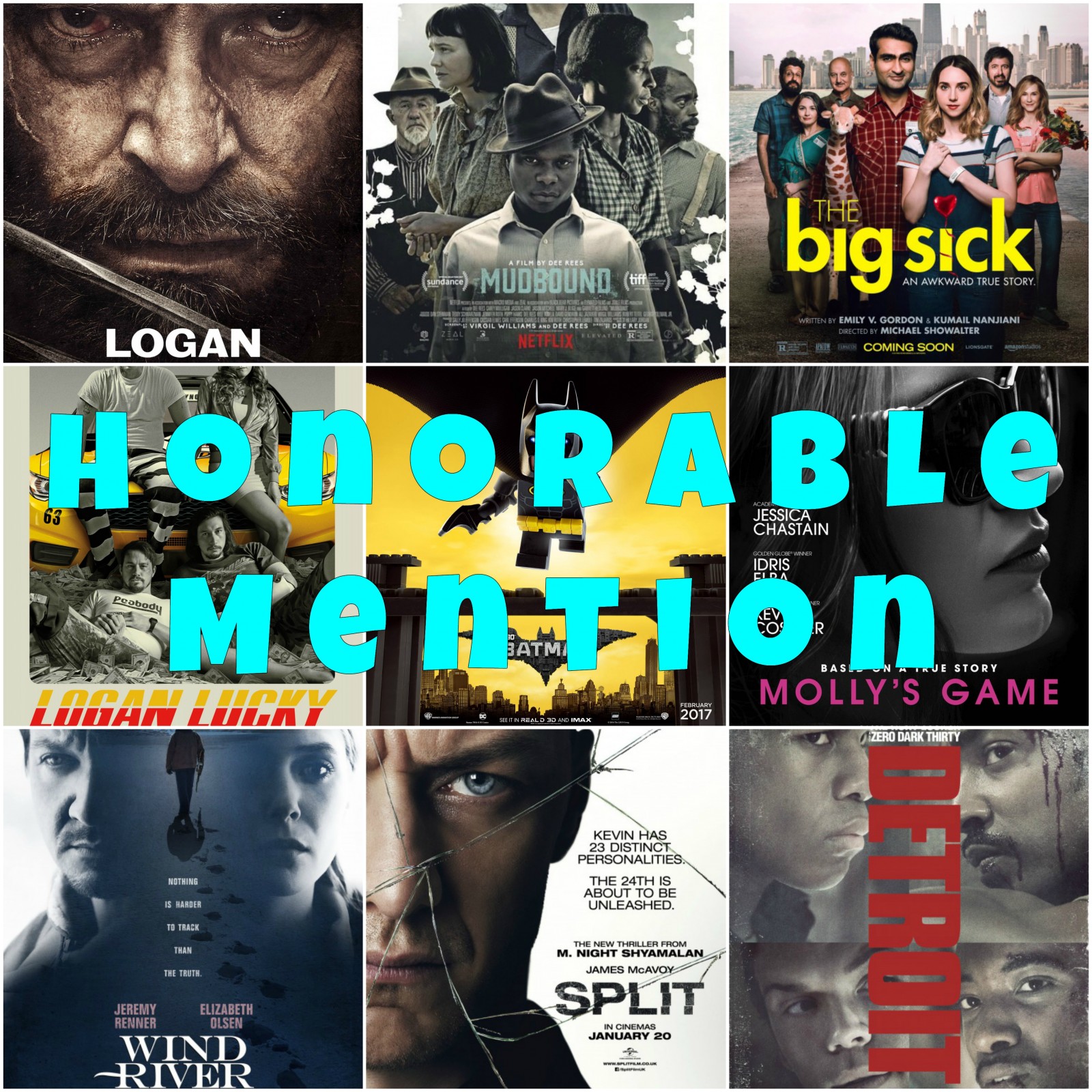
The LEGO Batman Movie – The animated category this year is full of mediocrity, but by not including this film (which was easily a standout amongst others like The Boss Baby) is criminal. But hey, at least the Academy is consistent with the LEGO franchise (The LEGO Movie – 2014 was suspectly not nominated the year of its release either).
Molly’s Game – Jessica Chastain brings a compelling and fun performance that should be nominated for Best Actress and possibly even considered for Best Picture due to former Oscar-winner Aaron Sorkin’s writing and first-time direction.
Wind River – If you liked last year’s Best Picture nominee Hell or High Water (which was my favorite) or 2015’s Sicario then you’ll love Wind River as well – written and directed by the same screenwriter (Tyler Sheridan) it has deep storytelling and thought-provoking themes throughout.
Logan Lucky – Director Steven Soderberg is back and just as good as he was with his Ocean’s trilogy. This time around, the heist is Charlotte Motor Speedway during a NASCAR race – what could possibly go wrong? Check it out if you missed this fun action-packed summer joyride with top-notch talent.
Logan – Patrick Stewart deserves a Best Supporting Actor nod for his work as Professor X which carries this films weight, joy, and emotional heartstring. I was happy to see the screenwriting nomination but would have been even more excited to see it be the first comic-book film to crack the top honors.
Split – There’s always a movie that the Academy forgets because it comes out so early in the year (last year was 10 Cloverfield Lane). Here, James McAvoy’s haunting and layered performance is overlooked simply because of its release date. Low budget, eerie, and a deeply thematic film with an unforgettable performance and conclusion. Great for if you love a good thriller with some scares.
Detroit – 2003’s Best Picture winner Crash is ratcheted up to a whole ‘nother level in this real-life story including breakout performances from John Boyega (Star Wars), Anthony Mackie (Falcon – Marvel films), and Will Poulter (Maze Runner) under the direction of 2 time Oscar-winner Kathryn Bigelow.
Mudbound – Sure, it’s nominated for a few awards so it’s not technically a “snub”, but how this film is NOT nominated for Best Picture blows my mind! An amazing story about race, family, and war all waged together in what is easily one of the best films this past year – a must-watch (especially if you have Netflix). Would have been in my Top 3 had this been in the Best Picture race.
The Big Sick – An emotionally stirring portrait of love amid life’s struggles, with a mostly positive message about marriage, family, forgiveness, and reconciliation that far too many did not see – easily one of the best written films of the past year with humor and an abundance of heart.
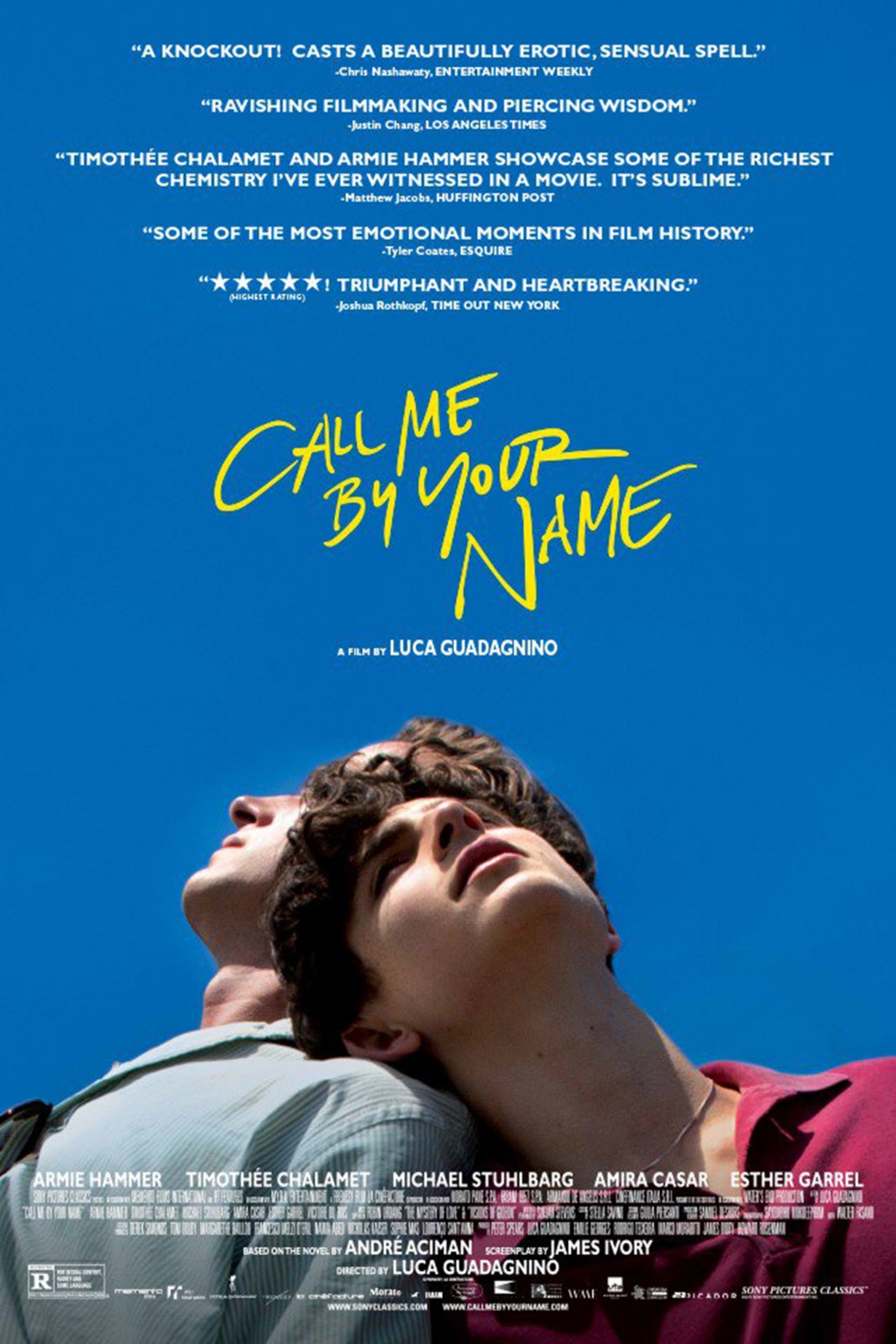 9. Call Me By Your Name – Egyptian-born Jewish writer, André Aciman’s, work comes to the big screen as 17-year-old Elio (Timothée Chalamet) in Northern Italy in 1983 where he begins a relationship with visiting Oliver (Armie Hammer), his father’s research assistant. With physical and emotional changes on the horizon, these two bond over his emerging sexuality, their Jewish heritage, and the gorgeous Italian landscape. Nominated for 4 awards: Best Picture, Best Actor (Timothée Chalamet), Best Adapted Screenplay, and Best Original Song.
Going back to last year’s Best Picture nominees, I was unsure about how to openly discuss films that touch on rather sensitive subjects such as sexuality – and in particular homosexuality. In the 2016 Best Picture winner Moonlight, the main character’s arc to discovering who he feels that he’s becoming is interestingly unfolded through 3 stages of his life (young boy, teenager, and young adult) which created a unique, though troublesome and problematic, approach to this subject. A year later now with another Best Picture nominee, this same conversation is executed poorly. Call Me By Your Name is an over-bloated, pretentious love story that has a serious case of needing to tell the audience how it should feel when in reality it suffers from its own perversion and storytelling mistakes.
That may seem like a harsh criticism but let’s look at the facts: a 17-year-old boy who is narrowing in on self-discovery of not only his identity but also on the world around him is then introduced to Oliver (24-years-old), his father’s summer research assistant with whom he immediately begins to manipulate. Elio at this same time is in a budding relationship with his longtime friend Marzia who’s been smitten over Elio for what seems like her whole life. But as the minutes tick by on the aging summer, Oliver pushes his own self-interest onto Elio (still malleable, uncertain, and naïve) and creates this intimacy and sexually attractiveness for each other in what mainstream critics are heralding as “sumptuous,” “rapturous,” and “beautiful”.
Again, that’s a 17-year-old and a 24-year-old. Something seems a bit off by that – right?
Some may try to rationalize this and say that age is just a number or perhaps praisers of this film will quote that Italy’s consent age in the 1980’s was 14-years-old, but that doesn’t solve this films biggest and most problematic issue: in a time when culture is reexamining sexual relationships it saddens and concerns me that this story of adult-child sex is not only getting a pass but being praised.
The film’s pluralistic message of living your life by your own set of rules is doing more harm than good – clearly evident in Elio’s life depicted in this film. The viewpoint and central point of Call Me By Your Name is that there is no morality. There is no truth. There is no judgment. There is only the moment and the feelings in that moment that determine what is good, right, and lovely. In fact, there is only the individual and that is all that matters. And when it comes to sexuality, any consensual expression of it whether that be Elio with a girl his age or Oliver an adult man is, according to this, a “beautiful” thing. And unfortunately, that’s the wrong message that is garnering so much praise.
The film’s only saving grace (and why I did not fail it completely): Italy looks beautiful in the summertime. Director Luca Guadagnino has no trouble behind the camera grabbing your fullest attention to the beauty that surrounds these woeful characters no matter if it’s simply a bike ride to the store or the oasis of a hidden waterhole, the visual element is unmistakably gorgeous. If only the conversation, subject matter, and storytelling would have done the same.
Overall Grade: D
Projected Awards: Adapted Screenplay
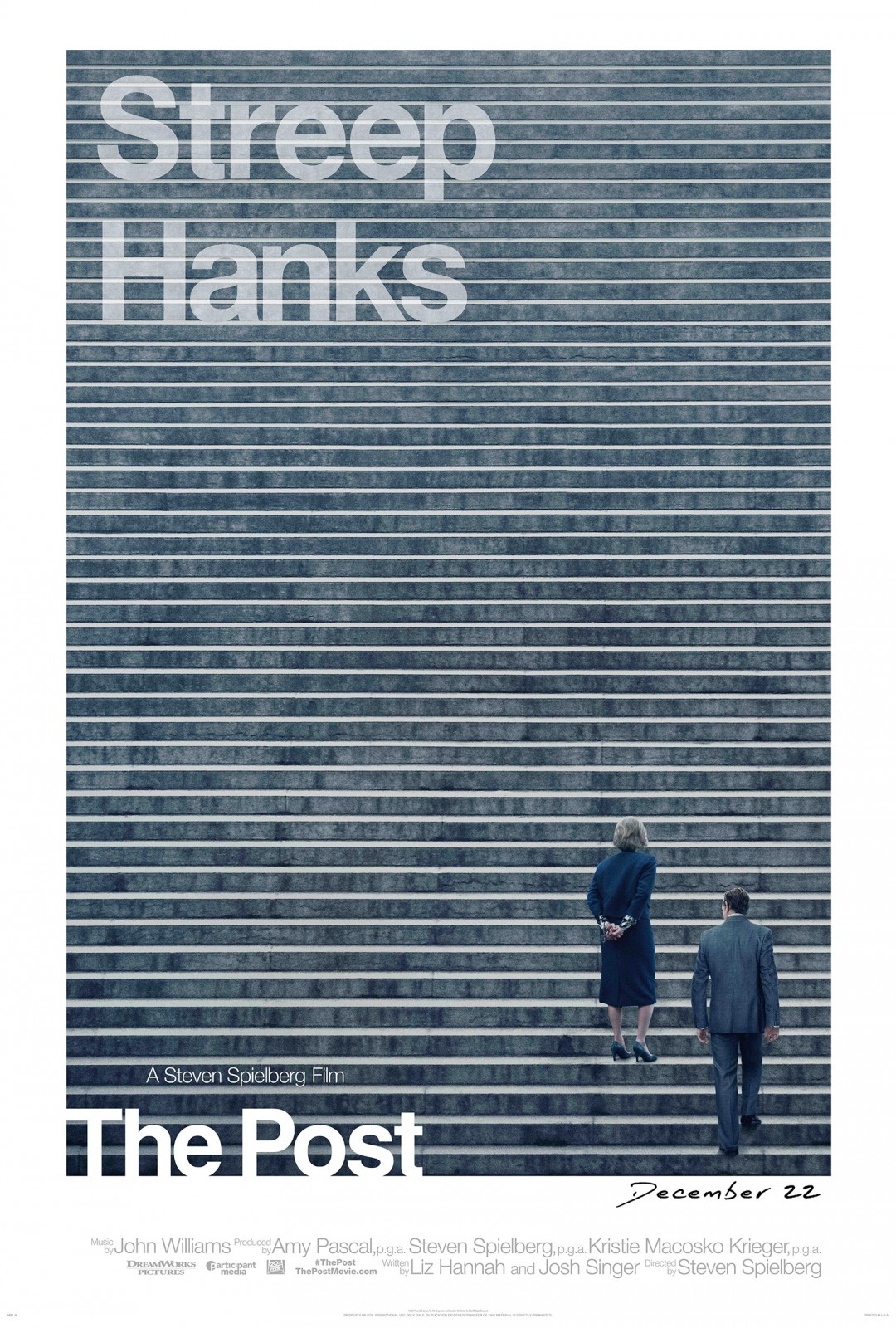 8. The Post – Steven Spielberg directs Meryl Streep and Tom Hanks in a true story drama about the unlikely partnership between The Washington Post’s Katharine Graham (Streep), the first female publisher of a major American newspaper, and editor Ben Bradlee (Hanks), as they race to catch up with The New York Times to expose a massive cover-up of government secrets that spanned three decades and four U.S. Presidents. The two must overcome their differences as they risk their careers – and their very freedom – to help bring long-buried truths to light. The Post marks the first time Meryl Streep, Tom Hanks, and Steven Spielberg have collaborated on a project together. Nominated for 2 awards: Best Picture and Best Actress (Meryl Streep).
The Post is the captivating story of a cover-up exposed by the media in an age where such things did not seem like yesterday’s news. In today’s world, stories of concealment seem like they are a regular part of our mainstream news outlet’s coverage. And what makes this story that much more remarkable are the people leading this exposition – a female lead publisher fighting against the current of culture, sexism, and decision-making alongside her trusted confidant and lead editor fighting for truth and justice at every turn no matter if it leads him to career suicide.
The story is all here. Even the actors in leads role could not be any more well known by the everyday public: Meryl Streep – a 21-time Oscar-nominated actress (which leads both male and female nominations all-time) and feels like a shoe-in every single year for top honors. Tom Hanks – a 5-time Oscar-nominated actor who never seems to disappoint on the big screen in any film he’s in. Steven Speilberg is a top all-time director talent whose works of Jurassic Park, Indiana Jones, Shindler’s List, and Saving Private Ryan are some of the tops in the industry perhaps ever. With all of that star talent in front of and behind the camera along with a true action-packed story, the final result of this film can be summed up in one word: disappointing.
I so badly wanted to like this film, but the sad truth is that it never really gets off the ground and the story is somehow told in an unengaging predictable way. From the very beginning, The Post seems to sputter its way out of the gate. The first 45 minutes are boringly dreadful to watch and in retrospect do nothing for the overall story told thereafter. I can appreciate an opening that looks to establish its characters, motives and setting the stage for the central issue but none of those things appear here. It’s mostly yik-yak meandering its way to the storyline that film’s premise promises. Once that finally begins, it’s only moderately engaging. Problem is – you know where the story is going leaving you with little suspense and mystery. That’s not because it’s a real-life event and so we immediately knows how it will conclude, what I mean is that the overall storyline follows patterns of movies that have come before. For a film about such high tension and dramatic stakes, it feels as though the hype was bigger than the event itself.
Even with those mistakes, the movie’s most positive aspects are the two lead characters: Katharine Graham and Ben Bradlee (Streep and Hanks respectively). Their tenacity and fire for the truth are both courageous and inspiring and that comes through in Streep and Hank’s performances. After I had seen The Post I immediately knew that it would earn Oscar nominations solely by default. All the performances are strong, though they keep it rather safe all across the board which is predictable for an “Oscar-bait” movie. Had this film not starred Streep and Hanks I don’t think it would have had the same buzz. Though not to be overlooked is the tension created by the great John Willaim’s nominated score underlining key time-sensitive moments of pressure that bring that needed sense of urgency.
What put the nail in the coffin for me is the overly preachy ending that Spielberg attaches to this film. Some artists like to be ambiguous about their work. The same cannot be said here as the director’s tone, feelings, and opinions are slapped into the audience’s face in the last 20 minutes. Is the message an important one? YES! But, trust me, as a Pastor I’m all for preaching – you just have to know when and where to pack the punch and here at the end of this film it’s done sloppily and heavy-handedly. It clearly shows just how rushed this film was being put together and has been reported by Spielberg himself.
With poor pacing and a dense narrative at the start, the entertainment value simply isn’t here. It’s also not a visual extravaganza unless you’re into long montages of 1970’s newspaper manufacturing, It’s hard to justify seeing this as one of the best films of the year when at the end of the day it’s just a sub-par, OK drama, not a must-see especially from this top talent.
Overall Grade: C-
Projected Awards: None
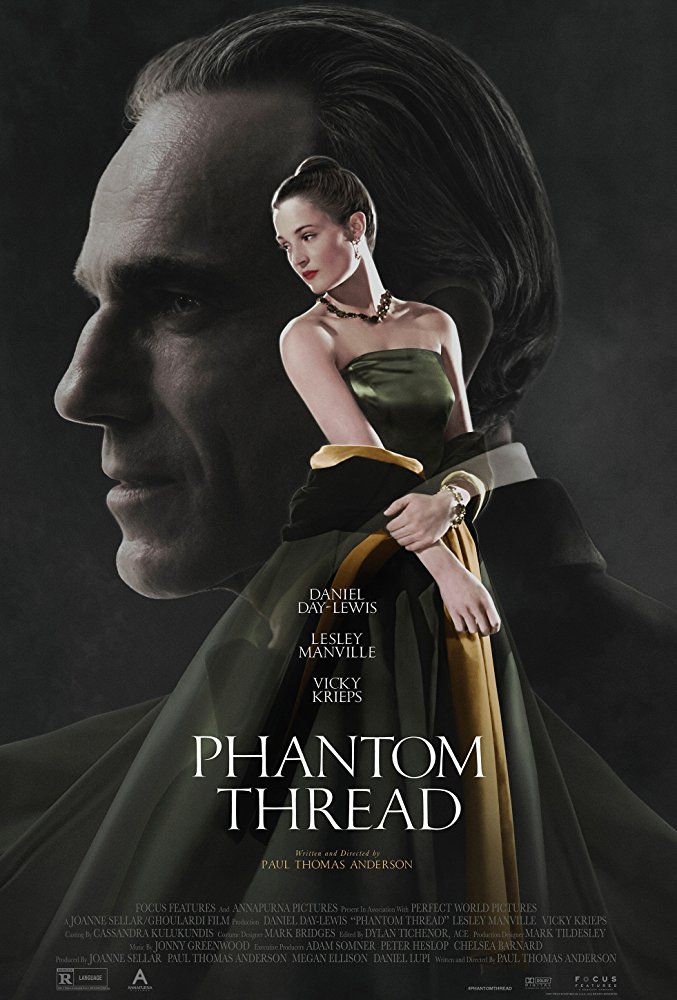
7. Phantom Thread – In 1950’s post-war London, renowned dressmaker Reynolds Woodcock (Daniel Day-Lewis) and his sister Cyril (Leslie Manville) are at the center of British fashion. Women come and go through Woodcock’s life, providing the bachelor with inspiration and companionship from time to time, until he comes across a young, strong-willed woman, Alma, who quickly becomes a fixture in his life as his muse and lover. Once controlled and planned, Woodcock finds his carefully tailored life disrupted by love. Nominated for 6 awards: Best Picture, Best Actor (Daniel Day-Lewis), Best Supporting Actress (Leslie Manville), Best Director (Paul Thomas Anderson) Best Original Score, and Best Costume Design.
At first glance, this movie seems like one that many people (including myself) would just skip right over. If I’m totally honest, I groaned when I saw this on the Best Picture list. That may sound harsh, but for me, the overall topic just did not grab my attention. It’s not one that I would normally say, “I’m so excited to watch a movie about love and dress-making”, but nevertheless I watched it and after assuming it would be #9 on my list I’ve gotta say – it’s way better than I expected.
In a story about a designer who falls in love with someone he meets out of the blue, this movie unravels into one of the most interesting case studies on a character in this entire field of nominated films. Before you skip right over this because it’s classified as a romantic period piece, take a chance on something that is perhaps different from your usual taste in films and watch one of the greats give a standout swan-song performance. It’s also Jonny Greenwood’s score that provides the sinister, anxious mood that lurks just under the surface of the Woodcock’s establishment. In certain ways, the movie is almost Hitchcockian in direction and story.
Daniel Day-Lewis is the standout role, which should come as no surprise when looking at his résumé. He’s been nominated Best Actor a record 6 times for an Academy Award, winning half of those nominations and here again in Phantom Thread he shows why he’s up there with Myerl Streep, Katharine Hepburn, and Jack Nickolson as one of the greatest of all time. The nuance of his character shows how meticulous Day-Lewis is about his craft. His character, Reynolds Woodcock, desires in life to not only make the best dresses but so that when people wear his designs, they would treat them with as much care as he, their creator. At one point in the film, someone acts out at a wedding and Woodcock is disgusted, not solely in her behavior, but that this person dared to disrespect his creation that she is wearing. Woodcock’s personality is full of narcism, idolatry to his work, and isolationism is his only comfort – even away from the ones he loves (or wants to love) most. Furthermore, when Alma, his young lover, steps into his life it unravels everything he so desperately and meticulously wants to satisfy his needs.
Where this film begins to fall apart is in its relationships. Whether it’s Woodcock and Alma or the dressmaking duo of Woodcock and Cyril, neither relationship is healthy by any measure. The question that director Paul Thomas Anderson is proposing in his film is what makes a relationship? From a biblical and scriptural standpoint here is the definition of godly relationships: “As God’s chosen people, holy and dearly loved, clothe yourselves with compassion, kindness, humility, gentleness and patience. Bear with each other and forgive one another if any of you has a grievance against someone. Forgive as the Lord forgave you. And over all these virtues put on love, which binds them all together in perfect unity” (Colossians 3:12-15). The basics of any relationship (whether marital, romantic, friendship or even just acquaintance) have to be rooted in something beneficial for both parties whereas in Phantom Thread those connection points are built on a foundation of toxicity that simply cannot last. The ending alone may leave you unsettled by the lengths to which Alma and Woodcock go to find “harmony” in their bizarre and unconventional lifestyle together. What we must remember is that God’s gracious, loving treatment of us is the basis for our treatment of others.
Overall Grade: C+
Projected Awards: Costume Design (It seems obvious right? A movie about costume design should win this category – easily!)
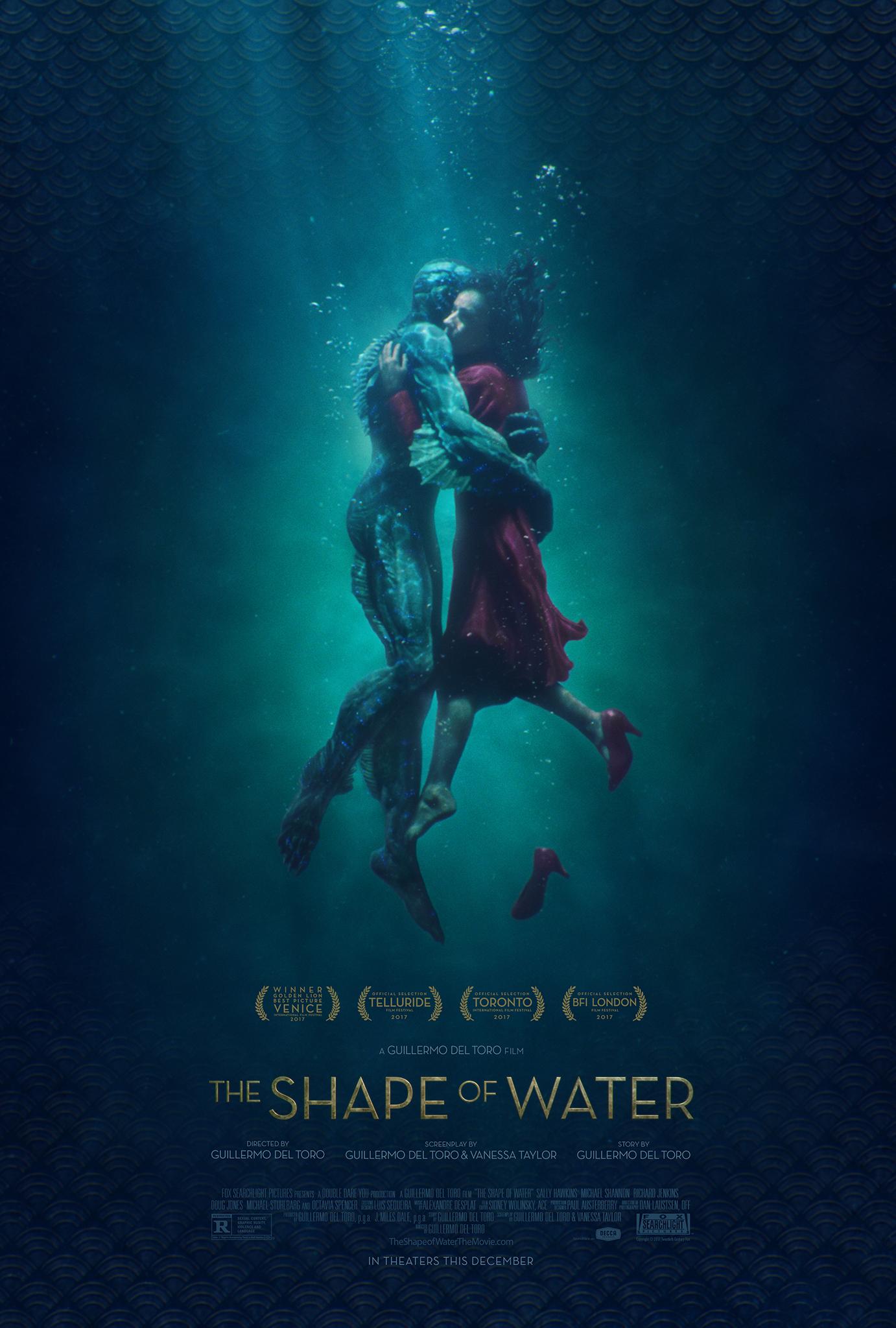 6. The Shape of Water – From master storyteller and movie monster creator, Guillermo del Toro, comes an otherworldly fable set against the backdrop of Cold War-era America of 1962. In a hidden high-security government laboratory, lonely Elisa (Sally Hawkins) is trapped in a life of isolation both physically and emotionally with her work. Elisa’s life is changed forever when she and co-worker Zelda (Octavia Spencer) discover a secret classified experiment. Nominated for 13 awards (only 1 shy of tying the all-time record): Best Picture, Best Director (Guillermo del Toro), Best Actress (Sally Hawkins), Best Supporting Actor (Richard Jenkins), Best Supporting Actress (Octavia Spencer), Best Original Score, Best Original Screenplay, Best Cinematography, Best Film Editing, Best Costume Design, Best Sound Mixing, Best Sound Editing, and Best Production Design.
Fantasy-epic director Guillermo Del Toro clearly put everything he had into this magical monster movie/romance, from a beautiful, labyrinthian visual scheme to a tale of love and empathy between two central broken characters. Certainly, The Shape of Water comes from a strange idea (which should be no surprise if you’ve followed any of Del Toro’s work), but it speaks to and about our culture today in a way that feels grounded even amongst all of the fantasy. Given that it’s structured, like Del Toro’s own Pan’s Labyrinth, as a kind of fairy tale, audiences may notice that it’s easy to see where the story is going, but that’s not necessarily the point Del Toro is trying to make with this film. After 25 years in the making for this monster creator, the journey of this film is less about the payoff, or even the mystery, than it is about simply connecting.
Does this story sounds familiar: “A castoff individual in distress meets a monster/creature that is terrifying but also broken in a way that only the main protagonist can fix. Therefore, the two then complete each other and find what’s been missing all along – each other.” Sure sounds pretty familiar if you’ve seen other works like Beauty and the Beast, Creature From the Black Lagoon, even Free Willy and the aforementioned Pan’s Labrinth – they all follow these same beats. Does that make it a bad film for copying others? No, given the fact that this work is masterfully executed and beautifully designed from start to finish. No wonder it’s nominated for 13 awards! (Though I do think it’s a bit ‘over-nominated’ in some categories) It simply has that special “it” factor that shapes this particular director’s viewpoints and Guillermo’s directorial fingerprints are all over this film’s style, camera movements, and love for period classical Hollywood. Plus the sweeping musical score by Alexandre Desplat is one for the ages in his long line of creative tones that encapsulate the tones of love with water.
Aside from the work aesthetically, the main actors are major standouts in this film both in their craft as well as subtlety. Sally Hawkin’s performance as Elisa could have simply been a run-of-the-mill character, but here what’s missing is actually what adds uniqueness. Elisa is deaf which makes for a challenging acting performance when you cannot use words to convey your message. Still, Hawkins is able to communicate her emotions through her face (particularly her eyes), hand motions, and playing off of the other actors. When she’s with her neighbor Giles you see the care of a friend. When she’s with Octavia Spencer’s character, charm exudes in their conversations. And when she meets the “monster” the two instantly have a connection even though neither really knows how to build this connection across such vast differences.
Though visually stunning that too is where the issues pile up – The Shape of Water is an overly graphic fairy tale that is at times is wanting to be sweetly sentimental, while at other times falls into exceedingly explicit and sexually immoral levels. What’s so frustrating about this shimmering love story is that it revolves mainly around Elisa’s need to feel love – she wants to be physically loved by someone. Is that wrong? No, we all have been created and feel the inundated desire to not only love, but to be loved – emotionally, spiritually, and yes – physically. However, what begins as simple affection for the poorly experimented on Creature boils over aggressively into something else entirely and grossly wrong. This unforgivable sin damages the sentiment of what should have been a sweet fairytale. For a movie so visually stunning it stabs itself in the back by feeling the need to oversexualize again and again; till it floods everywhere – but apparently, the critics and characters in this film see it as something to be wholeheartedly celebrated.
Here’s what Guillermo del Toro says about his title for this film: “The movie takes its name from Plato’s idea that in its purest form, water takes the shape of an ‘icosahedron’, a 20-sided polyhedron, evoking the idea that beauty, and humanity, has many faces… The Shape of Water is devoted to reminding us that everyone is beautiful and that it’s those we [cowardly] consider maimed and strange and frightening who will inherit the earth.” Correctly, beauty does have many faces but how should we define beauty? Is it the way that one feels physically with another person? Is beauty defined by what we see in the mirror or how we feel about ourselves? The underlying worldview message in The Shape of Water is that our feelings and impulses of love aren’t something that should be suppressed or rebuked, but instead should be lived out totally and openly without regret. This film could have told this unconventional story without including the graphic nudity that the camera repeatedly gazes at and with the clear implication of an interspecies relationship. But that is not the story that has been chosen to tell. What we have instead is an odd, jarring, and problematic fairy tale suited to please the worldview that love can be whatever you want it to be.
Overall Grade: C
Projected Awards: Best Picture, Best Director, Best Original Score, and Best Production Design
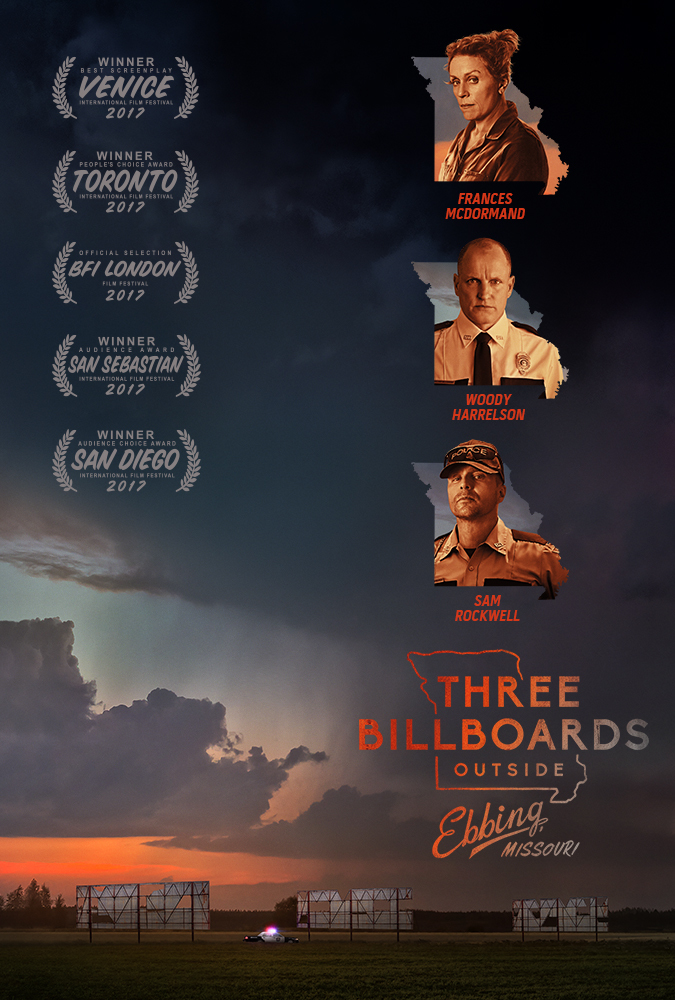 5. Three Billboard Outside Ebbing, Missouri – from director Martin McDonagh comes the story of a city on edge. Months have passed without a culprit in Mildred Hayes’ (Frances McDormand) daughter’s murder case and so she makes a bold move, painting three signs leading into her town with a controversial message directed squarely at the town’s revered police chief William Willoughby (Woody Harrelson). When his second-in-command Officer Dixon (Sam Rockwell) gets involved, the battle between mother and city police rocks the whole town smearing blame on all who deserve it unless someone answers for this heinous crime. Nominated for 6 awards: Best Picture, Best Actress (Frances McDormand), Best Supporting Actor (Sam Rockwell) Best Supporting Actor (Woody Harrelson), Best Original Score, Best Original Screenplay, and Best Film Editing.
If I’m being totally honest with Three Billboards, I’m still not really sure how I feel about it. It is the only Best Picture nominee that I had to watch twice because I needed to revisit it for more on the themes, performances, and the Gospel message. Is the film worthy of being a Best Picture? Yes – but don’t let that fool you. What McDonagh has assembled in his quippy and sometimes excessive writing style and talented group of seasoned actors is stellar yet suspicious and should be approached cautiously. It plays as a dark-comedy with difficult characters all struggling to cope with what’s happening in their small once quaint city. Together the sum of all these parts is simply a difficult oddball – which is why it lands here at #5.
What’s done extremely well is the acting. McDormand is the frontrunner for Best Actress because of her startling, haunting, and down-to-earth persona that is far and away the standout role amongst the three main leads in this film. She’s a broken mom who’s emotionally a wreck and desperate for answers. And on top of that – she’s willing to do anything to find those answers even if that means going right to the top of the investigation herself. She knows how to use shame for her own benefit and to get her way. Woody Harrelson’s character is most at odds with her because he feels that he is being unfairly thrust into the spotlight when all that he’s done is try his hardest to solve a case with little physical and testimonial evidence. That excuse does not fly with Mildred. The last of the big three is Sam Rockwell who plays a racist and sluggish police deputy under Harrelson’s character whose sole intention is to look out for himself. His journey in the film changes after an incident involving Mildred and the two of them are completely different people by the very end. And the credit for those character journies goes to writer/director Martian McDonagh who suspiciously was not nominated for Best Director even after winning other awards along the way to the big golden statue.
Where I continue to struggle with Three Billboards is there seems to be little hope for our main characters and for this small town. The growth that the characters have is perhaps inadequately described as sinking further and further down the rabbit-hole of sin willing to do whatever is needed for the cause – no matter who that hurts. Truth is paramount, but at what cost? I think most viewers of this film can agree that the search for truth has far exceeded what’s out there. To one character, in particular, this exploration drives them over the edge. For others, they find more sinister ways to handle their pain and search for the truth. But this small town of Ebbing, Missouri is painted with a broad-brushstroke of evil, racism, drunkenness, and morally indifferent citizens. And it’s not just the people – it’s also the cops and the government too. I wonder if the film is really being celebrated by everyone or is it just the Hollywood elites who view McDonagh’s smalltown setting as the breeding ground for all of the problems in today’s highlighted America.
As mentioned in the synopsis, this movie centers around something very devastating: the rape and murder of an innocent young girl. When there is a heartache in a small community like this where everyone knows everyone, people tend to treat those who are mourning differently. Mildred is all alone most days and when she does interact with people, they don’t know how to communicate with her. They’re scared she’ll snap at them for something that’s said, and so to avoid any misstep, they simply withdraw. Mildred’s got some family who stops by but they too don’t know how to cope with the ruin either. Even when the local Catholic church tries to step in and help, Mildred pushes back. She compares them to a gang and holds them culpable for their own past mistakes saying there’s no way they can help her when they’ve got their own mess to clean up.
Here’s how Mildred explains church: “There ain’t no God. The world’s empty and it don’t matter what we do to each other.” The redemptive hope has been lost for her. But as a Gospel message for viewers today of this film: there is hope. Amidst all of the darkness we face in our lives (and I pray none of us ever has to face a situation like what’s happened here in this film), God brings hope. For example, in Zepheniah 3:17, when the Israelite nation was exiled away from their home, the prophet told them to rejoice. “The Lord your God is with you, the Mighty Warrior who saves. He will take great delight in you; in his love, he will no longer rebuke you, but will rejoice over you with singing.” Care for those who are hurting, search for truth, and ask God to oversee justice in this world.
Overall Grade: B-
Projected Awards: Best Actress (Frances McDormand) and Best Supporting Actor (Sam Rockwell)
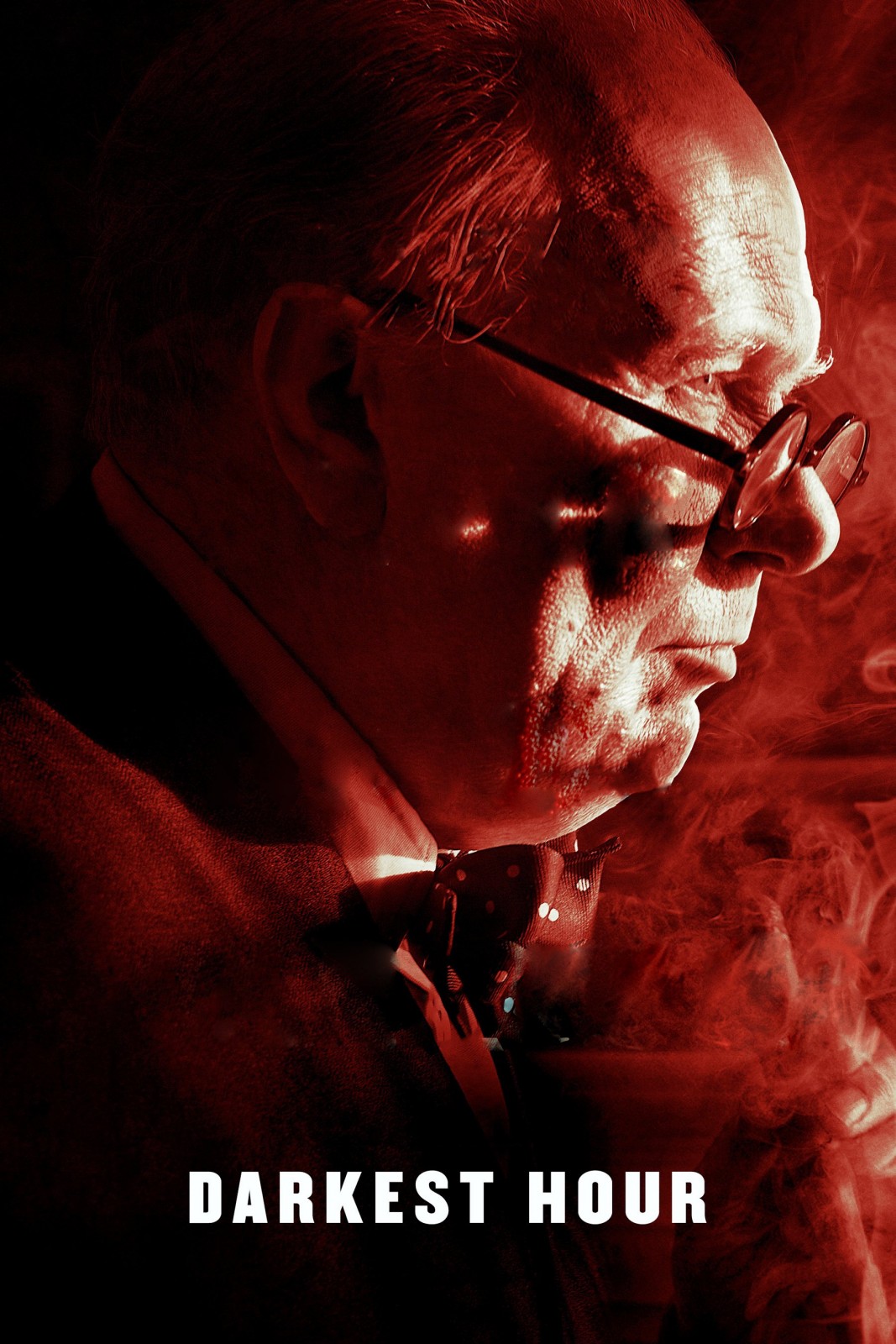 4. Darkest Hour – Within days of becoming Prime Minister of Great Britain, Winston Churchill (Gary Oldman) must face one of his most turbulent and defining trials: exploring a negotiated peace treaty with Nazi Germany, or standing firm to fight for the ideals, liberty, and freedom of a nation. As the unstoppable Nazi forces roll across Western Europe and the threat of invasion is imminent, and with an unprepared public, a skeptical King, and his own party plotting against him, Churchill must withstand his darkest hour, rally a nation, and attempt to change the course of world history. Nominated for 6 awards: Best Picture, Best Actor (Gary Oldman), Best Cinematography, Best Costume Design, Best Production Design, and Best Makeup and Hairstyling.
Here’s a quick spoiler alert – Germany loses the war. I’m sure you already knew that. But how the Allied Powers won the war is the bigger and broader story and here in this film, we’re treated to the action-packed drama of what happened at Dunkirk from across the waters in Britain. “How many of them are trapped?” asks Winston Churchill, Britain’s new prime minister. “All of them,” he’s told. It’s hopeless, some in Parliament suggest. Churchill wants to fight on. But should he? Centered around one of the most daring missions ever executed this Best Picture nominee takes viewers behind the curtain and into the war room where one man stood against his own party to change the world. This brave tale is one of two World War II films nominated this year for Best Picture and continues the streak now of 4 straight years nominating a war film for this prestigious category (Hacksaw Ridge [’16], Bridge of Spies [’15], American Sniper [’14]). Though the lowest rated film by most critics in this class, I found this to be worthy of not only the nomination but also an inspiring story told by the outstanding performance of Gary Oldman as Winson Churchill that pairs well with another Best Picture nominee.
The positive buzz for this film began the moment the first images started to be shown of Gary Oldman portraying Churchill. Many critics said that this was a PR stunt to get him the Oscar since Churchill has been played by so many actors over such a long time. Could he reshape the mold and make his performance something truly remarkable and memorable? You better believe it! In that first trailer released back in the early part of the summer, I was amazed not even being able to recognize Oldman in all the makeup and with his voice (which is why this film is also nominated for Hair and Makeup). Still, it just seems right. Oldman slowly and methodically plays out one of his best roles ever. Not to mention a few moments in this film that are sound-bite worthy of Oscar gold (check out one of those amazing scenes out HERE). Oldman commands the screen, even with all of the real-life Winston’s personal faults and blemishes, and finds a way to deliver a tour-de-force achievement that really seems to be destined to win that Best Actor award.
The only major fault that I had with this film is the character played by Lily James. She’s a wonderful actress who seems to turn up everywhere these days (Baby Driver, Downington Abbey). She’s charming and naïve as a young stenographer sent to record Churchill’s words. She’s shy at first but slowly begins to open up and not just accept her role but flourish under the wisdom of Churchill. All that being said, her story falters toward the end and never quite recovers. It’s not her fault – the story just becomes less about her and Churchill’s working friendship and moves on to the pressing world-saving issues at Dunkirk. It’s almost as though the scriptwriter meant to come back to her, but got distracted along the way and never completed her character arc.
So where is the Gospel message in a story about war? Actually, in the case of this film, the most surprising element isn’t even in the film – it’s actually what is left out that could add the most Gospel story elements. Darkest Hour focuses on the events surrounding the rescue at Dunkirk and the acceptance of Churchill as the newly trusted leader. However, it doesn’t mention anywhere in the movie or in the closing epilogue about the King’s call for a Day of Prayer and Repentance. Yes, you read that right! During the most critical time when tensions were at it’s highest throughout the British Empire, the King called on its people to seek God. They left something pretty substantial out if you ask me. Historians have even taken notice that the miraculous weather that grounded the German air force that day but enabled Britain to rescue its troops played a major role in the liberation efforts. Ultimately, it was God who rescued the British people during their darkest hour, when the world seemed to be at critical mass from all of its division.
As we today look back the world was divided then, too, but it was a cleaner divide. The good guys and bad guys were pretty easy to distinguish. As such, we felt more able to unite, to stand firm against a shared, obvious adversary. We knew what we had to do. How fitting it is then that Darkest Hour was released the same year as Christopher Nolan’s Dunkirk—so much so that, in some ways, these movies could, and I would suggest should, be watched as a seamless pair. Both take perhaps the most inspirational rescue in history and give it life and blood while challenging viewers to as Churchill demanded: “Never, Never surrender.”
Overall Grade: B+
Projected Awards: Best Actor (Gary Oldman) [Come on – the poor guy hasn’t won yet after all these years and after so many memorable roles!]
3. 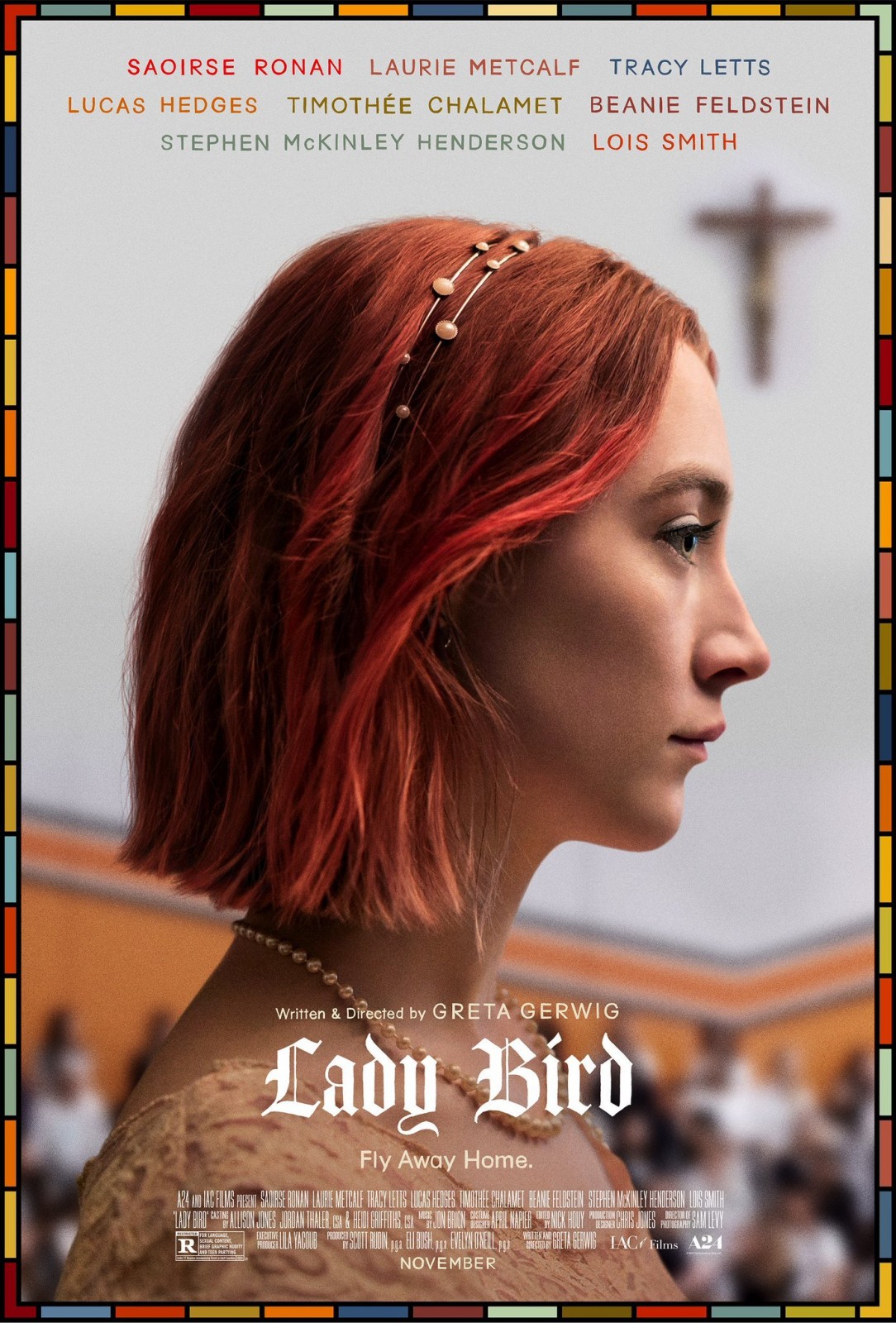 Lady Bird – Greta Gerwig reveals herself to be a bold new cinematic voice with her directorial debut, unearthing both humor and tenderness in the fierce bond between a mother and her teenage daughter. Christine “Lady Bird” McPherson (Saoirse Ronan) fights against but is exactly like her wildly loving, deeply opinionated and strong-willed mom (Laurie Metcalf), a nurse working tirelessly to keep her family afloat. Set in Sacramento, California in 2002, amidst a rapidly shifting American economic landscape, this film looks at the relationships that shape us, the beliefs that define us, and the unmatched beauty of a place called home. Nominated for 5 awards: Best Picture, Best Actress (Saoirse Ronan), Best Supporting Actress (Laurie Metcalf), Best Directing (Greta Gerwig), and Best Original Screenplay.
100% – That’s the score this movie had on RottenTomatoes for a very long time. At one point it was named the best-reviewed movie ever! And if you’re wondering how RottenTomates works, at the most basic level it brings together movie critics and reviewers for their thoughts creating a score. If they gave it a positive review it is considered “Fresh” while negative reviews are labeled “Rotten”. So, 100% means that 100% of movie reviewers liked the film which clearly says something! Though today that 100% no longer stands (as of writing this it’s down to a 99%) this film is still one of the best of the year and wholeheartedly deserves not only a nomination for Best Picture but to me is the first step in both Saoirse Ronan’s career and coming-of-age films to come.
Where to begin? The performances in Lady Bird are simply incredible. Ronan and Metcalf positively steal the show and I would love for one of them to steal an award come Oscars night. The brilliance of this film is the everydayness of a teenage girl and her mother. Lady Bird has “typical” teenage frustrations: her mom, high school struggles, friendship drama, her mom, romance or lack thereof, brother returning home, her mom, finances to get to college, and yes – HER MOM! The “overbearing mom”, played by Laurie Metcalf, is just trying to keep it all together, though passive-aggressively even though that’s exactly how Lady Bird deals with all the stresses too; like mother – like daughter. Mom works double shifts as a nurse just to keep her family afloat and all the while Lady Bird just wants to be treated like an adult. Mom and Lady Bird dance their way through the school year, bickering, yet in troubling times return to one another for comfort. The dialogue is fresh and sharp yet very natural, as are many of the smaller character arcs within the grand narrative. Who can’t relate to schoolyard romance, pretentious classmates, big dreams, or bitter disappointments? Boys, grades, sex, college apps, prom. She’ll make it all work her way if that’s what it takes. And that’s what director Greta Gerwig so smartly captures.
Though with all of the praise for this film there are a few issues. Firstly, this movie is foul-language heavy though I’m sure mainstream media will say “that’s how kids talk”, but let’s be honest – it’s not. This type of thing along with sidestepping major issues like sexuality/homosexuality and alcohol is shown for the “entertainment value” and, at times humor, which sadly is unfortunate. The other area of concern I had for this film is the clear lack of concern for anyone other than our main two characters when issues arise. For instance, at one point there is student whom Christine spends a lot of time with and who is revealed later to be struggling with depression and suicide somehow just disappears from the film with no resolution. That’s a bit troubling considering the mental health climate of today, especially with teenagers who feel constantly those hovering weights of time, money, career, friends, family, work, drama, and unless they’re strong-willed like Lady Bird they could mentally crash.
Finding the Gospel elements in Lady Bird can be tricky. On one hand, the majority of the film takes place at a Catholic high school, where students and faculty are attending Mass and reading Scripture surrounded by images of Christ. That should make this easy right? Well, much of this is depicted as nothing more than a ritual exercise, and Christine herself appears to be from her own description agnostic forced by (you guessed it) Mom to attend this “prestigious” school. She has little patience for religion (shown in all its glory as her and friend chow down on communion wafers like I do on a bag of Doritos) and she has no qualms about taking drugs, drinking alcohol, or engaging in premarital sex. Yet despite all of this irreverence, elements of faith are still present, and even our heroine Lady Bird isn’t immune. The nuns and priests running the school are always kind, selfless, and wise to their students despite all their irreverence and misbehavior. One even shows forgiveness to Christine after she pranks her teacher. So as the film comes to a close, Lady Bird’s character, who is in a different state of mind and heart than what she was at the start, now finds herself searching for what once was – including home. With messages of love, sacrifice, forgiveness, plus the importance of family, Lady Bird has some interesting spiritual thoughts lining its edges.
Overall Grade: B+
Projected Awards: None (but I’m pulling for Laurie Metcalf in the Best Supporting Actress category)
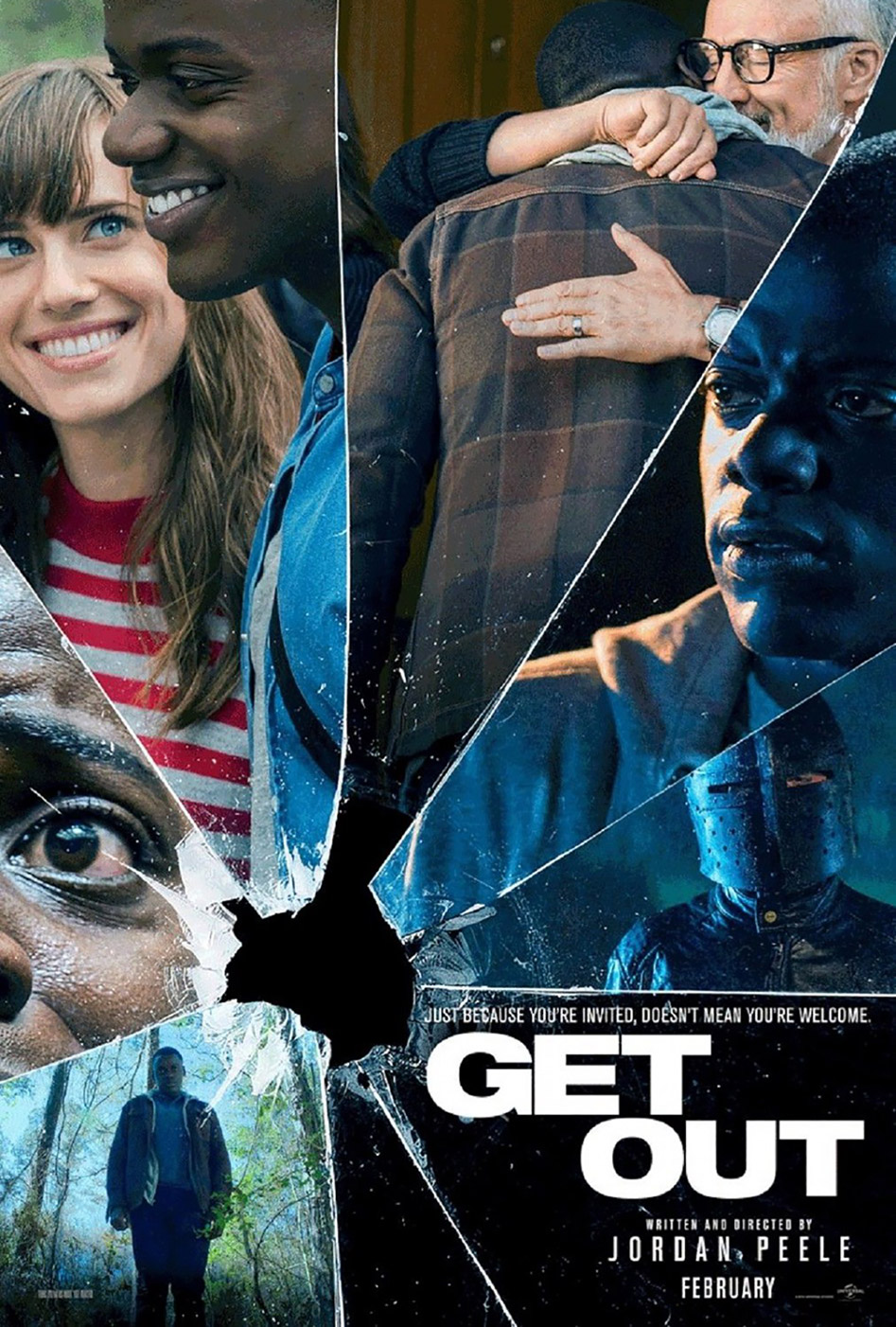 2. Get Out – In one of the biggest movie surprises of the year, Jordan Peele’s directorial debut released all the way back in late February is still being talked about in the movie-going circles and is receiving much-deserved recognition by the Academy. Chris (Daniel Kaluuya) and his girlfriend Rose (Allison Williams) go upstate to visit her parents for the weekend. At first, Chris reads the family’s overly accommodating behavior as nervous attempts to deal with their daughter’s interracial relationship, but as the weekend progresses, a series of increasingly disturbing discoveries lead him to a truth that he could never have imagined. Nominated for 4 awards: Best Picture, Best Actor (Daniel Kaluuya), Best Director (Jordan Peele), and Best Original Screenplay.
In the film industry, there is such a thing called “Oscar Season”. It begins after the summer blockbusters have ended their runs and these “artsier” films begin to slowly roll out in theaters near the end of the year as studios wait to release their award-hopeful films. Get Out, however, breaks that mold in influentially historic ways. Here are some fascinating statistics to back up this monumental breakthrough:
– Director Jordan Peele earned 3 nominations (Best Picture, Best Director and Best Original Screenplay). This makes him the 3rd person in Oscars history to earn nods in all 3 categories for a directorial debut and the 1st African-American to ever do so.
– Peele is the 5th African-American to earn a Best Director nomination in the history of the Oscars. If he wins, he could make history as the 1st-ever African-American director to take home the coveted award.
– The 1st film to be nominated for a Best Picture released in February since 1991’s The Silence of the Lambs. This means it also joins an elite group in style as it’s only the 6th Best Picture nominee in the horror genre joining the likes of The Sixth Sense (2000), The Exorcist (1974), and Jaws (1976).
…Basically, this film is not just a dark horse, but due to it’s staying power over a year after its release in theaters, it makes a strong contender for best in class.
From the opening bits, this film introduces seeds of interest that keep the momentum going from start to finish – all thanks to Peele’s directing style as well as breakout roles for the two major leads. Daniel Kaluuya plays Chris, an African-American boyfriend who justs wants the introductory weekend with his girlfriend’s family to go smoothly. We see his girlfriend Rose come to his defense and reassure him that her family is not only accepting but encouraging of their relationship and the African-American community (even saying that her Dad would have voted a 3rd time for Obama if allowed). But at every turn through Chris’ eyes, we see his rising concerned viewpoint. And little by little the panic sets in. The layers of mystery are peeled away leaving Chris and us as viewers with only one course of action – get out! It’s so masterfully crafted by a first time director you’ll think you’re watching a Hitchcockian film of old come to life or yet another critically acclaimed Steven King adaptation. There are moments of intense panic while also moments of levity thanks to the comic relief of Chris’ best friend who doesn’t initially seem to fit but becomes an intricate part of the movie’s fabric.
For many Christians, the word “horror” sets off alarm bells. Isn’t this an especially deviant and heartless genre that does little more than celebrating mayhem and bloodshed? Why would Christians venture anywhere near this morbid territory? Get Out handles the horror elements, not with jump scares and grotesque images, but the horror of prejudice and racism through character interactions and performance. What makes it so scary is the realisticness of the whole ordeal! Plus all of this is shown rather than preached – which makes for a far more memorable story with repeat viewings. Chris deals with his circumstances through an understandably complex series of reactions: understanding, gratitude, dismissal, and frustration.
But what does a horror film with racism at its center have to say to Christians in particular? Jesus’ troubling answer to the question “Who is my neighbor?” provides us with a very holistic answer. In Luke 10:25–37, we are told of a man who is stripped, robbed, savagely beaten, and left for dead on the side of the road. Several highly respected persons catch a glimpse and quickly scurry away, preferring not to get involved in such a shameful affair. Finally, a Samaritan, a member of a stigmatized people group for Jesus’ Jewish audience, emerges as the true neighbor of the story because he takes the risk of looking, of getting involved, and dealing with the grave injustice before his eyes. And, as Peele’s film shows, we cannot even begin to address the scourge of racism unless we first see its vicious outworking in our lives, our communities, and finally, our country. Get Out is not for everyone, but its message that the horrors of racism must be seen in order to be healed is for every man, woman, and child on this planet.
When a film on a $4.5 million dollar budget ends up taking home over $252 million in profit just here in America, even folks who had no intention of seeing it have had to take notice. I also now know what the “Sunken Place” is, and it may very well be the most terrifying thing I may have ever experienced in film. Add to that the rewards of multiple viewings that continue to add more to the narrative and you’ve got yourself one of the best films in quite a long time. Get Out is the kind of movie that will be studied, analyzed, and used as a teaching mechanism in high schools to graduate-level film studies courses 50 years from now. It is indeed that striking in its narrative weaving and cinematic incantation. Get Out is that good.
Overall Grade: A+
Projected Awards: Best Original Screenplay
 1. Dunkirk – May-June 1940: 400,000 British and French soldiers are holed up in the French port town of Dunkirk. The only way out is via the sea, and the Germans have air superiority, bombing the British soldiers and ships without much opposition. The situation looks dire and, in a moment of brilliant desperation, Britain sends civilian boats to its hard-pressed navy to try to evacuate the abandoned forces. This is that story, seen through the eyes of a soldier amongst those trapped forces, two RAF fighter pilots and a group of civilians on their boat – all part of this historic and miraculous evacuation fleet. Nominated for 8 awards: Best Picture, Best Directing (Christopher Nolan), Best Cinematography, Best Original Score (Hans Zimmer), Best Film Editing, Best Sound Mixing, Best Sound Editing, and Best Production Design.
When the 2017 year is all said and done there is one film that stands above the rest when it comes to a revolutionary vision, a cinematic experience unlike any other, and that appeals to the epicness of the occasion – Dunkirk. So many things are missed during history lessons in school and the miracle at Dunkirk was one of them for me. I’m drawn to the brave stories of soldiers who are against all odds, and this moment in history certainly fit that category. 400,000 men had no hope or chance of survival as the Germans pushed them through the town of Dunkirk to the open beach (they were even taunting them with leaflets showing them the inevitability of their demise). Left in the open, the soldiers waited for ships to sail them home—within sight from the beach. Best estimates were maybe 5-10% would escape back to Britain. But hemmed in from the land, air, and U-boats in the water, the battalions of Dunkirk should never have made it home. Yet they did and this film shows in all it’s splendor the miraculous from air, sea, and land.
Director Christopher Nolan has made some fine movies in the past (The Dark Knight Trilogy, Inception, and one of my all-time favorites The Prestige), but Dunkirk is being hailed by some as his masterpiece – and rightly so. It is a powerful story told cinematically like few have ever done. It’s not in the same style as say Saving Private Ryan with nonstop action laced with deep emotional character development. Here there is a distinct lack of dialogue that lends substance to this film. The desperate fight for life takes precedence over the need to talk it out. Instead of rambling monologues, Nolan plucks a heartstring of emotion and then thrusts viewers into war, never stopping to feel—exactly how actual war moves. Several stories run parallel, converging to perfection, as different lives clash together. The pace is frantic, from the first to the last shot and it’s all brought together with Nolan’s trusted and Oscar-nominated composer Hans Zimmer who’s ticking clock sounds add the intense frenetic feel bolstering the criticalness of every second. And that last shot is worth a million words, although there are none.
Dunkirk dramatizes the complexity of war—both its horrors and heroism—while admirably not straying beyond the boundaries of a PG-13 rating. Does every war movie need to show the brutality of D-Day or the bloodiness of Vietnam? No, because the focus here in Dunkirk is less on the characters and more on the sweeping story. The film even gives us moments of pure beauty: a British Spitfire, out of gas, silently gliding over the beach as British soldiers shout a salute from below. It’s the moments like this that show Nolan’s care for those who survived this horror. Walking out of a Calgary, Canada, movie theater where he’d just watched the premiere, 97-year-old war veteran Ken Sturdy was seen wiping tears from his eyes. “I never thought I’d see that again,” an emotional Sturdy, dressed in a jacket adorned with war medals and a military beret, told reporters. “It was just like I was there again. Tonight I cried because it’s never the end,” he said, referring to fight for freedom and peace.
Some viewers may not appreciate the grand scale of the story. It puts things in perspective but can make it difficult to get really attached to most of the characters (Mr. Dawson being an exception). And that’s reflective in what it’s nominated for – all technical awards, not acting. The timeline is a bit jumbled, too; events on the beach covered more hours than the boat’s journey which was, in turn, slower than the fighter pilots’ flight, but all seem to take place in the same space and time. It’s not a major flaw, just one of those things that make you go “hmmm.” This does not make for easy viewing. But it tells a story well worth the telling. The other nit-pick I’ve heard people criticize Dunkirk for is the volume – this is a VERY LOUD film! Bombs exploding, machine guns firing, people screaming at levels that’ll make you wonder if you’re TV’s speakers will survive too. “The noise of the bombs at Dunkirk did fall away in the air — it’s a massive, massive stretch of beach,” lead actor Kenneth Branagh said. “But trapped in Chris Nolan’s amazing vision of this conflict, you can’t get away from the sound of the bombs.”
While some characters displayed less admirable character traits (fear, selfishness), many were prepared to sacrifice themselves for others. Perhaps the most notable spiritual attribute of this story is grace: A man who caused a death was offered grace by the victim’s friends. This is the key Gospel message throughout Dunkirk – grace. The soldiers who made it home felt like failures but were extended grace by those who met them with cheers, blankets, and bottles of beer. In a time when the world was crumbling and defeat seemed imminent, grace was a choice made by many and it encourages viewers today to find grace even in the less extreme of circumstances.
Overall, Nolan’s heavy hand in drama versus the emotion is well-suited for this exact moment in history. Even the portrayal of the civilians called to action was handled with hisotical care. They had their own stories to tell, and Nolan let the glimpses shine through. He finds time for the massive action set pieces as well as the small, intimate stories to prosper. This is a movie everyone should see, to remind them grace, like love, is a powerful thing. And when I look back on this year’s films this is the one that is most likely to stand the test of time technically and thematically.
Overall Grade: A+
Projected Awards: Best Film Editing and Best Sound Editing (and maybe even Best Director???)
What do you think of the Best Picture nominees?
What other categories or Honorable mentions did you love from this past year? I badly wanted to put Star Wars: The Last Jedi in but I recognize how device some people feel (By the way – I LOVED it!)
Where did you see the Gospel in these Best Picture nominees and how can we as the church come Monday after the awards night use conversations about these films to bring people closer to faith?
What have you recently seen where you saw the Gospel? Feel free to share your thoughts on this show as well as other likes/dislikes/Gospel moments you saw in the film (remember don’t spoil it for others who haven’t seen it yet). And SHARE this post with others to keep the conversation going! Plan a movie night and then talk about your thoughts over dessert or extra popcorn!
Don’t forget to stay in touch here on our website as well as at our church! Feel free to comment AND SHARE on what you agree with, what challenges you here, or push back a little on what I’ve said. Don’t want to miss out on new posts? Be sure to check back for more Monthly Snapshots (always on the 1st of the month), “The Gospel According to…” reviews, and lots of other great things here on our church website and blog!
I haven’t seen any of these movies, but now I want to see all of them. Awards in two days…hmmmm