
The 2020 Oscars will be televised on ABC this coming Sunday night (February 2nd) making it the 92nd year of these festivities. Each year the Academy looks to celebrate the performances, directors, editors, composers, and overall designers for their accomplished works of art. And although each film on its own is subjective by each and every viewer, these are the ones that we’ll be talking about the morning after. With that said, sadly, this year there does not seem to be much variety in the Academy’s choices.
As you’ll see if you look over the list of films there are not nearly as many as there ought to be considering that this looked to be a year packed full of great flicks. And that is a HUGE mistake on the part of the Academy – to not celebrate, showcase, or nominate the diversity and wealth seen on screen. Instead, it seems, they chose to center in on a select few. One film critic that I greatly appreciate when it comes to insights and overall perspective of the film community is Dan Murrell from Fandom/ScreenJunkies who tweeted this the morning after the nominations were announced: “There were 104 nomination slots across all categories for narrative features at the Oscars. Only 34 different films were nominated. Two-Thirds of all nominations were multiple nods from a small group of films. In a year this rich with great movies, this is a slew of missed opportunities.” To look at it even a step further, all the Best Picture nominees this year received at least 4 nominations in other categories; films that did not get a Best Picture nomination all received less than 4 nominations elsewhere.
Here’s another stat to show you just how biased and ultra-focus the Academy seems to be on a select few of films, rather than the sum of the whole year’s filmography: 67% of all narrative feature Oscar nominees were released from October – December. 29% were released from April – September. Only a single nominee (How to Train Your Dragon 3) was released from January – March. Every year it seems that there are those films that are forgotten about or pushed aside for the agenda of the “Oscar-campaign” movies. But the problem goes deeper than just what film where nominated – it’s the nomination process as a whole.
This year, as compared to previous years, the awards season was truncated significantly leaving many critics and reviewers (and even myself who is neither of those two things) little time to evaluate and process through the wealth of cinema. Last year’s Oscar ceremony took place on February 24th – that’s a whole 3 weeks later! And this year’s films were no easy task to work through. If you were to total up the runtimes of Best Picture nominees from every year, you would spend the 2nd most time on the nominees for 2019 (21 hours and 15 minutes); that finishes only behind 1935’s 12 nominees that clocked in at 21 hours and 57 minutes. That’s a lot to watch, in a short amount of time, and with the treasure of other great stories out there to see it’s a shame for storytellers.
So why do I do this? What do I get out of a silly awards show? To me – the Oscars are not about the glitz and glamor or really even about who wins or loses. My main focus and joy comes from the stories these authors, characters, actors, and filmmakers are telling us and how to evaluate those through a biblical worldview. It challenges me to see, hear, listen, and respond to what the filmmakers are sharing with us. Some of the films this year were very dark in their subject matter and nature. Others were light-hearted and more the kind where you stuff your face full of popcorn during fun entertainment. And most of all, there were ones that really stuck with you and made you think, evaluate, and tell others about the moving piece of art you saw.
You and I may have different tastes in movies (and that’s ok).
You and I may completely differ our opinions when it comes to Hollywood’s “Best” films (and that’s ok too).
But remember…if these films are selected by the Academy as the “best” then there’s something in these stories that’s worth investigating.
There’s something in these films that resonates with people.
There’s something about these films that goes further than box office profit.
There’s something special about the characters, the visuals, and the direction that makes people say, “Wow!”
There’s something…and I want to know what it is and how I can speak into the conversations surrounding these stories!
Remember this as you check out these films or watch some of your own favorites. In the end – ALL stories matter! Even in the stories told by secular, progressive, and often hypocritical Hollywood, as a follower of Christ I can still see, celebrate, and present echoes of the one story written on every human heart – the Gospel.
So here it is! Beginning with some HONORABLE MENTIONS (in no particular order) and then working my way from my #9 to my #1 favorite of the Best Picture Nominees, I’ll give a non-spoiler synopsis along with my likes, dislikes, and a brief picture/thought on the Gospel that I saw or that we can tell. I’ll also give a grade for each movie and a prediction of the awards that these films might receive. ENJOY!
*Just a quick reminder: there are NO SPOILERS! So feel free to read without me giving away the big reveals or moments that are special to each film.
*Remember too – these are MY own feelings and we might not always agree (and that’s ok) – so feel free to disagree and share your own thoughts about it in the comment section below!
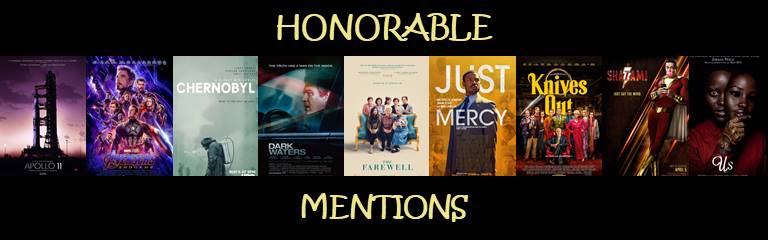
Apollo 11 – After scouring through over 11,000 hours of old and newly discovered audio and video from the Apollo 11 mission to the moon, hear straight from Neil Armstrong, Buzz Aldrin, and Michael Collins about the journey of a lifetime. This is the best documentary this year and (just like last year) did not make the nomination list. Even though you’ve seen it again and again, seek this one out.
Avengers: Endgame – The culmination of a 23 film saga that leads fans on a film-ride of comic-book mania. This final entry went bonkers at the box-office shattering records all over the place. If you haven’t seen this big finale yet, make sure you do so!
Chernobyl – Ok…I’m breaking my own rule here and including a TV mini-series that is not a movie. But when my wife and I sat down to tackle this 5 episode 5.5 hour story, we were enthralled from start to finish. A MUST see that is so timely in asking questions like: “What is the cost of lies?”
Dark Waters – Mark Ruffalo plays a lawyer who is supposed to protect the major corporations from petty legal cases. But what if the truth was so undeniable that what was uncovered was actually poisoning every human being on the planet? Experience this true story that’ll have you digging even deeper into the absurdness of this hidden dark secret that is in your home and body right now.
The Farewell – The lead actress for this film won the Golden Globe and wasn’t even nominated in this year’s Academy Awards. That seems strange, especially after you see what Awkwafina pours out on screen. The musical score is superb and if you give it a chance, this story of family loss will have you cherishing your own family even more.
Just Mercy – This powerful story is what is needed in today’s culture. A man fighting against the “bad cards” that life dealt him and his desire to find freedom and forgiveness. Jamie Foxx delivers what is probably his best performance in over a decade and shamefully, even with an “A+” Cinemascore, this one is still being critically overlooked.
Knives Out – Everyone loves a “Who-Done-It”. We’ve all played and have seen the impacts in the culture of things like the board game Clue. Whether it be something we read or seen on TV and film (Sherlock, Se7en, Murder on the Orient Express) there’s just something intriguing about a good mystery. So strap in and hold on for a whole new wild ride helmed by Star Wars: The Last Jedi director Rian Johnson.
Shazam! – DC Comics has been making movies from their comic-book library that are often seen as dark or gritty. This one though is the most light-hearted and joyous of any of the previous from DC. It’s one you can watch together as a family with a great message, silly enough villains to not weigh you down, and laugh out loud moments that’ll make you say: “Shazam!”
Us – Every single year I have to get on my soapbox and be frustrated by a film or performance that had it come out later in the year would be an Oscars darling (2019: A Quiet Place. 2018: Logan). This year it is Jordan Peele’s horror-thriller about a family’s beach vacation that turns to chaos when their doppelgängers appear and terrorize them. Lupita Nyong’o should be a Best Actress contender for her incredible performance!
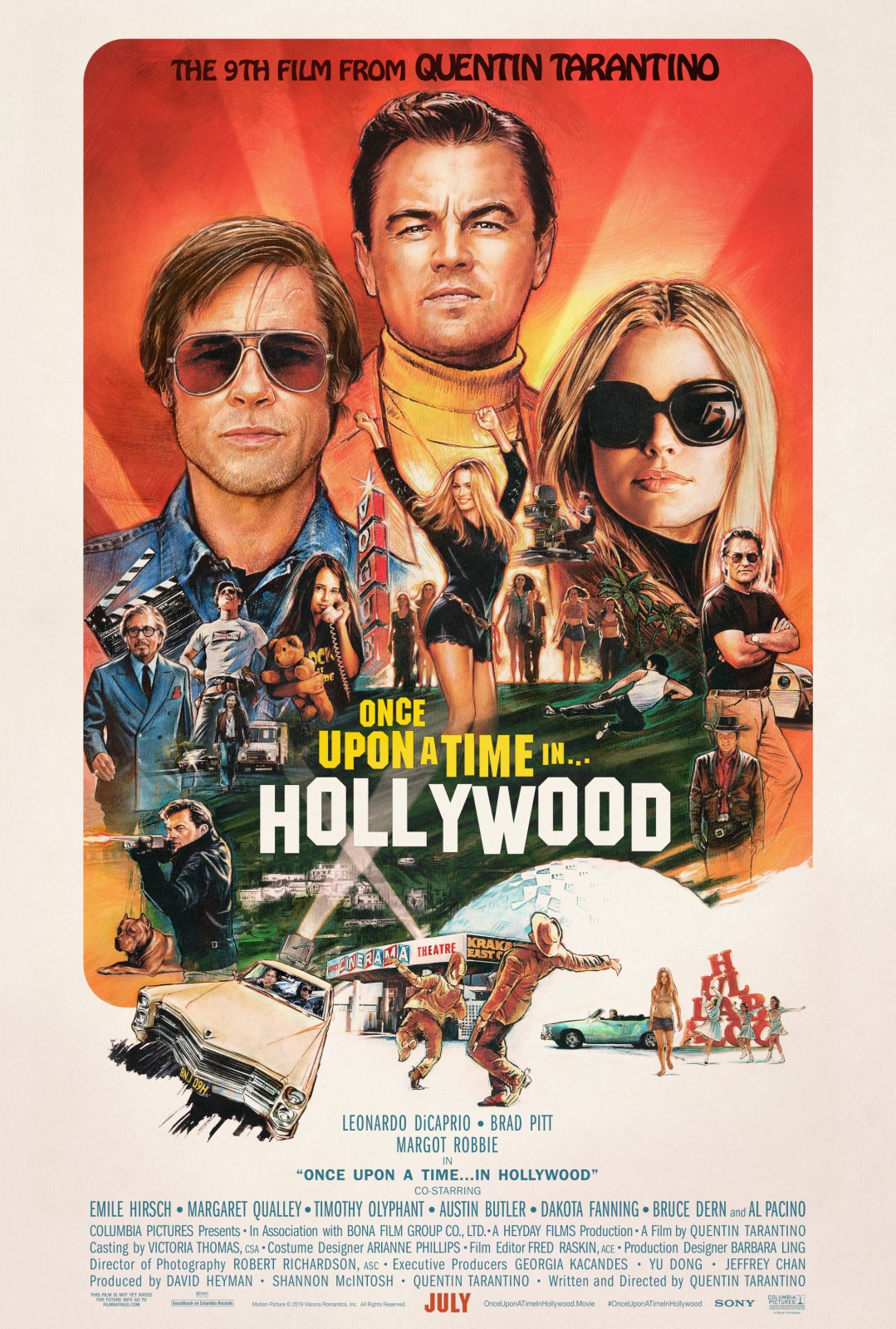 #9. Once Upon a Time…In Hollywood – A faded television actor (Leonardo DiCaprio) and his stunt double (Brad Pitt) strive to achieve fame and success in the film industry during the final years of Hollywood’s Golden Age in 1969 Los Angeles.
Nominated for 10 Oscars: Best Picture, Best Director (Quentin Tarintino), Best Lead Actor (Leonardo DiCaprio), Best Supporting Actor (Brad Pitt), Best Original Screenplay, Best Cinematography, Best Costume Design, Best Production, Best Sound Mixing, and Best Sound Editing.
FUN FACT – Silly, but true: Once Upon a Time in Hollywood is the 1st Best Picture title to contain the words “Once,” “Upon,” or “Time”.
Quintin Tarintino is one of the most well-known names in the film industry. His films are often heralded as the best of the best whether it be his 2-part Kill Bill series, the cult-classic Pulp Fiction, or the more character-driven pieces such as Django Unchained. And I’ll be fully honest, though I’ve seen a number of his works, I’m not much of a Tarintino fan. His product, to me, always carried too much hyper-aggressiveness coupled with an overabundance of sexuality, profanity, and/or gratuitous violence as a crutch to balance out his quippy storytelling tropes. However with that said, Once Upon a Time…In Hollywood might just be his most restrained film to date.
The shining stars of this film (as you might guess from a movie about the golden age of Hollywood) is all about the actors. Brad Pitt and Leonardo DiCaprio go together in this film like PB&J – there’s something magical about two stellar award-winning actors who love what they do so much that these new characters come alive so effortlessly. There’s a particular moment that focuses on Leo’s character, who is an actor, performing a scene with a young girl that is hilariously funny and she tells him after the scene cuts that she was amazed by his execution. That’s a microcosm of the entire film. I should also give a mention to Margot Robbie, who plays Sharon Tate, because she holds her own against these two icons of the industry and I would have liked to see her character arc grow a little further.
Leo and Pitt may be the biggest stars, but what is hard to take your eyes off of is the impeccable production design of the film’s set. A 4-block stretch of Hollywood Blvd. was shut down at times for filming while the rest was transformed back into the 1960s by recreating storefronts and theaters with impeccable detail, even down to the pamphlets in the windows. Tarintino wanted Once Upon a Time…In Hollywood to accurately capture the vibe of 1969 and many of the sets are still up today as a promotion to the movie’s Oscar-winning chances.
But what’s lacking in total is a storyline worth following. Everything so far has been about the actors and the set design, but the movie doesn’t necessarily go anywhere. It meanders around creating excessively long and uninteresting twists that lead to little consequence – that is till it makes a 6-month time jump. Don’t be fooled by the glitz of Hollywood, the talent of the actors or even the playfulness of the film’s title – this film closes with a 40-minute fairytale of violence that’ll leave a sick taste in your mouth. The pleasantly mild-mannered Tarintino just cannot resist a bloodbath of violence.
If you didn’t pick up on it earlier, Margot Robbie plays the real-life character of Sharon Tate – yes that Sharon Tate who was brutally murdered alongside four others in her home by members of the Manson Family. Fans of this director know what they are getting into when they sign up for his films, but this feels different because of the historical realness set throughout the film. Tarintino chooses to walk a fine line between what he sees as comically violent entertainment and what many (like myself) see as not only disrespectful and distasteful but even more so degrading to the memory of the Tate family tragedy. There are moments of violence that, without creating hyperbole, are beyond what you’ve seen before on film or in this director’s previous features. If I had stopped before the final plot-line, I might have given it a C+/B- grade, but this final act does such damage.
FINAL THOUGHT – A milder Tarintino flick still doesn’t absolve this film of the final bloody, violent, and grossly-imaginative act that was probably meant to be entertaining, but ended up being revolting.
Overall Grade: C-
Projected Award Wins: Best Actor (Brad Pitt), Best Production Design, and Best Original Screenplay
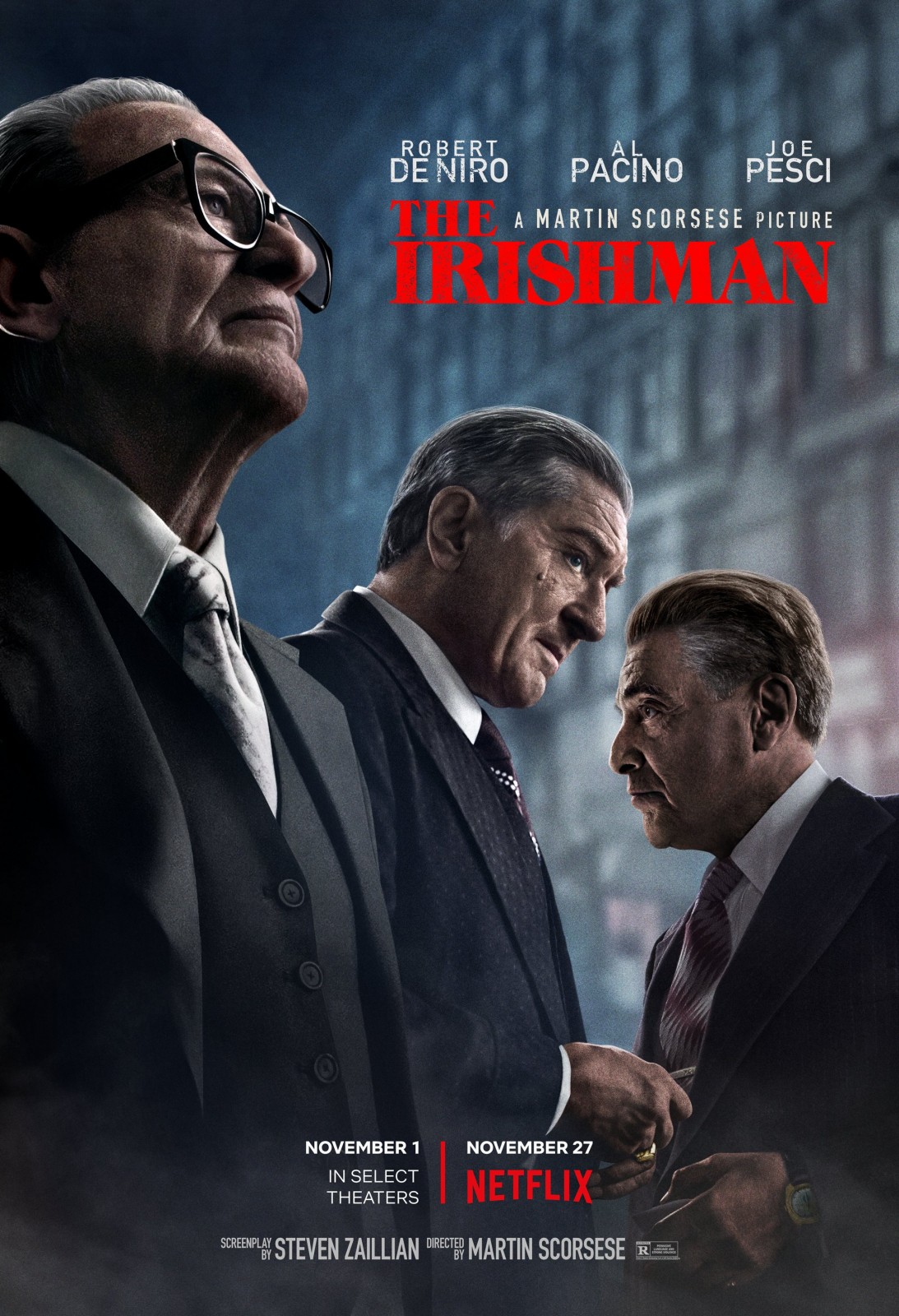 #8. The Irishman – A biographical crime thriller following the life of Frank Sheeran (Robert De Niro) as he recalls his past years working for the Bufalino crime family. Now older, the WWII veteran once again reflects on his most prolific hits and, in particular, considers his involvement with his good friend Jimmy Hoffa’s disappearance in 1975.
Nominated for 10 Oscars: Best Picture, Best Director (Martin Scorsese), Best Supporting Actor (Al Pacino), Best Supporting Actor (Joe Pesci), Best Adapted Screenplay, Best Cinematography, Best Costume Design, Best Production Design, Best Film Editing, and Best Visual Effects.
FUN FACT – This film runs for 209 minutes, making it the 6th longest Best Picture nominee, and the longest of the last half-century behind only Cleopatra (1963): 248 minutes, Gone with the Wind (1939): 238, Lawrence of Arabia (1962): 222, The Ten Commandments (1956): 220, Ben-Hur (1959): 212.
Robert De Niro + Al Pacino + Joe Pesci + Director Martin Scorsese = an Oscar-darling frontrunner. Here are 4 titans of the film industry that together have a combined 200+ years of service in front of and behind the camera to go along with their 30 Academy Award nominations and 5 wins. And so from the moment of this film’s earliest announcement (10 years ago), people got excited – very excited. It reminded them of Goodfellas, Casino, or even Raging Bull and that alone vaulted this film into a “must-see” watchlist. Once Netflix was tabbed with the major release the streaming subscribers circled the date ready to enjoy the next mob-boss classic. Though, what many folks did not realize was that they were going to need to commit some time to watch this one – like, a lot of time! 209 minutes (which is 3 hours and 29 minutes long) is quite a stretch for viewers that in the end, though this film is a great watch and is nominated for acting and film production awards across the board, it might just be a bit too much.
The commitment to watching a film or even a TV show is a time-consuming act for us all. And unless you’re trying to drive others around you nuts, the standard practice is to watch the movie/show, from start to finish, in that one sitting (minus a bathroom or snack break). As a parent of a young toddler, I know that there are very few hours of “free” time a day to sit and watch something the whole way through that isn’t a binge of Puppy Dog Pals. I liked this film, but the more and more I thought about it as the weeks went on, the less and less I actually remembered from it. See, here’s the thing: some films “earn” the longer runtimes and those hours whisk by; The Irishman is not one of those. For example, the 11-time Oscar-winning Lord of the Rings: The Return of the King is hailed by many as one of the greatest films concluding an expansive and beloved trilogy. It carries a runtime of 3 hours and 21 minutes (just 8 minutes shy of The Irishman). Their stories, genres, and target audiences are largely different, but it is hard to find someone who thinks Frodo and the gang’s final journey should be split into a 4-part episodic documentary the way that people united under that same idea for Scorsese’s Netflix marathon.
It goes without saying, but the three lead actors are phenomenal across the board. The film is told from De Niro’s character who is aging and reflecting on the mistakes he feels he has made over the course of his life. Al Pacino plays the character that you’d expect him to – power-hungry, relentless, and feared by just about everyone. The real gem in my eyes was Joe Pesci whose performance is subdued, meek, and heartwarmingly loyal which is a surprising choice given his history of characters played previously. But when he was approached by Scorsese for this role that would pull him from the comforts of his 9-year acting retirement, Pesci needed to be coaxed. It reportedly took him being asked 40 times for him to finally say yes, mostly in large part thanks to his close and honest friendship with De Niro. In an extension of these actor’s vast acting skills, they were also aided by groundbreaking CGI technology that would transform the aged men back into their prime youths along the story to be told over the course 40+ years without the need for recasting. This may, in fact, pave the way for more of our favorite actors of old (or even beyond the grave) to reappear on screen again – yes I’m talking to you, Alec Guinness!
Though the message of this film can get lost in the runtime, it does bear fruit for discussion. Like much of Scorsese’s work, this one weaves deeper, sometimes even spiritual messages into the mix. The Irishman deals deeply with sin and confession, family and betrayal. As the main characters age through the years of this story, they become more introspective and reflective of their mistakes of youth and ruts those choices have locked them into. Even the scenes of violence and suspense (which are bloody and frequent) are deliberately dispassionate as if to confess that these things should not be seen or spoken of. And it’s even surprisingly, frequently touching and funny. Overall, The Irishman leaves off with many questions, about legacy and regret, from a director in his autumn years who’s looking back more than forward but is still in awe of the mysteries of life.
FINAL THOUGHT – The Irishman is a GREAT 2.5-hour film that gets a little gratuitous with a 3.5-hour runtime, but many will forgive that stretch and concede to Scorsese to work his magic in the script, characters, and behind the camera.
Overall Grade: B-
Projected Award Wins: Film Editing and Visual Effects
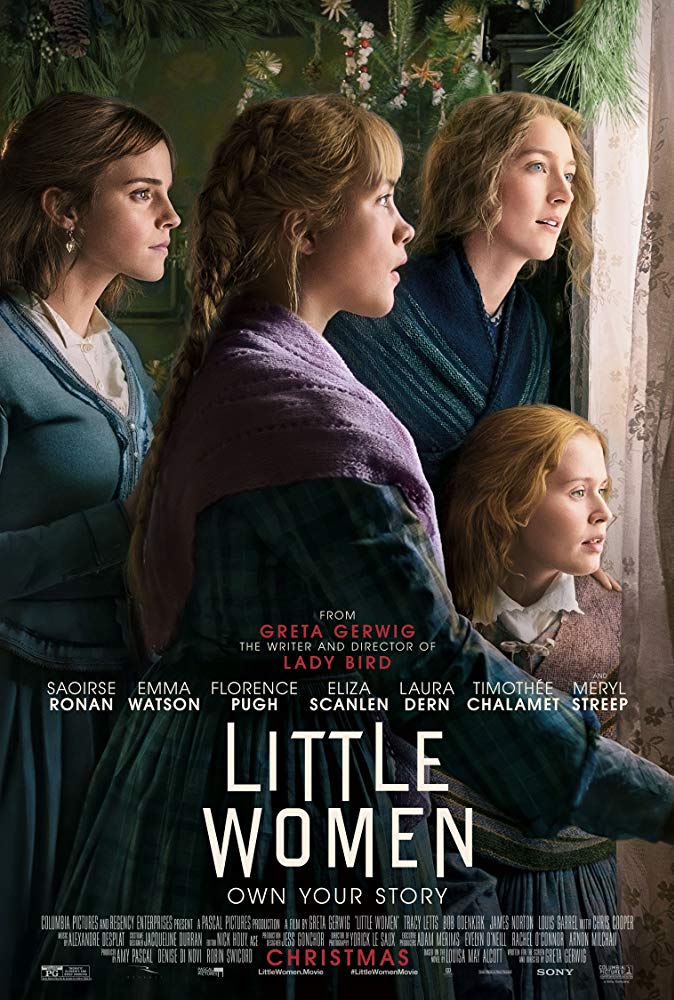 #7. Little Women – Jo March (Saoirse Ronan) reflects back and forth on her life, telling the beloved story of the March sisters – four young women each determined to live life on their own terms.
Nominated for 6 Oscars: Best Picture, Best Lead Actress (Saoirse Ronan), Best Supporting Actress (Florence Pugh), Best Adapted Screenplay, Best Costume Design, and Best Original Score.
FUN FACT – Jo March from Little Women joins Esther Blodgett (A Star Is Born), Leslie Crosbie (The Letter), and Queen Elizabeth I (Elizabeth) as the only characters with multiple Best Actress nominations. In addition to Saoirse Ronan, Winona Ryder was nominated for the 1994 version.
Louise May Alcott’s story is so well known, I’m not sure I even need to refrain from major spoilers. It’s been the source of 6 different film adaptations, 12 TV adaptations, and is such a well-known piece of literature to most of us that even Friends can’t help but poke fun while spoiling it all (Joey doesn’t know the BIG SPOILER). But for the sake of the one or two of you who don’t know, I’ll refrain. This 2019 version of Little Women takes the approach of a less paint-by-numbers adaptation and chooses to follow the character arcs of the sisters. What that means is, the storyline does not go in the order you think does if you’ve read Alcott’s book. In some ways that is beneficial to the overall story and it plays to the strengths of director Greta Gerwig and her outstanding cast of strong and vibrant women.
Saoirse Ronan follows Gerwig towards another Oscar-nominated performance after 2018’s Ladybird and once again shows why she is the powerhouse young actress primed to be on screen for years to come (move over Jennifer Lawrence). She brings the lead of Jo March to life in enlightening and fresh ways focusing on her as the centerpiece of the fearsome foursome’s love and passion. Emma Watson and Eliza Scanlen (Meg and Beth respectively) are also quite good compared to their most recent counterparts from the 1994’s film adaptation. But the most challenging, and for many readers/viewers the sister hardest to identify and be sympathetic towards, has always been Amy March. Gerwig effectively elevates this character to new heights that nearly stole the whole movie for me so be sure to keep your eye on the actress Florence Pugh as well in the coming years. This stellar cast leans on the director’s creative script that many feel should have been recognized by a Best Director nomination for Gerwig alongside her other awards – and it’s hard to argue against, though, there’s no one on that list I would take out in place of her.
The biggest drawback of this otherwise stellar adaptation is the creative choice by Gerwig to play with the storytelling through time. Normally this style would not be an issue and when other filmmakers do this same “trick” they may or may not choose to do it the same way, but Gerwig’s choice to not tell or hint to the audience of a jump in time causes much confusion. One moment Laurie is telling of his deep love for Jo and in the immediate next scene, with no warning, Laurie frustratingly ignores Jo in favor of Amy. The viewer moves from scene to scene looking for timeline markers to compose themselves and will need to rewatch this flick to catch all that they missed (or need to correct again). I’ll admit, I knew going into our viewing of this film the director’s choice to tell a non-linear story, but even as prepared as I was, I still found the experience at times jarring lost in the timeline of events. For a novice of the overall story, their lack of knowing the characters beforehand will only add to their unsettling viewing experience.
Since Alcott’s famous novel was first published in 1868, there have been a multitude of adaptations. And while there are stalwart opinions regarding which of those is “the best,” Gerwig’s version of this classic faithfully gives fans more of what they adore from the beloved March sisters. Jo, Meg, Beth, and Amy have their share of flaws. Yes, they bicker and tease and overreact and hurt one another. But they also forgive and support and trust and love one another, too. As Jo eventually says, “Life is too short to be angry at one’s sister.” One of the reasons so many creators over the years have chosen to adapt this piece is because of its timelessness even amongst the backdrop of the Civil War. The story of Little Women doesn’t offer a formulaic path to love and success, wisdom and happiness. It shows the pain that must be experienced, the losses that must be endured, the struggles that must be faced. And in the end, the March family finds true joy through the kindness that they show to others.
FINAL THOUGHT – While struggling to not lose the audience in a non-linear storyline, this special adaptation brings focus on the depth of Alcott’s characters helmed and acted so wonderfully that it is easy to see why the story is told from one generation to the next.
Overall Grade: B+
Projected Award Win: Costume Design and Adapted Screenplay (because Gerwig missed out on a Director’s nomination)
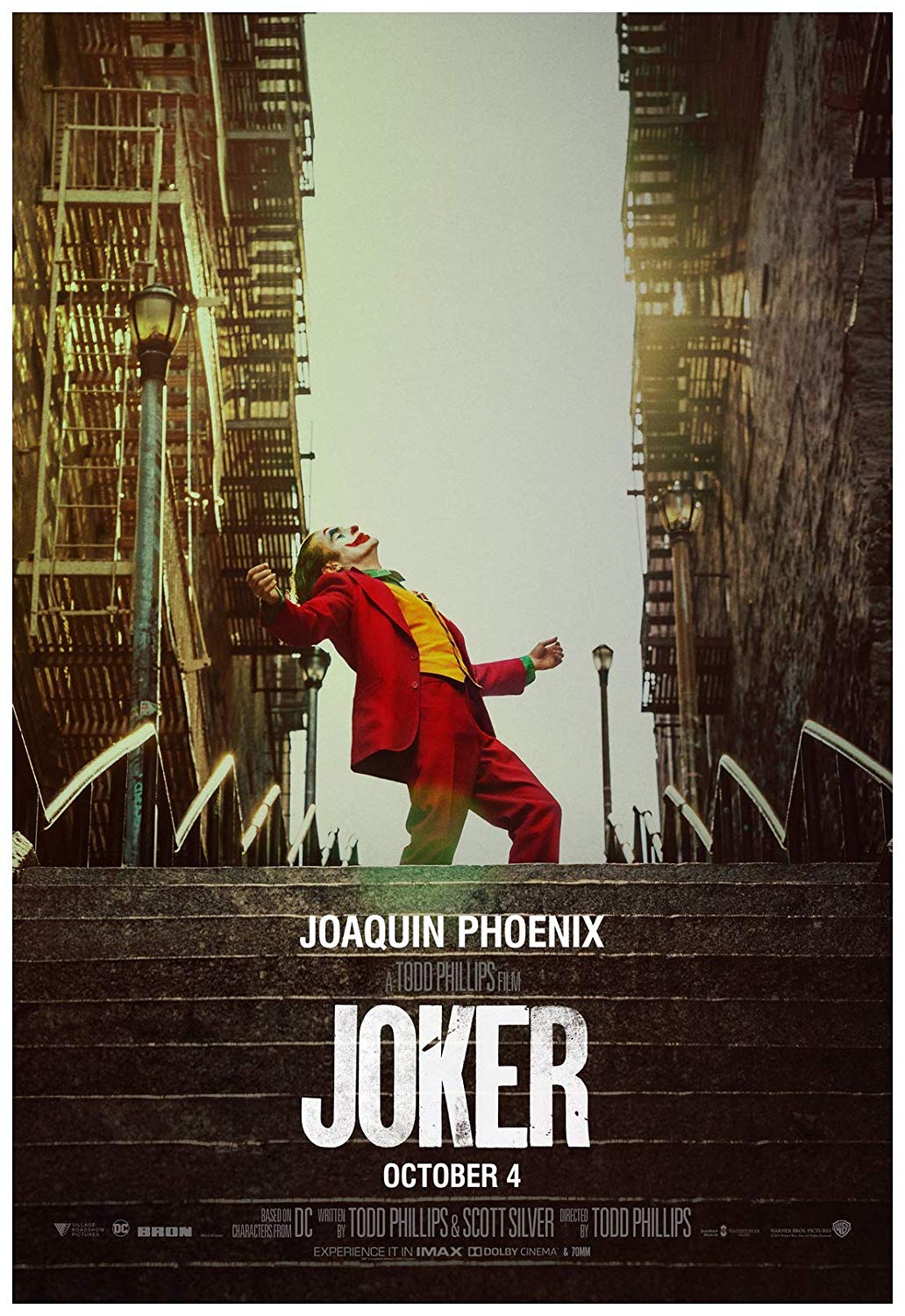 #6. Joker – In Gotham City, mentally troubled comedian Arthur Fleck (Joaquin Phoenix) is disregarded and mistreated by society. He then embarks on a downward spiral of revolution and bloody crime. This path brings him face-to-face with his alter-ego: the Joker.
Nominated for the MOST categories (11) at this year’s Oscars: Best Picture, Best Director (Todd Phillips), Best Actor (Joaquin Phoenix), Best Adapted Screenplay, Best Cinematography, Best Costume Design, Best Hairstyle and Makeup, Best Orginal Score, Best Film Editing, Best Sound Mixing, and Best Sound Editing.
FUN FACT – Hildur Guðnadóttir is the 7th female composer to be nominated for Best Score in the 92 years of the Academy Awards and is seen by many to be the frontrunner in this category. She has many other outstanding works such as Sicario: Day of the Soldado and the HBO mini-series Chernobyl.
Comic-book fans were first introduced to the live-action Joker in Tim Burton’s 1989 Batman. As Michael Keaton’s Batman nemesis, the Joker is seen as silly in nature with quippy lines such as: “If you gotta go, go with a smile!” as well as that cringe-worthy dance scene in the museum. Fans saw the Joker character as campy and clearly not up to par with the great and just Batman. The Joker returned again, but this time in manic fashion with Heath Ledger’s Oscar-winning performance in 2008’s The Dark Knight. This version of the Joker embodied themes of chaos, anarchy, and obsession. He expressed a desire to upset social order through crime and defined himself by his conflict with Batman. Many considered Ledger’s performance to be “untouchable” especially considering his untimely death following the film’s release. That is until Joaquin Phoenix and Todd Phillips took the leap to bring this character front and center (without Batman) and deliver the origin of the Joker’s dark and twisted tale. But what you are about to see is not for the faint of heart or for the pleasures or joys of movie viewing.
The star of the show is Joaquin Phoenix and there’s no denying that he is the shoo-in for the Academy Award for Best Actor. Everyone that watches this film cannot unsee the levels to which Phoenix dives, commits, and contorts himself to drive home the devilish nature in this character. It may, in fact, be his best performance ever in a film, which is saying something for a man whose filmography is loaded with amazing works: Gladiator, Walk the Line, Her, The Master, You Were Never Really Here and the list goes on! He and Phillips together have created something unsettling and disturbing that was not there in previous adaptations. Perhaps that is because of the timeliness of Joker.
I cannot remember who said this off-the-cuff remark, but their comment about Joker was: “This film represents 2019.” Batman’s famous nemesis isn’t just villainous any longer; he’s a heartbreaking mistake that could have been prevented. Everything even in the color scheme of this film reads grey and bleak with the only pop of color being either the blood of Joker’s next victim or the wild brightness of his clown makeup ensemble. In this very bleak film, the bright colors of the Joker’s clown makeup offer a violent, horrifying escape. It’s no coincidence that Joker is set during a garbage strike, given that humans here are thrown to the curb just as easily as trash bags. For reference to other films of this style and nature, think of Taxi Driver or perhaps the lesser-known but Phillips’ greatest influence for this film 1982’s The King of Comedy. Both are set under the same darkness and bleakness that ushers in that “devil in the pale moonlight.”
How can a story so dark and with a character that is not by any stretch of the imagination a “role model” have any benefit today? For starters, this gloomy film managed to draw in globally over $1 billion (the highest of any of the Best Picture nominees in 2019). Many went because it was a “comic-book” film and some went because of the high critical reviews. My observation is that so many went to the theaters as an escape from the world we live in, only to be pulled into a system that looks nearly identical to their eyes. The message of Joker points directly to common threads of today’s grievances and boiling anger at the wealthy and powerful, who claim to want to help but make it impossible for the downtrodden. While the people are screaming for light to heal the darkness, they will also cling to the only hope the can find.
This film begs for a hero. It gives us a clown. While Gotham seeks salvation it finds only blood. There is a better hope. There is light even in the darkest of places. And there is goodness despite all the brokenness that we see.
FINAL THOUGHT – A riveting performance by Phoenix that works both as a comic-book adaptation or without any DC attachment that’ll leave you feeling similar to me: unsettled, disturbed, and aching to discuss and mend with others.
Overall Grade: B+
Projected Award Wins: Best Lead Actor (Joaquin Phoenix) and Best Original Score
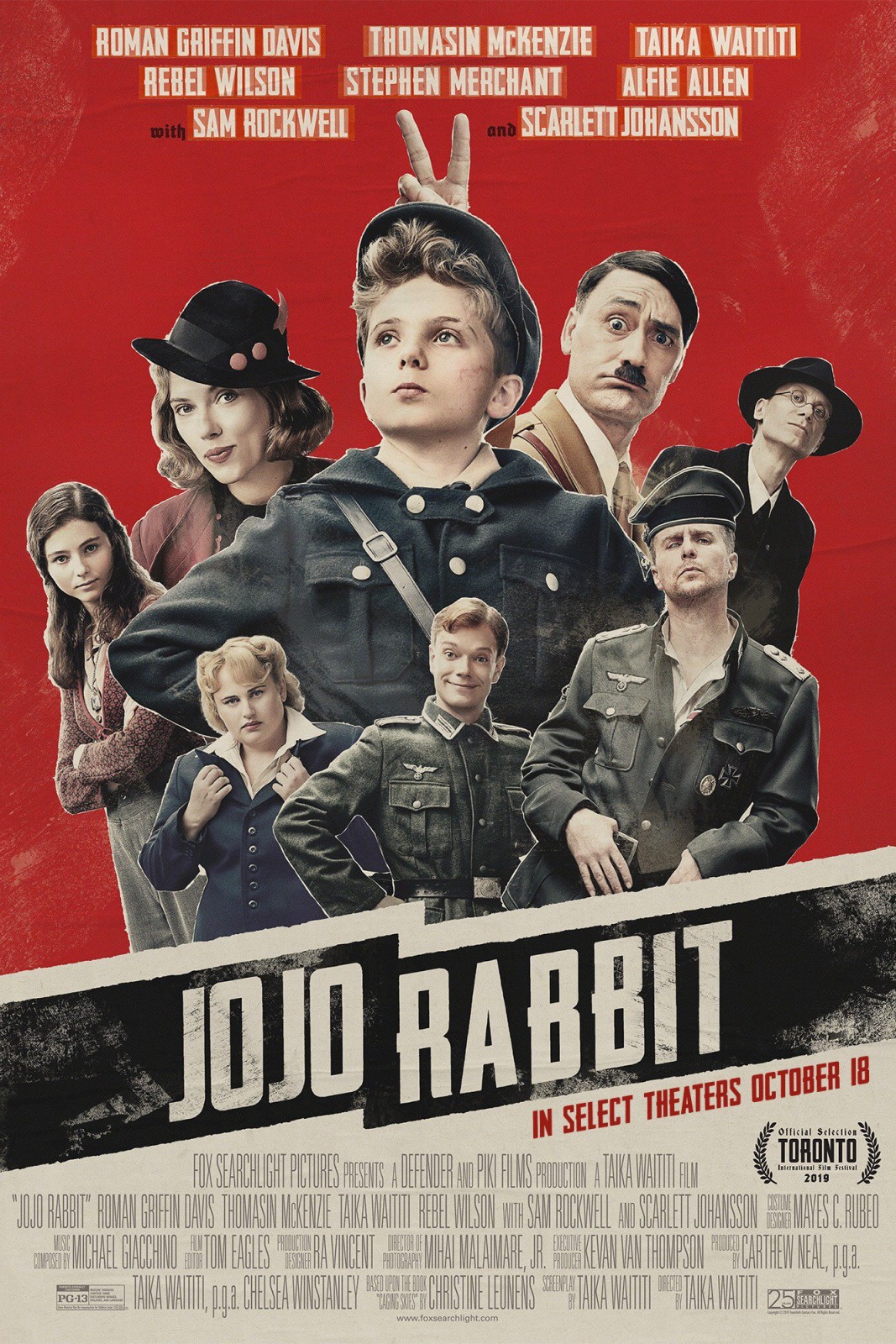 #5. Jojo Rabbit – A World War II satire that follows a lonely German boy named Jojo (Roman Griffin Davis) whose world view is turned upside down when he discovers his single mother (Scarlett Johansson) is hiding a secret. Aided only by his idiotic imaginary friend, the one and only, Adolf Hitler (Taika Waititi), Jojo must confront his blind nationalism.
Nominated for 6 Oscars: Best Picture, Best Supporting Actress (Scarlett Johansson), Best Adapted Screenplay, Best Costume Design, Best Production Design, Best Film Editing.
FUN FACT – Scarlett Johansson is the 9th person with nominations for Lead & Supporting Actress in the same year. Most recently this happened in 2008 with Cate Blanchett for Elizabeth: The Golden Age and I’m Not There.
Children gravitate towards some sort of passion when they are little. Some are voracious readers who will speed through books. Others love to race their HotWheels cars all around the track and zipping over make-shift ramps. Older kids might find joy in gaming or other escapism obsessions. For 10-year-old Jojo…well his obsession is Adolf Hitler – yes that Hitler. Now before we condemn Jojo for his enthusiasm, remember that this connection to the Nazi party leader would not be that far of a stretch. Lots of kids were gaga over the German chancellor at the time – in a furor for the Führer, you might say. The Beatles-like reception he received from youth offers ample proof of that. But Jojo takes it a step farther. He would like nothing more than to be Adolf’s BFF. But what happens when that dedication to the state is tested? What if Jojo suspects that those closest to him are not as zealous for the loyalty that burns deep within his heart? A witty comedy that’ll loosen viewers up with humor before delivering a walloping gut-punch of seriousness.
Jojo Rabbit is an odd film for sure – I’d go so far as to say this is the weirdest of the Best Picture’s this year. Even just the idea of it sounds so crazy that no filmmaker would ever dare attempt this sort of satire-esque material about such a devastating point in human history. But if there’s one guy that can do it successfully, it’s Taika Waititi (What We Do In The Shadows, Thor: Ragnarok). Waititi’s style of practical and modern comedy is an uplifting infusion to this dire and depressing era in Germany. And he uses the effectiveness of this wonderful child lead actor (Roman Griffin Davis) to see such humor through his young eyes. For example, the passionate young wannabe Nazi walks into his living room that unbeknownst to him is full of SS soldiers. And so, to show respect and national pride, Jojo joyful salutes “Heil Hitler!” The commanding officer welcomes and responds to Jojo’s pride by repeating it back to him: “Heil Hitler!” But Jojo isn’t satisfied with just doing it once for the lead officer – he does this for all 6 men in the room. But does it stop there? Nope, because when they leave he makes them each do it all over again in hilarious and ridiculous fashion. Most viewers will agree that Nazis aren’t funny, but Waititi’s comic voice is so absurdly lovable that, against all odds, this movie somehow is – at least amusing.
One of the reasons this film is so high on my list is because of the deep heart-felt story and messages about faith it carries all throughout. I walked into this film hearing lots of buzz about it from critics but was unaware of the full plotline, which in some ways made the experience better for me to go in a bit blind. Jojo meets someone, very unexpectedly, that dramatically changes the way that he sees his world. To him, he thought that life was all about being the best German and future Nazi you could be. Dress right, act accordingly and be vigilant. But as this person he meets tells him, the life he thinks he is living is not all that it’s cracked up to be. “You’re not a Nazi, Jojo. You’re a 10-year-old kid who likes dressing up in a funny uniform and wants to be part of a club.” The tale of Jojo is one of discovering himself anew and that when it all falls apart, he’s got to find something tangible to hold onto that isn’t his imaginary Nazi friend. Is it his mom? Is it his father who he’s told is away fighting in the war? What unmistakable truth rises to the surface when all else falls away?
Jojo Rabbit is a strange little movie. Superficially a satire, it’s actually weirder and goofier than the subject suggests. Few movies would dare try to make us love a Nazi wannabe, 10 years old or not – much less one who plays with an imaginary Adolph Hitler. The film reflects on this strange tonal schizophrenia perfectly. It tells a story about the power of life and love and heroism of a different kind – one that embraces kindness and goodness above the things that Nazi Germany valued. Or, let’s face it, what our world often values, too. In the end, it reminds us that even in the world’s worst moments, and in our worst, too, we should remember to love one another.
FINAL THOUGHT – Jojo Rabbit is a film that many artists would never dare to attempt – a satire of WWII brutality with a 10-year-old boy who’s imagining Hitler as his best friend. And yet, the hurt and pain he experiences teaches us about how to respond in the face of opposition and brokenness.
Overall Grade: A-
Projected Award Wins: None
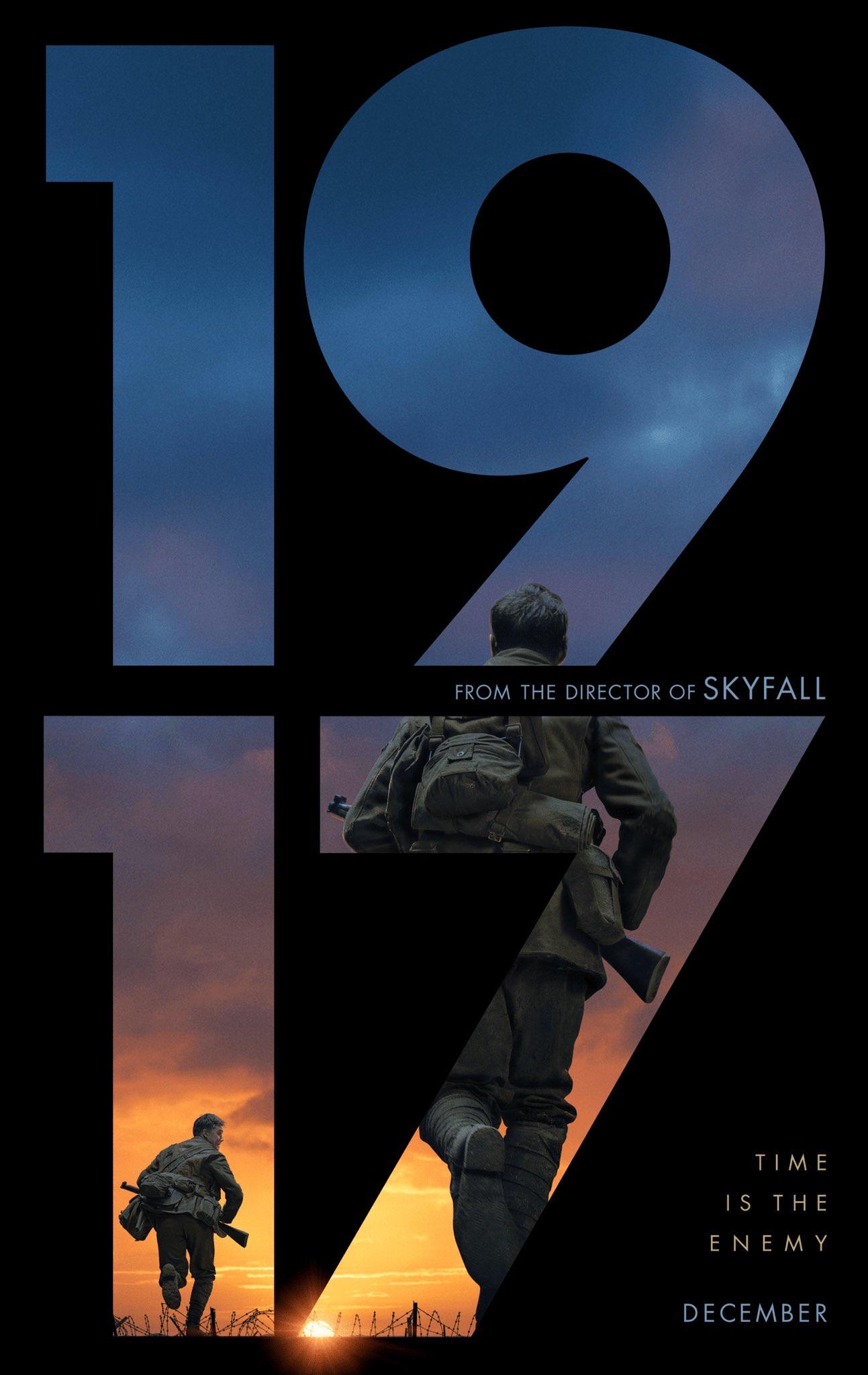 #4. 1917 – April 1917, the Western Front. Two British soldiers are sent to deliver an urgent message to an isolated regiment. If the message is not received in time the regiment will walk into a trap and be massacred. To get to the regiment they will need to cross through enemy territory. Time is of the essence and the journey will be fraught with danger.
Nominated for 10 Oscars: Best Picture, Best Director (Sam Mendes), Best Original Screenplay, Best Cinematography, Best Makeup and Hairstyling, Best Production Design, Best Original Score, Best Visual Effects, Best Sound Mixing, and Best Sound Editing.
FUN FACT – 1917 is the 1st Best Picture nominee with a number as the entire title. And Only 5 Best Picture titles have been shorter than 1917. They are Z (1969), JFK (1991), Ray (2004), Up (2009), and Her (2013).
There are war films that stand the test of time because of their subject matter, characters, and the real-life stories that they tell. From as old as The Bridge On the River Kwai and Tora! Tora! Tora! to modern-day classics such as Saving Private Ryan, Black Hawk Down, The Hurt Locker, and Dunkirk they each resonate with viewers that bring men and women to tears. The heroism, the pain, the patriotism, and the journey towards freedom and protecting those they love are global messages spoken throughout time. This year, a new film has entered this rare category of greatness and brilliance as it’s hard to imagine anyone won’t appreciate its originality, heart, and grit.
About 15 minutes into 1917, it dawns on you that this is something uniquely brilliant; by the end, it’s clear that the Oscar-nominated director Sam Mendes has made something resoundingly special, and yet you might not even know why. That’s largely because of the innovative cinematography: The entire film is one long tracking shot. What that means is that there is no moment when the camera cuts and changes directions – it is continuously capturing every breath, every step, and every ounce of heroism along this impossible journey and we as viewers are locked in step with them. That means the long trenches, the airplane crashes, the cat-and-mouse escapes are all filmed in sequence and without any hidden CGI tricks to hide the camera work. To see how this was done, click the link to watch a 4-minute behind the scene featurette: 1917 Behind the Scenes
Now truth be told, of course, there are edits. As imperceptible to viewers as they might be they are there. And, honestly, whether or when the film stopped rolling isn’t the point – it’s the effect that it brings to us as viewers. As the camera follows the two British soldiers trying to get across a German-occupied battlefield to deliver their urgent message, it moves around them – in front, behind, next to, sometimes around a rock or a slightly different route but keeping the soldiers in view. It creates the video game-like feeling that you’re the third runner on the mission. The first-person viewpoint transforms the experience of watching 1917 into something intimate, just short of interactive. And the score swells into motion capturing those perfect moments of the “wow” effect. Cinematographers aren’t often household names, but the 15-time Oscar-Nominated Roger Deakins is one thanks to this; another Herculean accomplishment. And I guarantee you, you may not know his name, but you know his works: Shawshank Redemption, Sicario, Blade Runner 2049, No Country For Old Men, Fargo, Skyfall, A Beautiful Mind, The Big Lewbowski…just to name a few.
I’ll be totally honest, I really wanted this film to be higher on my list – so badly. From the moment that I heard about Mendes and Deakins’ idea of a one-shot film, I was hooked. There was nothing that was going to stop me from seeing this one. But where the film takes a hit is the lack of depth in the lead characters. The reason that we love a war film like Saving Private Ryan is that we were not only taken on their journey, we were also pulled in by the depths of their performances. We cared for the well-written characters and we felt their pains. Here in 1917, we just don’t feel it the same way. There’s not enough of an attachment that when the bullets are flying that we feel the urgency and fear for them as we should. It’s a small miss, but when the focal point of a 2-person mission is the brotherly pair and they don’t capture us in those moments, then the stakes don’t feel as high as they could or should.
“If you’re going through hell, keep going.” So said Britain’s great Winston Churchill, who experienced his own political hades during World War I. It’s a terrible, awful trek that these two soldiers make – one that we appreciate (and loathe) all the more for making it. This story, indeed, feels like hell sometimes. But they keep going. 1917 is a game-changer in technical achievements across the board. Sam Mendes’ camerawork and storytelling both magnify the horrors of war and humanize those in it. The world these two soldiers trudge through is a cruel one hungry for something other than war. But in its face, they show courage and sacrifice. By living so vicariously through them, we find just a hint of beauty in all that brutality.
FINAL THOUGHT – The brilliance of the “One-Shot” technique that creators Mendes and Deakins use forces us, as viewers, to lock onto the lead characters for every single second of the action – no rest, no breath, just keep going. This is an inspiration, encouragement, and love-letter to those who serve and still fight in the trenches of war home, abroad, and in life.
Overall Grade: A
Projected Award Wins: Best Picture and Sound Mixing
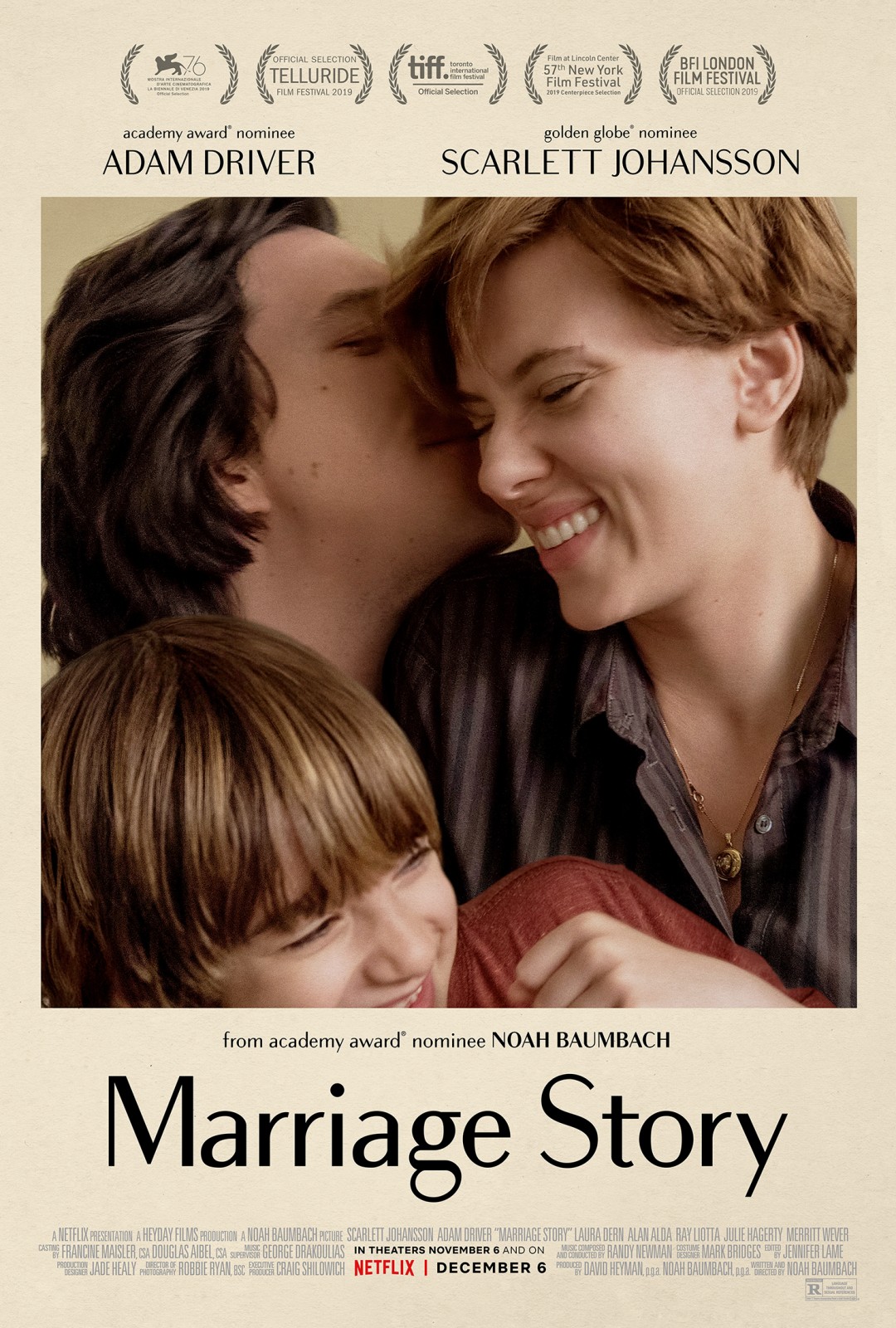 #3. Marriage Story – Successful New York theatre director Charlie Barber (Adam Driver) and his lauded actor wife Nicole (Scarlett Johansson) grow apart as their unique life goals begin to compete and their career paths diverge. When divorce becomes inevitable, the two aspire to separate compassionately for the sake of their son and emotional well-being but their good intentions are challenged and perspectives that begin to shift with time.
Nominated for 6 Oscars: Best Picture, Best Lead Actor (Adam Driver), Best Lead Actress (Scarlett Johansson), Best Supporting Actress (Laura Dern), Best Original Screenplay, and Best Orginal Score.
FUN FACT – Adam Driver is showing these days he’s one of the best in the business. He is the only person nominated in an acting category both of the last 2 years. Last year he was nominated for Best Supporting Actor in Blackkklasman.
A couple’s happiest day is the day that they marry. It is the start of their life together in the comforts and joys of marital bliss. The adventurous road of marriage will have its ups and its downs as every couple will tell you. The saddest reality is when the marriage story becomes a divorce story because that’s not how it was supposed to go. Marriage, by its design, is meant to end only when we do. The institution itself was built to last. “For better or worse. For richer or poorer. In sickness and in health. ’Til death do us part.” A happy ending. The backbone of the film Marriage Story is built upon the question: After so many years together, do they still feel the same about each other? Warm embraces turn to cold kisses on the cheek and little things here and there begin to pile up into mountains of anger waiting to explode. For in their relationship, a happy ending seems out of the question. What looms instead is just the end.
First things first – this is a masterclass in acting! Adam Driver and Scarlett Johansson are two of the best actors out there today and they bring their A-game to this powerhouse drama. The story is told from both sides of their own stories opening with monologue overlays of what they love/hate about each other. It gives you the backstory while also laying the foundation for the “why” in all of this. There are no sides taken, just moments of acknowledging each other’s faults and mistakes. And each of these actors gets moments to shine apart as well as explosively together. They simply just give off the perfect vibe that they are together and enjoy the life and family that they have – at least the life they could have.
The heartache of this film is that it is less about marriage and more about their divorce – perhaps more correctly titled: “Divorce Story”. It is difficult to watch a film about something so many of us have either ourselves experienced or walked alongside of someone who has. Charlie and Nicole are fed up with the little things about each other and it drives them apart in every sense of the word. And while they think that the simple answer is divorce, ask anyone who has gone through a divorce and they’ll tell you: it’s not a simple answer. Especially because they have a son together who they want to love and raise without the burdens of their broken-down marriage. Divorce “survivors” will find that every frame hits home: the raw emotions, getting sucked down the legal system’s financial hole, and the lawyers who make everything so much worse.
The story feels authentically personal – which makes sense, as it’s based on director Noah Baumbach’s own 2013 divorce from Jennifer Jason Leigh. Baumbach said this about this inspiration and personal experience for the script: “I have a real connection to the material … [but] I was also at a time in my life where many of my friends were getting divorced. I saw it as an opportunity to do something more expansive, so I did a lot of research. I interviewed a lot of my friends, and friends of friends, and then also lawyers, judges, and mediators.” Ironically he is not the only main cast member whose story this is – in fact, divorce seems to have taken over the lives of this entire cast and the larger Hollywood landscape.
– Adam Driver grew up in a divorced household as his parents split when he was only 7 years old.
– Co-lead Scarlett Johansson’s parent’s divorced when she was 13 years old and she herself has been through two separate divorces in her life (Ryan Reynolds [2011] and Romain Dauriac [2017]) though now engaged to be married to SNL’s Colin Jost this upcoming year.
– Supporting actress Laura Dern is also no stranger to divorce – parents divorced at the age of 2 and she went through an up and down divorce process with then-husband Ben Harper ending in 2013.
You might think that Marriage Story is a fictional tale of divorce that in the end was sad, but inevitable. And maybe, to some, that could be the takeaway here. But for me, it’s a launching pad to talk about what hope really is.
“Maybe if we stayed married, it could be better?” Nicole tearfully asks divorce lawyer Nora (who is definitely the wrong person to ask). “What we’re doing is an act of hope,” Nora tells her. But it’s not. “Hope” is dependent not on a feeling about the way things were or the way they were moving, but on faith, faith in the One God. It is a virtue. Obviously, placing our hope in God is very much different than placing our hope in a spouse. Anyone who’s been married any length of time knows that our husbands and wives fall far short of perfection. Obviously, Charlie’s infidelity casts a huge shadow over his marriage with Nicole. But despite their mistakes (both of them) they still loved each other. That love was still worth fighting for. And had they fought for their love as much and as hard as they fought for custody and “winning” this fight, maybe Marriage Story would’ve been about marriage – not divorce.
FINAL THOUGHT – “Love is the final fight,” said John M Perkins. When it comes to the reality of marriage, and sadly divorce, this film feels like it’s ripped straight from the heart and telegraphs real-life stories many have lived through. May this inspire couples to encourage, listen, and be drawn closer together against the fierce backdrop of “what if’s”.
Overall Grade: A
Projected Wins: Best Supporting Actress (Laura Dern)
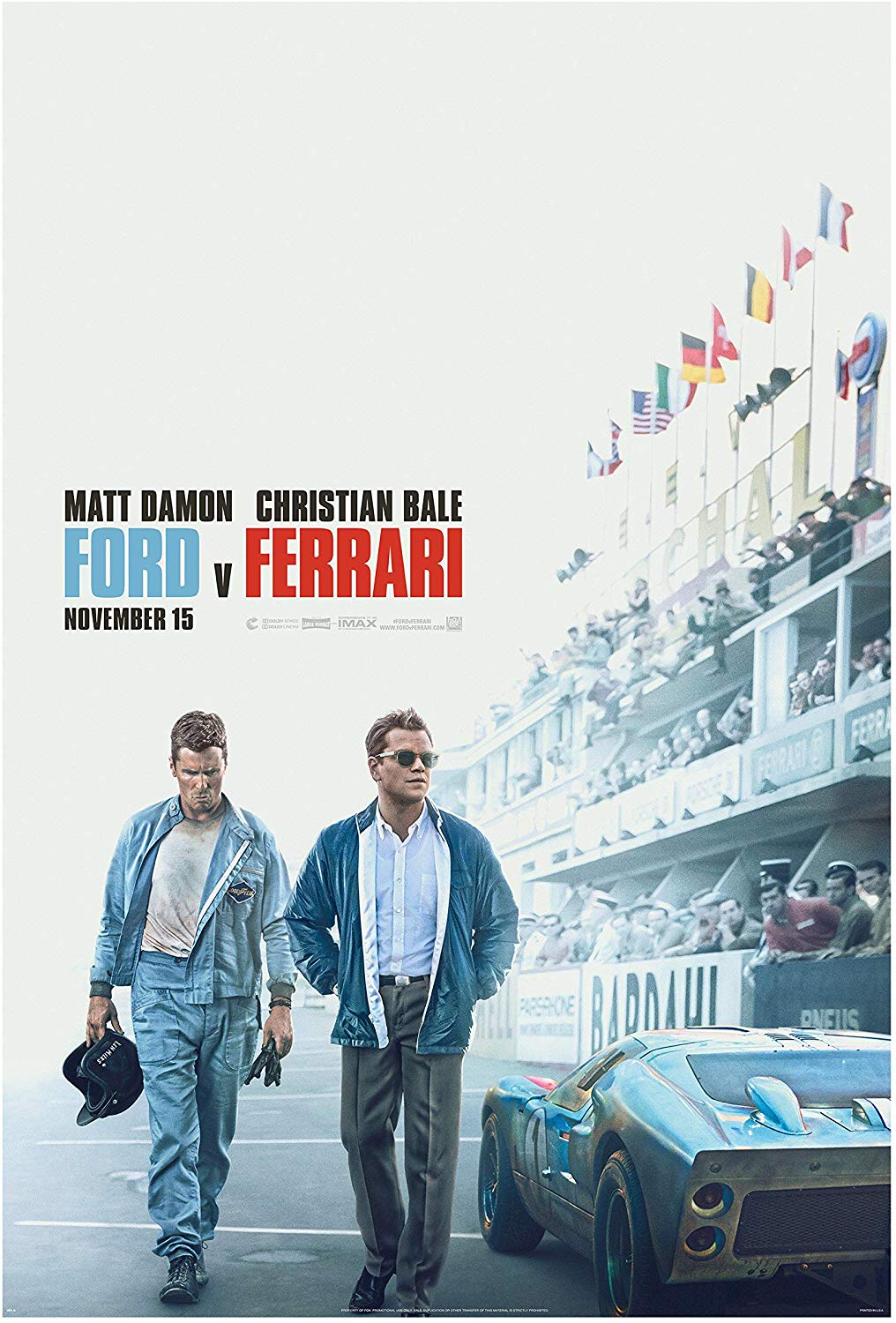 #2. Ford v Ferrari – American car designer Carroll Shelby (Matt Damon) and driver Ken Miles (Christian Bale) battle corporate interference, the laws of physics and their own personal demons to build a revolutionary race car for Ford and challenge Ferrari at the 24 Hours of Le Mans in 1966.
Nominated for 4 Oscars: Best Picture, Best Film Editing, Best Sound Mixing, and Best Sound Editing.
FUN FACT – Paul Massey has a chance to become the 2nd sound mixer this century to win back-to-back Oscars, having won for Bohemian Rhapsody a year ago. Michael Minkler won for Black Hawk Down (2001) and Chicago (2002).
Films about fast cars are generally about the cars. The Fast and Furious franchise has made that to be the truth over the course of its rise in fandom. And when you title your film to be about two of the largest and most prestigious automobile dealerships the going public is expecting this to be about the motors. Because ironically in a film about cars, normally the driver takes a backseat. But here, and especially when you cast talent of this type, that’s just simply not the case.
Ford v Ferrari is the every person’s film – it’s got just about everything you could want in it while being a great time to stuff your face full of popcorn along the ride. At the wheel, director James Mangold gives Ford v Ferrari the crisp, confident energy we see from him in genre films of this nature, Logan and 3:10 to Yuma (the latter of which also starred Bale), without letting it drift into the stodgy, awards-bait seriousness of a previous biopic of Mangold’s Walk the Line. This film could have easily gotten pretentious about itself or gone too introspective and serious, but it manages to balance both adequately throughout that the long ride feels as smooth as it can be. The racing sequences are impeccably timed, with thundering, thrilling sound design that could convert newbies into hard-core racing fans while not leaning too heavily on them to isolate its audience of non-racing fans. It’s nice when a film is so simple and classic that it could have been sent here directly from the early 1960s. I can see this being the Best Picture nominee of this year’s class that people will rewatch the most years from now.
The fast cars and dynamic storyline need leads who can carry such a film on their backs as they look to bring you in and surround you as a viewer with the sights and smells of the racetrack. Stars Christian Bale and Matt Damon so fully embody the temperamental characters of Ken Miles and the quick-cornering Carroll Shelby – all their flaws and strengths, on and off the racetrack. If you stick any two old actors in there, the 2.5-hour drama might begin to drag and sputter around the final corners, but here it zips on by. Because we care about the men. You care about their dreams. In Miles’ case, you care about his family and this make-or-break love for the racing game that envelopes his wife and son into a racing family. And win-or-lose, you care about seeing this hammer and nail struggle through to its completion.
Where this film steers in the best direction is its message about winning. We live in a world where winning is the ultimate goal whether that be the Super Bowl, the Academy Award, or climbing the corporate work ladder. So many of us have that deep competitive nature within us that even a simple game of Uno can turn into a blood bath. Both of these characters are all about winning – and winning the right way. They want to show the world, but more importantly themselves, that they can defeat this monster of a track and its competition by just being the best. That means working the hardest, the longest, and taking the right chances when the time is called. But is winning really everything? Is being first always what matters most? The corporate heads of Ford wanted to do things that made the company look good, even at the expense of the driver. Meanwhile, the driver and racing team wanted to focus on the actual race and hoped to let the bigger things pass them by. And in the end, this historical race becomes more than just a race – it becomes a marathon on and off the track. A parable about the race we live, and work, and survive in daily.
FINAL THOUGHT – Grab a big tasty bag of popcorn and gather all the friends because this one is meant to be seen by many cheering fans of cars, racing, and action, but most of all the friendship that goes beyond the track and into the depths of their spirits.
Overall Grade: A+
Projected Award Wins: Best Sound Editing
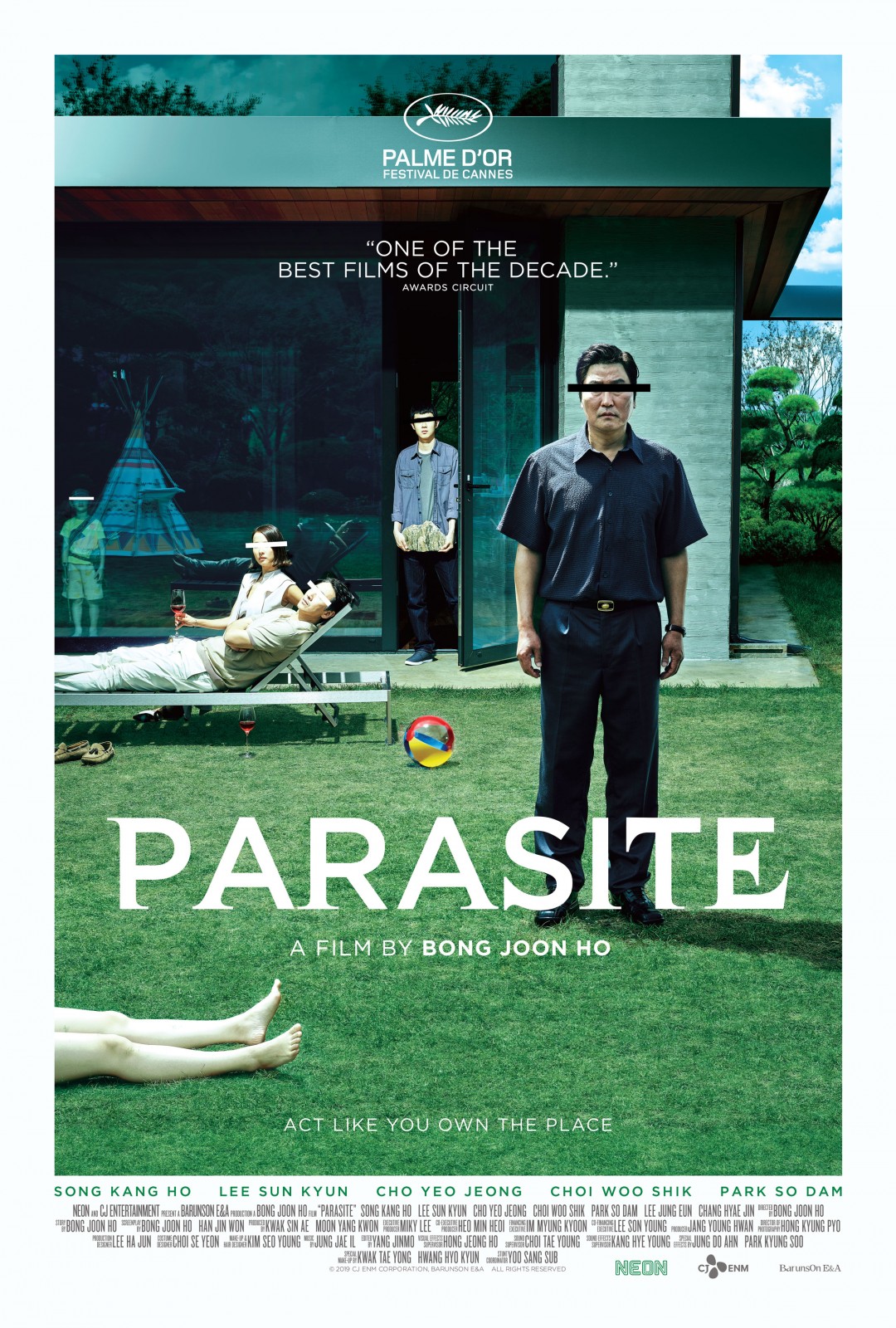 #1. Parasite – All unemployed and underprivileged, Ki-taek and his family take a peculiar interest in the wealthy and glamorous Parks family. They ingratiate themselves into their lives however possible and get entangled in an unexpected incident that changes their lofty and sneaky plans. The stage seems set for unceasing winner-take-all class war – but who will win, or (better yet) does anyone?
Nominated for 6 Oscars: Best Picture, Best Director (Bong Joon Ho), Best Original Screenplay, Best International Film (South Korea), Best Production Design, and Best Film Editing.
FUN FACT – Parasite is the 12th foreign language film to be nominated for Best Picture. However, that does not bode well for this year’s nominee as the previous were 0/11 in winning the big prize.
Parasite will come as a surprise to many who have no idea why this film should be recognized as the best film of this Best Picture class, but once you see it, you absolutely know why. This low-budget, South Korean mystery/thriller/comedy/tragedy has been scooping up all sorts of honors this awards season. In advance of the Academy Awards, it seems poised not just to win an Oscar for Best International Film, but potentially steal the show and do what no other international film has done yet: win Best Picture. Parasite has so many extra hoops to jump through in order to get your attention but the surprises are worth it, the acting is superb, and overall, the questions and themes that it asks are resounding talking points that require further discussion.
One of the biggest hurdles most viewers will have with Parasite is the obvious one – it’s in Korean. That means there are subtitles all throughout and for some that can be a challenge when the majority of American films are obviously done in English. Filmgoers don’t mind the occasional reading of subtitles here and there or directors will choose a creative way around the overabundance of subtitles (The Hunt For Red October is the perfect example of that). My wife candidly shared with me that her trouble with a film that is in a different language is that she feels that she is reading more than she is watching – and I completely understand her position. But even though that is the case for many, we are being introduced to more and more foreign films hitting the mainstream media that at some point we may need to adjust and accommodate for what is coming. As Director Bong Joon Ho said in his Golden Globes acceptance speech: “Once you overcome the 1-inch-tall barrier of subtitles, you will be introduced to so many more amazing films…I think we [all] use only one language: the cinema.”
Speaking of director Bong Joon Ho, you may have never heard his name before or know more specifically what his movies tend to be about, but he is someone who you will hear about more and more in the coming years. Bong’s first big American hit was 2013’s Snowpiercer – a train that held the last remnants of humanity starring pre-Marvel icons such as Chris Evans and Tilda Swinton alongside Octavia Spencer and Kang-ho Song (who also appears in Parasite). The progression from the back to the front of the train’s passengers gave Bong the opportunity to comment on things like economic equality, climate change, and class warfare. Snowpiercer will make a reintroduction to mainstream media when the new TV show airs this coming spring on TNT. Jump ahead to his next major film, Netflix’s Okja, and we see many of these same themes and messages about an E.T.-like character that is overlooked, feared, and pushed aside because it doesn’t fit with the expected norms of society. And so it’s easy to follow along with Bong’s journey in filmmaking to know what cultural, political, and social messages he is stirring through.
Through the story of two families locked in class conflict in Parasite, Bong comments on the wage-differing economy, the massive seen and unseen gaps between rich and poor, and how the haves subtly maintain their grip on power by playing the have-nots against one another. These are political themes that he addressed more explicitly in Snowpiercer and Okja, but Bong keeps them just below the surface, as the engine that moves the plot of Parasite forward. Where the film goes, and where Bong’s career goes after this, remains a mystery. But this is one that’ll make you think and rethink your own understanding of these topics.
To give you an example from the film: very often in Parasite we see characters moving up and down according to their class status – the poorer Kim family is seen often times walking up stairs, hills, and scenery while the richer Park family is often shown as above and having to walk down those same stairs, hills, and sceneries. In one particular scene that is the impetus for major events to come, a huge rainstorm comes along and it affects both families in extreme differences. The Kim family’s home is down on the lower street level that is beginning to flood while the Park residence is high on the hilltops safe from any danger. The rain brings dirt, garbage, and even sewage into the Kim residence. The Park family has never had to worry about such things. And the moment of total clarity in class differences comes when Mr. Kim overhears Mrs. Parks talking to a friend about how happy she is that it rained the night before because it “washed all the junk away.” Yes, but where did that junk all go and to what does she mean (subtly) by “junk”? Her “out of sight, out of mind” mentality forgets that there are those who were affected by the rain and in more ways than she’ll ever know. It’s metaphors like this that elevate this film to must-see status.
Is Parasite a perfect film? No, and in many ways, it should be taken with great caution. This is a more violent film than Bong’s previous. It also contains a lot of really troubling behavior. That is, of course, cooked into the story. You’re not necessarily supposed to like a lot of the people we meet – so the fact that we like so many of them, in spite of themselves, is a tribute to the filmmaker. The rich can treat the poor like non-humans. The poor can treat the rich with their own kind of contempt. Whatever warmth and hope we find here is buried under seriously troubling behavior. Not to mention that when the second half of this film hits and there are major reveals, it’s a narrative shock, but it also forces viewers to ask hard questions about why the first half was so enjoyable. It is, certainly, a clever film, filled with sting-like schemes, moments of humor, relevant cultural satire, and surprises throughout. The message and questions it asks will leave a lasting impression and opportunity to discuss further with others across the class spectrum.
FINAL THOUGHT – The craft and nuance of Parasite‘s message might be too overwhelming for some viewers and there will also be those who are turned away by the “1-inch tall barriers of subtitles.” But for those who take a chance, be prepared to be turned upsidedown and see the film and the world in an eye-opening way.
Overall Grade: A+
Projected Wins: Best International Film and Best Director (Bong Joon Ho)
What do you think of the Best Picture nominees? This might be the best class of films in quite a while! And there were so many more that could have been up there (check out my Honorable Mentions for some of my personal favorites).
What else did you love from this past year? I want to hear your Honorable Mentions!
Where did you see the Gospel in these Best Picture nominees and how can we as the church come Monday after the awards night use conversations about these films to bring people closer to faith?

Leave a Reply