
The 2019 Oscars will be televised this upcoming Sunday night (February 24th) on ABC making it the 91st year of these festivities. Every year there are movies that have powerful performances, moving characters, spectacular visuals and camera work, spot-on writing, and sometimes they all come together in one film making it the best motion picture of the year. The Oscars themselves can be a mess (no host, best popular film fiasco, not televising all the awards [going back on that decision after outcry], #OscarsSoWhite, ZERO women nominated in major categories…and the list goes on). But even with all those miscues, the main focus of the night is to celebrate the most excellent and deserving in films, characters, and productions.
This is my 3rd straight year of reviewing and discussing these films and every year (as I’m sure this year will be the same) I am asked the same question: “David, why do you care about the Oscars?” Last year I had someone comment to me that these awards show to them are nothing more than a celeb-fest with meaningless awards and overly-political messages from start to finish. And I get it – really I do. In full honesty, I feel that way too sometimes when it comes to these awards shows. I could care less about the red carpet or even who presents what award. But the reason that I watch the Oscars isn’t for celebrities, speeches, or even awards. That stuff doesn’t compare to what I find most intriguing.
What gets me excited about the Oscars (and movies in general) is what’s at the heart of any film – a story. I’m a storyteller at heart who loves to share about life, journies, adventures, failures, and where we engage with God in his even grander story. And stories somehow have the magical way of tapping straight into the heart.
Think about it, before anyone was able to construct things like blogs or even a written language, we as a culture used storytelling to convey the message. Because in a story anything is possible – just ask a fisherman – the fish they caught gets bigger each time they tell the story. Stories can share about history, art, culture, beliefs, personal struggles, or be a rallying cry for others to join in the movement. We each are storytellers who are on our own story to tell or we’re privileged enough to be invited to hear someone else’s story and heart and share in their joys and struggles.
This year’s collection of Best Picture Nominees is a collection of stories from the world of superheroes, American and Mexican 1960-70’s history, the rise of stardom and music, and stretches all the way to the governmental and royal crowns. There are some stories we fall in love with and others that just rub us the wrong way – and that’s ok! Sometimes that’s even the point! You don’t have to like each and every story in the same way that most people aren’t fans of every kind of film out there (yes I’m looking at you cheesy rom-coms). But, each of these stories has been crafted by a director and a team of writers and actors who have brought to life this tale to be told for the world to hear.
And if these films are selected by the Academy as the “best” then there’s something in these stories that are worth investigating.
There’s something in these films that resonates with people.
There’s something about these films that goes further than box office profit.
There’s something special about the characters, the visuals, the direction that makes people say, “Wow!”
There’s something…and I want to know what it is and how I can speak into the conversation surrounding these stories!
Remember this as you check out these films or watch some of your own favorites that didn’t make this list (hey I won’t judge your guilty pleasures if you don’t judge mine). In the end – stories matter! Even in the stories told by secular, progressive Hollywood, as a follower of Christ I can still see, celebrate, and present echoes of the one story written on every human heart – the Gospel.
So here it is! Beginning with some HONORABLE MENTIONS and then working my way from MY #8 to MY #1 favorite of the Best Picture Nominees, I’ll give a non-spoiler synopsis along with my likes, dislikes, and a brief picture/avenue to the Gospel that I saw. I’ll also give a grade for each movie and a prediction of the awards that these films might receive (Best Director, Actor/Actress, Technical achievements, etc.). ENJOY!
*Just a quick reminder: there are NO SPOILERS! This, along with any other “The Gospel According To…” reviews are always spoiler-free review.
*Remember too – these are my own feelings and we might not always agree (and that’s ok) – so feel free to disagree and share your own thoughts about it in the comment section below!
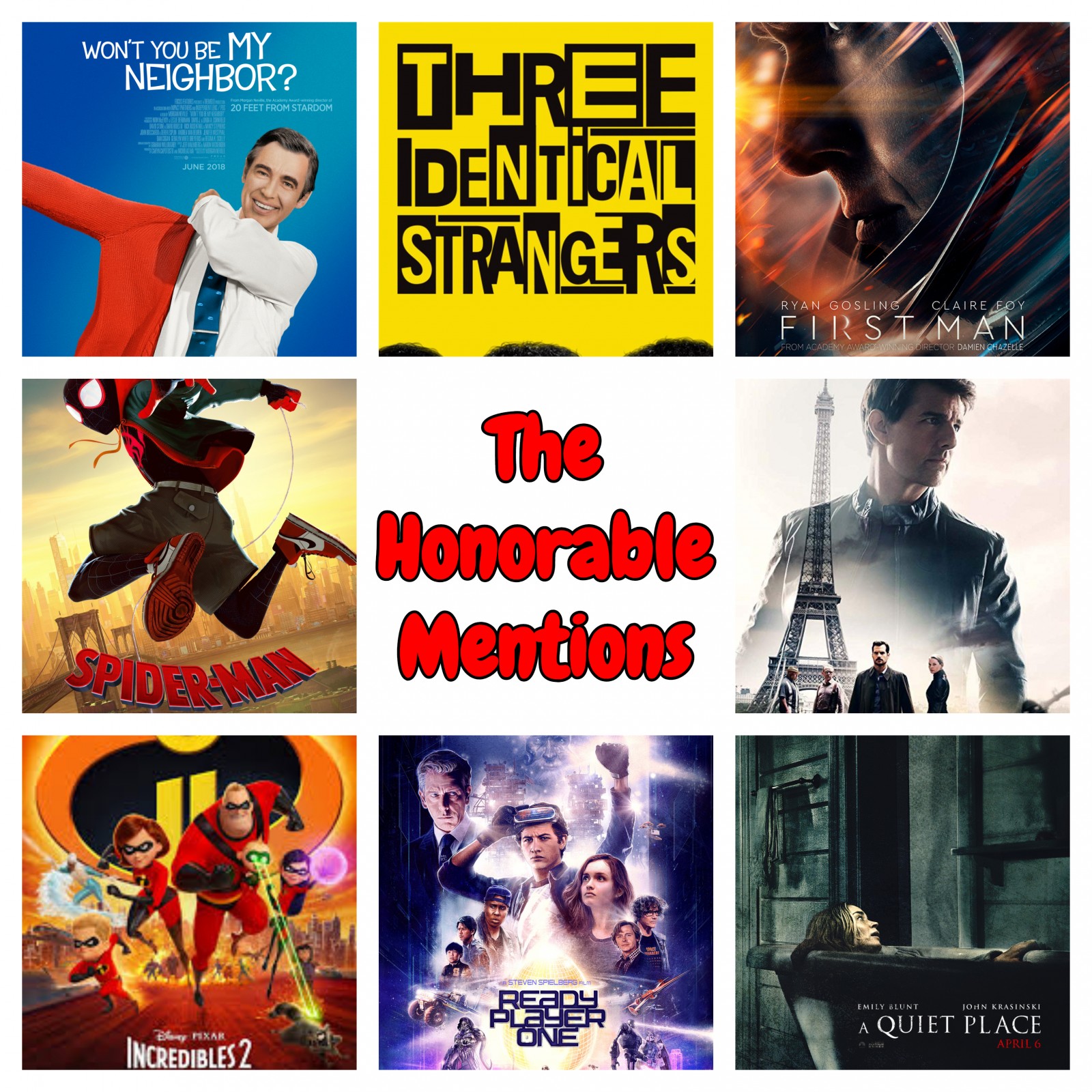 Won’t You Be My Neighbor? – In a year when documentary films hit blockbuster levels, how in the world did this NOT nab a best documentary nomination? Talk about a massive snub! The life, legacy, and impact of Fred Rodgers hit all of our neighborhoods – and one scene, in particular, had me in tears (who knew puppets and kid songs could do that to a grown man?). Be moved and be ready to smile as Mr. Rodgers is ready to remind you how special each of us is in this world.
Three Identical Strangers – Another documentary? Yes! I had read about this one online a few months ago and had been seeking it out because all I read was non-stop praise for a story that’ll blow your mind! Triplet brothers separated at birth 20 years later discover that the quest to know each other goes deeper, darker, and more mysterious than what meets the eye. A case study on “Nature vs Nurture” with real-life consequences.
First Man – Nominated for a few awards but should easily have been on the top list for best picture. Hot off the releases of Whiplash and La La Land, Damian Chazelle is becoming a must-watch director the likes of Nolan, Spielberg, and Cameron for how he tackles each and every film with flawless design and wonder. Not to mention the fact that score is insanely good (won the Golden Globe and somehow wasn’t nominated for an Oscar). It’s a space race film that isn’t afraid to show the darker side of what the moon landing and the famed pilot were really like.
Spiderman: Into the Spider-Verse – Ever feel like there are too many Spiderman movies these days? Guess what, so does this one! But that’s sort of the whole point. This is a slamdunk for Best Animated Film and should be considered one of the best overall this year with a message to match its playful enthusiasm. The animation is revolutionary and it might just become your favorite superhero movie this year – it is for me!
Leave No Trace – As a new father myself, this story hit me hard – this film is a tough one. It is the story of a father suffering from his former life in the military, where a part of him still hasn’t fully come home, but his 13-year-old daughter wants to help. It’s poignant, powerful, remarkable, and tragic all for the sake of healing and in a setting that tells an even larger narrative. This story of brokenness and heartache that will (unlike the title) leave a trace on you and your soul is one you should check out.
Mission Impossible: Fallout – I get it…You’ve seen Tom Cruise be Tom Cruise a million times and this is the 6th Mission Impossible movie. You might ask, “Isn’t this getting old?” The answer – NOPE! Fallout might be the best so far but more importantly, is far and away the best, pure, white-knuckled action film of this past year. Strap yourself in for a wild ride with stunts that’ll make your head spin (Cruise literally jumps out of an airplane and during the filming even broke his ankle…I mean what’s next? Space?!?). What MI:6 also has is great themes of trust, teamwork, and leaves the “Bond” persona behind.
Incredibles 2 – The sequel that took 14 years too long to make…we needed this one way sooner, but it’s hard to complain when it’s this good. The family is back together and they haven’t missed a beat. It’s a fantastic family-fun time with deeper questions than your ordinary run-of-the-mill animation film. Pixar asks tough questions (maybe not as majestic as Up or as moving as Inside Out) but it’s a great sequel with an even greater adventure and message.
Ready Player One – NERD ALERT! This film will bring out the 70’s and 80’s geek lover in you that you know is there deep down in each of us. Speilberg is at it again to make us say “wow” as he packs every bit of fan culture into this frenetic, action-packed adventure. And in the end, the message is as clear as the screen we play games on – the virtual world (though packed with many positive things) cannot replace the world in front of us. Anyone sense a deeper conversation about the Gospel?
A Quiet Place – In my opinion, by far, the best film of 2018 didn’t even make the top honors list at the Oscars and that’s a bummer for fans of this masterpiece like me. It nabbed a nomination for Sound Editing but this suspense/horror/sci-fi mashup by first time director (and The Office alum) John Krasinski is a bonafide big theater experience unlike any other. When a family seeks to survive deadly monsters who prey on even a whisper of sound, the fight, and sacrifice for family will turn your ordinary movie night into a full-blown cinematic experience. And just be ready in the first 5 minutes – you’ll know what I mean when you see it.
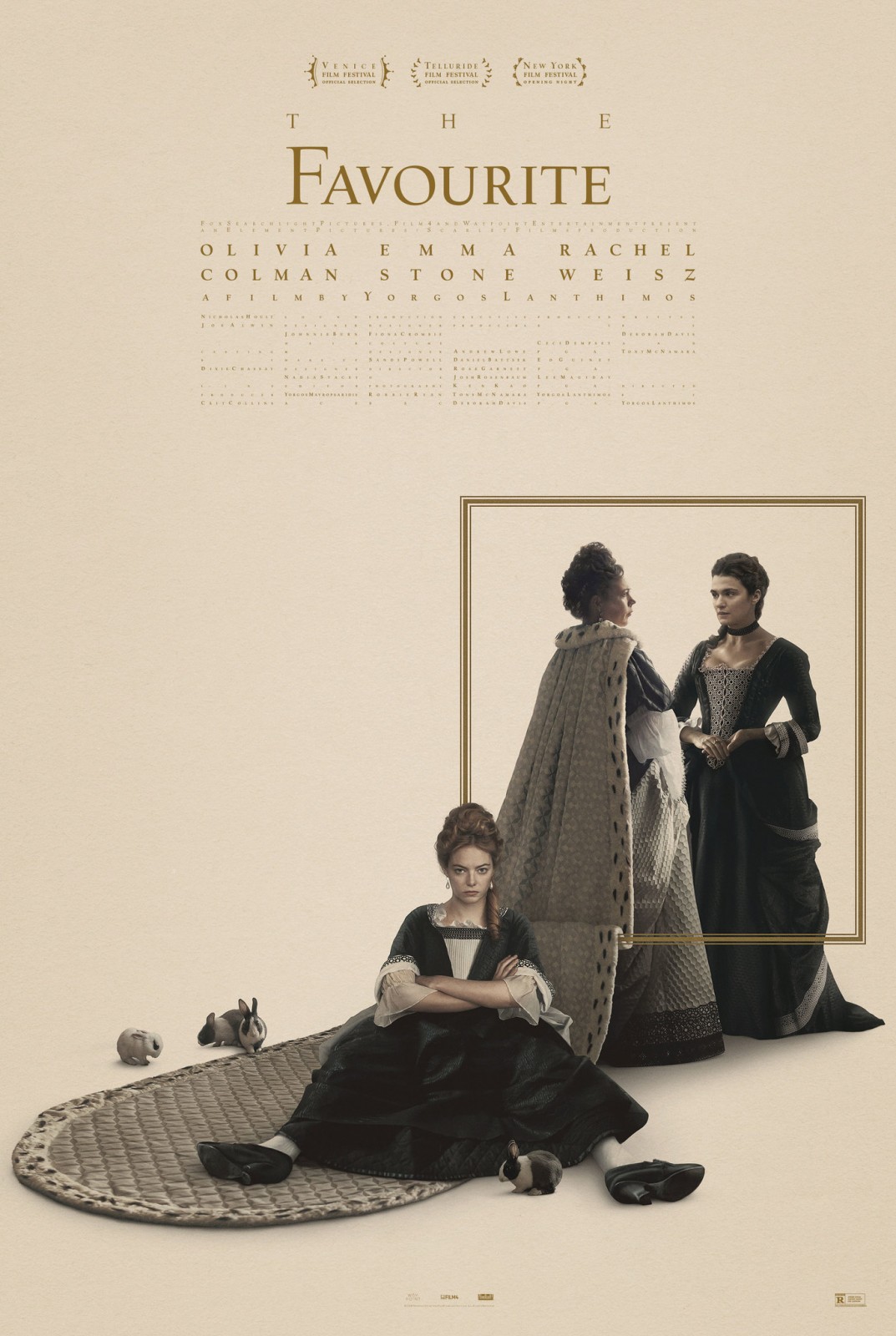 #8. The Favourite – In the early 1700s, Queen Anne (Olivia Colman), in poor health and emotionally unstable, allows her most trusted confidante, Lady Sarah (Rachel Weisz), to act as the de facto ruler of Great Britain during its war with France. Sarah’s control slips, however, when her cousin Abigail (Emma Stone) arrives at court and charms the queen.
Tied for the most Oscar nominations this year with 10 awards: Best Picture, Best Lead Actress (Olivia Colman), Best Supporting Actress (Rachel Weisz), Best Supporting Actress (Emma Stone), Best Cinematography, Best Costume Design, Best Directing, Best Film Editing, Best Production Design, and Best Original Screenplay.
Being queen is about being in charge – being in charge of the kingdom, running the war from the homefront, and all while being professional and honorably royal…well that’s what it’s supposed to be. For Queen Ann, it’s simply about taking care of her physical needs while letting her trusted Dutchess, Sarah, handle all the royal material. The Queen in some way or another wants to be involved, but she’s emotionally and physically unfit to rule and instead is subjected by Sarah to be the one to dot the I’s and cross the T’s. When Abigal, a young and humble former lady now slaved servent, catches the Dutchess’ and Queen’s eyes it’s a catfight for power and rulership. At the core of this film are three things: Sexuality, Spitefulness, and Selfishness – with little to no positive elements anyplace.
The few good things that are going for this film are conventional straightforward aesthetics – the set designs and costumes alone should/will bring this top honored film a statue or two. And despite the actions and plot being far from anything positive in nature, it’s easy to see why the Academy awarded the three lead ladies with acting nominations. They each go for it in every scene. Just when you think one has outdone the other, another lead lady snatches up the attention of the viewer as the editing is as sharp as their contempt. Perhaps too, in the end, the message of The Favourite comes across subtly and lasting: Absolute power corrupts, and absolute power absolutely corrupts.
Meanwhile, the negatives pile on each other like the 17 rabbits in this film fighting for a space in the Queen’s lap (yes there are that many rabbits on screen). Without untangling too much of the plot, the subject of this film is a contest between two women who will do anything – and there’s no limit to their immorality – all to win the grace’s approval, heart, and love. The once thought innocent Abigal quickly shows her true colors as she relentlessly pursues the power her heart desires. While the Academy heralds this film as witty, quick, and crisp it comes stale through the lens of a Biblical worldview.
There’s little to no redeemable values and elements anywhere in the over two-hour runtime except to serve as an example for the complete opposite of nobility and goodness – only pleasure and greed remain in this least favorite of top film honor’s.
Overall Grade: F (YES – it’s that bad. Why Academy? Why?!?)
Projected Wins: Best Costume Design
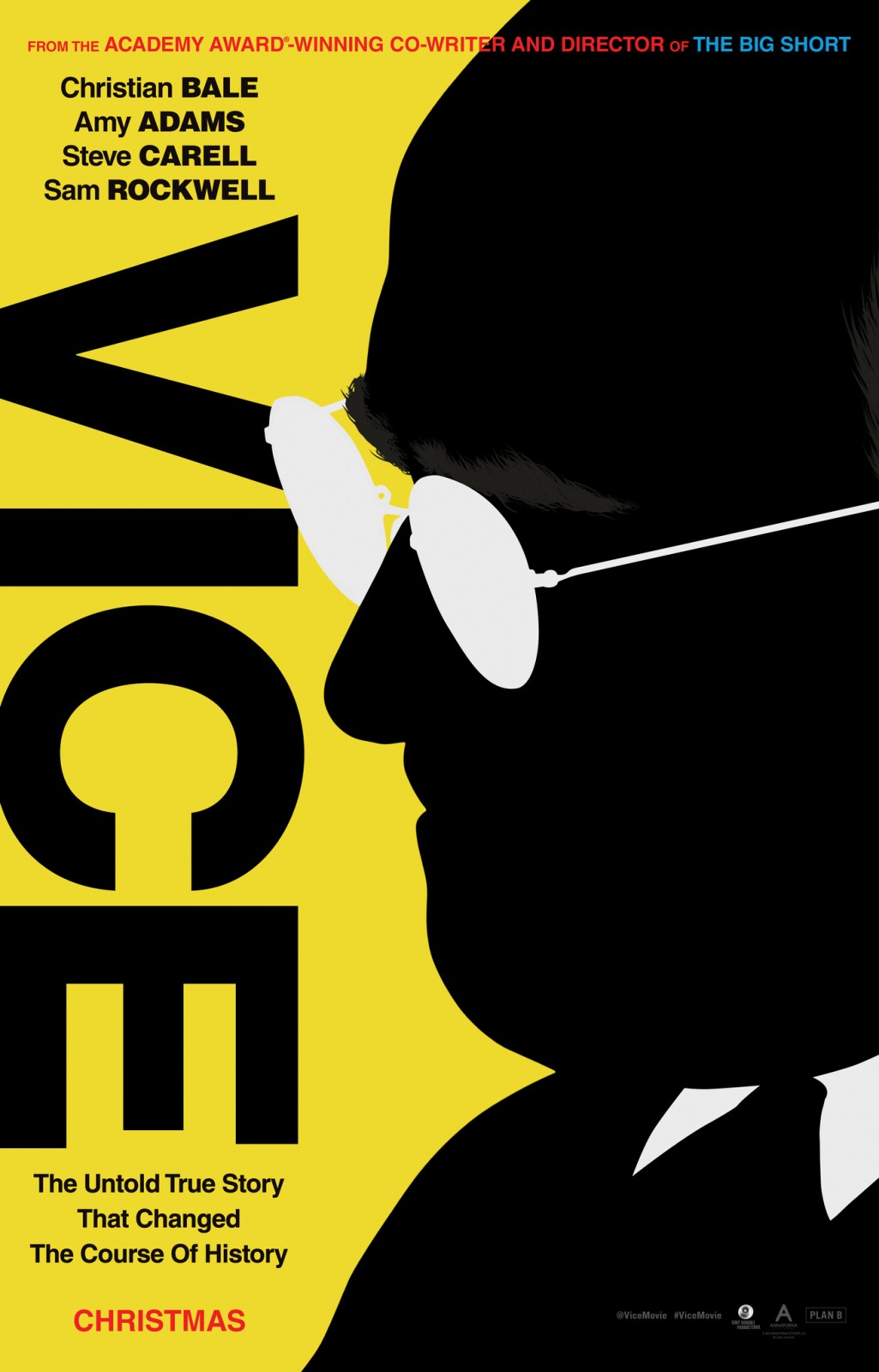 #7. Vice – Dick Cheney (Christian Bale) rises from humble beginnings to the heights of politics, serving in cabinet positions, in the White House and in the House of Representatives, before becoming George W. Bush’s (Sam Rockwell) vice president. While wielding unprecedented influence in his new role, Cheney seeks to be the power behind the throne.
Nominated for 8 awards: Best Picture, Best Lead Actor (Christian Bale), Best Supporting Actor (Sam Rockwell), Best Supporting Actress (Amy Adams), Best Director (Adam McKay), Best Film Editing, Best Makeup and Hairstyling, and Best Original Screenplay.
The premise and curiosity of the Vice President’s position has always been one of intrigue. For the longest time, the VP was nothing more than the errand boy of the POTUS – that is until a high-school alcoholic dropout rose to power and took control of the newly furnished throne. Dick Cheney ran the country right under President Bush’s nose and from director McKay’s politically leftist perspective, that’s exactly how we as a nation wanted it.
In full transparency, I’m not one to jump into political conversations. My simplest answer is that most people (left or right really doesn’t matter) seem to always be ingrained so deeply in their parties positions that the conversations tend to go nowhere. And today’s political climate is even more divisive than the early 2000s when this story takes place. However, Vice intrigued me from the first trailer – possibly because of the on-screen transformation of the ever-popular Christian Bale who methodically and physically bears a striking resemblance to Cheney. Add to that the “untold true story” trope there’s plenty of intrigued my attention. Whatever it ultimately was, this movie is a frenetic, choppy, and undeniably wild ride that feels like gasoline poured on top of an already brewing bonfire of upheaval in today’s politically charged environment.
Beginning with the positives, Bale is fantastic as he always seems to be. And this time in the role of Cheney he has already racked up guild awards for his bold and full-bodied portrayal. Apparently, he gained 45 pounds for the role by eating gobs of pies to really get the full-body experience to which he did out of his own free will. This shows that even though Bale disapproves of Cheney as a person (calling him “Satan” at the Golden Globes), he enjoys the opportunity to showcase his range of acting. Rockwell is nominated as well, though all I saw was a decent SNL impersonation of President Bush while Steve Carrell (who plays Donald Rumsfeld) steals the scenes he’s in. And Amy Adams just can’t seem to do anything wrong when it comes to acting as she once again has her name said during Oscar weekend for the 6th time in her budding career.
When it comes to storytelling, there are different styles and tastes out there and to each their own as they look to showcase their message. McKay decided for this biopic to avoid the pomp and circumstance of subtly and has chosen to carve us up as the audience with purposeful, unhinged glee. As a director, he seeks to be as ruthless and daring as Cheney was from Day One in the VP chair and is willing to challenge your presuppositions on film structure too (for example – the film’s credits begin halfway through the movie before abruptly stopping for an about-face on the plot). And if you’re looking for an unbiased opinion or full true story view of Cheney as a political figure, you may want to look elsewhere as it’s McKay’s way or the highway.
In the end, it’s hard to tell if McKay’s Vice is brilliant or brash – for whichever side it lands on, it isn’t so good for anyone.
Overall Grade: C-
Projected Wins: Best Makeup and Hairstyling
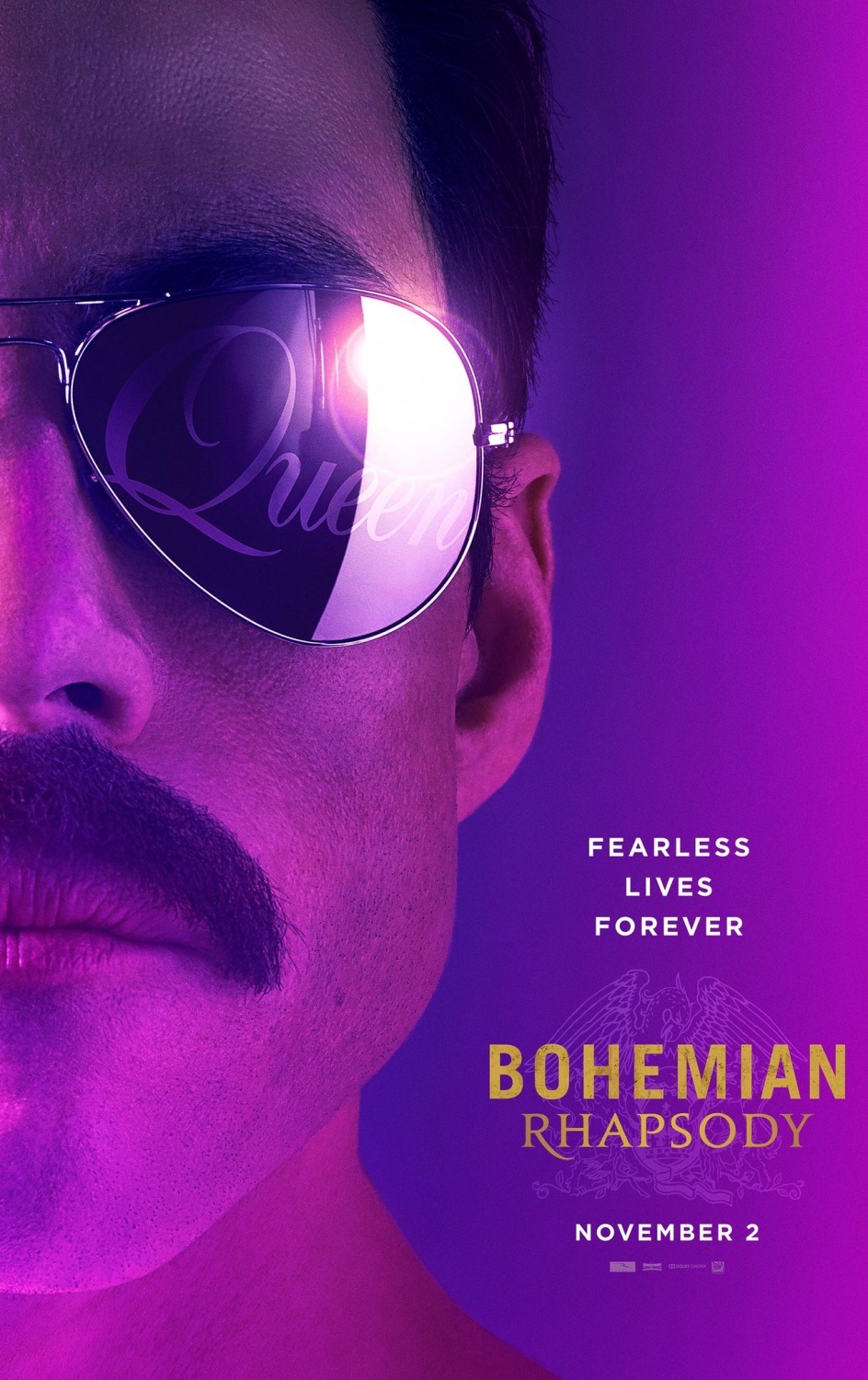 #6. Bohemian Rhapsody – As he seeks to fulfill his dream of becoming a famous singer, art student Freddie (Rami Malek) rebels against his traditional Parsi family and joins the band that will become Queen. Adopting the surname “Mercury”, Freddie becomes a superstar as he and his bandmates create the exuberant music that electrifies audiences in the 1970s and 1980s.
Nominated for 5 awards: Best Picture, Best Lead Actor (Rami Malek), Best Film Editing, Best Sound Editing, and Best Sound Mixing.
“We Are the Champions”
“Somebody to Love”
“Another Bites the Dust”
“Who Wants to Live Forever”
“Don’t Stop Me Now”
“I Want it All”
“Under Pressure”
“We Will Rock You”
You know their songs – and you were probably singing some of the titles while reading that short list of their greatest hits. Even their biggest song, the title for the film “Bohemian Rhapsody”, has continued to live on even after the days of Queen’s stardom. This Oscar-nominated film was bound to take off and excite audiences who craved to bang their heads one more time to the songs made to blare through speakers. And since its nomination, more issues outside of the film (particularly with the director) have made it distasteful to critics. Overall, Bohemian Rhapsody attempts to tell the story of Queen and stardom of Freddie Mercury, but instead of this being a greatest hits album, it lands more like Greek tragedy out of Shakespearian play.
There are a lot of positives in this film – in particular, they all revolve around the lead performance and the initial creation of the royal rock band. It’s a fascinating story about how these now-icons met and the journey that life took them on from washout college pubs to Whimbly stadium and beyond. The music, of course, plays right into the narrative as the stories behind some of Queen’s greatest hits tell of their struggles and successes. In particular, I loved the background to the titular song “Bohemian Rhapsody” and how it became a whimsical afterthought rather than a big radio hit upon its release.
But the star of the film is Rami Malek who encapsulates Freddie into the narcissistic, adored lead vocalist that changed the face of rock-and-roll music. The final 20 minutes of the film is a near perfect recreation of the iconic Live-Aid concert that is sure to leave audiences on a high note. I would be surprised if Malek doesn’t hear his name called come awards night as everyone seems to agree that this is a performance for the ages.
The main trouble with this film is in its main character – what do we (as viewers) do about Freddie Mercury? Without giving major plot details away I think it’s safe to assume that people know about Queen’s lead singer’s personal and sexual lifestyle. Freddie’s family life clashes with his adopted band family but, this deep “secret” never gave Freddie a chance at what he thought would give him the wholeness he so desperately desired. Although the film ends on a rock-tastic finale, I could not help but feel I was sold a tragical biopic rather than a brave, triumphant one. It feels empty and incomplete – just as Freddie did.
Problematically, Bohemian Rhapsody lacks a cohesive, climactic narrative structure. Much of the movie is episodic, moving from scene to scene showing how different hit songs came to be and although that’s exciting for what it is, the payoff just isn’t quite there. It makes the whole of the movie and Mercury’s story even more muddled than before – not the musical poetry that Queen is recognized for.
Overall Grade: C
Projected Wins: Best Actor (Rami Malek)
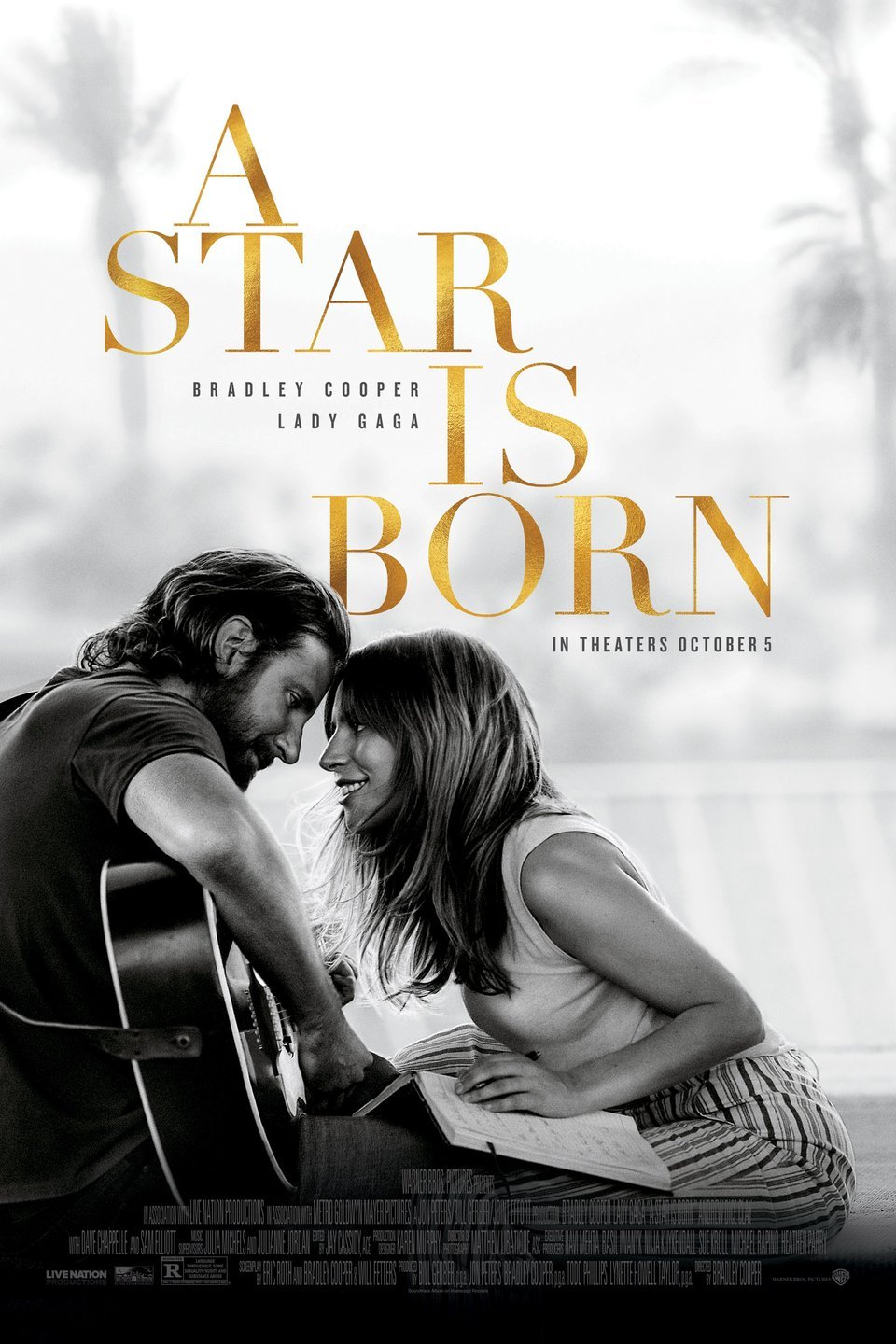 #5. A Star is Born – When rock star Jackson Maine (Bradley Cooper) meets struggling singer Ally (Lady Gaga), he is impressed by her talent and encourages her to perform her own material despite her insecurities. Ally’s career quickly blossoms, as does her romance with Jack, although his alcoholism and ambivalence over her success jeopardize their relationship.
Nominated for 8 awards: Best Picture, Best Lead Actor (Bradley Cooper), Best Lead Actress (Lady Gaga), Best Supporting Actor (Sam Elliot), Best Cinematography, Best Original Song (“Shallow”), Best Sound Mixing, and Best Adapted Screenplay.
Stop me if you’ve seen this one before – yes this is the FOURTH incarnation of this narrative following in the footsteps of the original 1937, the first remake in 1954 with Judy Garland, and the 1976 Barbara Streisand version. Mark Twain’s words from his autobiography carry some truth here when he writes, “There is no such thing as a new idea. It is impossible. We simply take a lot of old ideas and put them into a sort of mental kaleidoscope. We give them a turn and they make new and curious combinations.” The narrative here is remade slightly, updating the songs and a few storyline beats here and there, but if you’ve seen this one already the story is the same – the high price of fame may cost more than you’re willing to afford.
This rendition is receiving highest praise ever from the Academy compared to the previous iterations of this classic and it’s hard to argue with their logic. Bradley Cooper as a first-time director and lead actor competently helms both like a veteran. Sure, he makes a few mistakes in the editing room and his accent doesn’t hold from start to finish, but people will shrug those off. The supporting cast (Sam Elliot most notably) adds a layer of conflict and complexity to the overall narrative keeping our focus squarely on the star being born on-screen.
Everyone knows who Lady Gaga is even before they watch this film. She’s already a star by her own right. But she proves that she isn’t just a singer/songwriter – in the role tailor-made for her she rises to the occasion and delivers a solid performance. She’s bound to be on the big screen come more often in the future, especially if she walks away Sunday night with the statue. But if this remake had gone for someone nobody had known, I wonder if the impact might have resonated more with audiences rather than falling back on someone who viewers already see as a star. I know that’s not what someone should say but, who’d have thought of that irony to nit-pick? Shouldn’t A Star is Born be about a star being born on-screen?
But before you rush to see this version – there is a considerable caution to this loveable tale. Like many of the Oscar films this year, there is a driving and worrisome theme all over this film more so than the others: Self-destruction. Jackson is losing his stardom because of his health and overall motivation. Ally’s star, though radiant and fresh, begins to be hijacked as other’s dictate to her what her goals should be. Both are on the road, by their own choices, towards self-destruction. Might I also add from a viewer’s displeasure that this film is loaded with unnecessary and crude language that is not needed to prove it’s already powerful enough tone. As Christians, this film will ask you to consider your own journey and its purpose. I pray that the Father and we can speak life into people’s stories and not expect or demand that each other be “stars” in our own right – because stars burn out no matter how bright.
Hollywood keeps remaking this story, updating it for modern moviegoers. Obviously, there’s something special and universal about its story that it has tapped into no matter the viewing generation. It also presents an opportunity for actors, singers, writers, and directors to create a dramatically powerful movie with compelling characters that touch people’s hearts and souls. But as my wife said as we watched it realizing we had another 40 minutes to go in the runtime, “I’m bored” – I get the feeling many others will find themselves straying too.
The previous versions are better no matter their age. I guess it’s time to set the countdown for whoever will remake this remake.
Overall Grade: C+
Projected Wins: Best Original Song (as if there’s any other choice at this point) and Sound Mixing
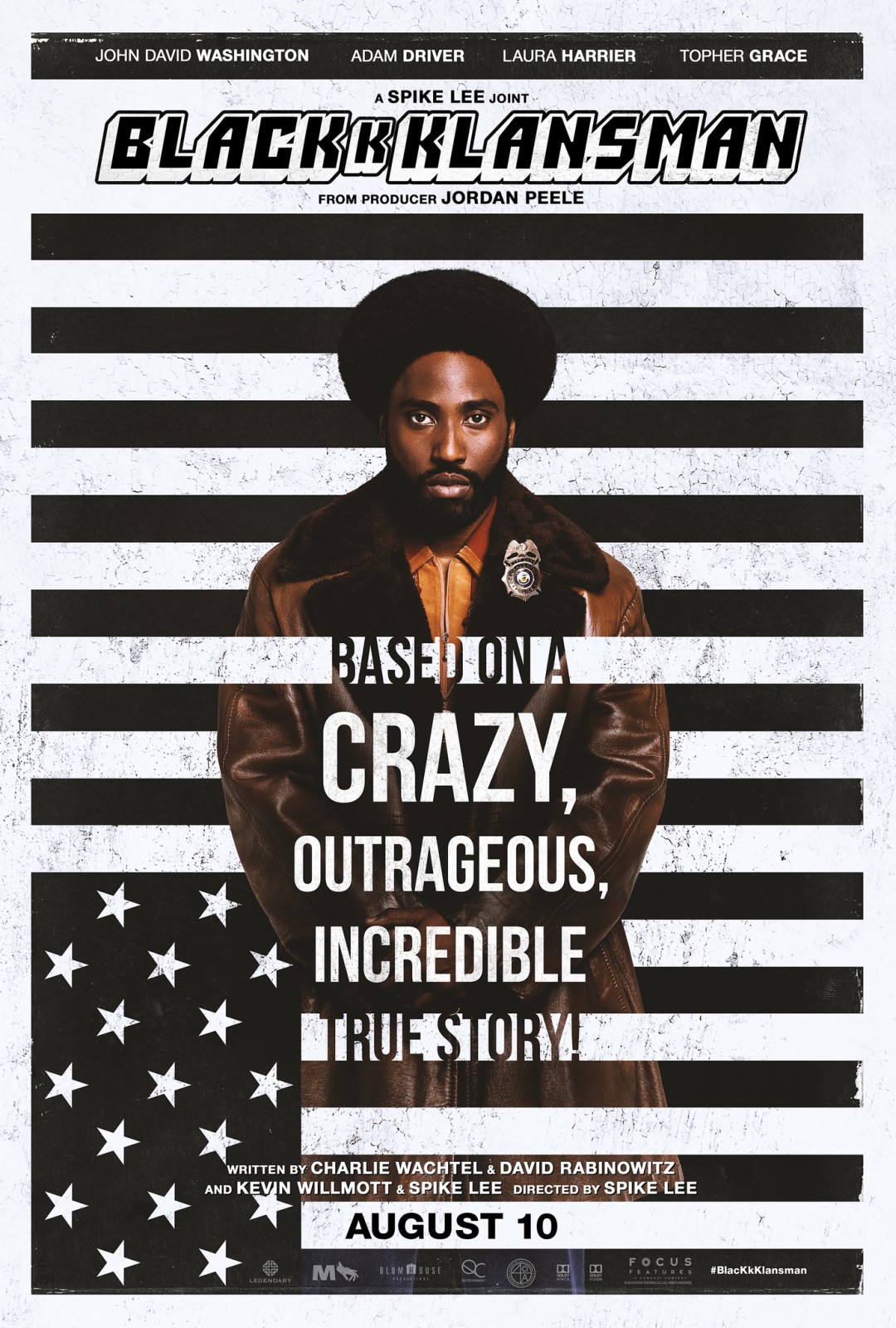 #4. Blackkklansman – In the early 1970s, Ron Stallworth (John David Washington) becomes the first African-American officer in the Colorado Springs Police Department. Hoping to distinguish himself, Stallworth organizes an investigation into the local chapter of the KKK, recruiting Jewish officer Flip Zimmerman (Adam Driver) to go undercover and infiltrate the hatemongering organization.
Nominated for 6 awards: Best Picture, Best Actor in a Supporting Role (Adam Driver), Best Director (Spike Lee), Best Film Editing, Best Orginal Score, and Best Adapted Screenplay.
If that synopsis or tagline doesn’t grab your attention I don’t know what will. This story seems more surprising than anything Hollywood could come up with and the fact that it’s true is what takes it over the edge. From a smart, unique narrative to a full-fledged adventure with deeper ramifications BlackKklansman checks all the modern-day storytelling beats. It must be pretty wild in this real-life case to tell people, “Hi, my name is Ron Stallworth. I was the first African American to be inducted into the KKK – and they didn’t even know it!“
Director Spike Lee, who film critics have beloved over his many years (but I myself have just never found the same regard for), delivers a powerful message in a time when race and equality are constantly in the news cycles. There are bitter scenes of startling contrasts like the shooting gallery and the KKK initiation/induction ceremony that have lasting impacts – probably as Spike intended. Many times in the film I found myself chuckling only to be thrust back into the cold harsh reality of this time period’s bigotry. For example, Officer Ron scores big with the case and is strolling through the hallways brimming with excitement when he’s body-checked hard by a White racist cop reminding the Black rookie cop of “his place”. It’s the moments like that that showcase this film’s message and direction.
John David Washington is a star in the making who will follow in the footsteps of his father, actor Denzel Washington, making a name for himself in this role. Ron’s story suggests that looking past skin color and focusing on who people really are inside is the only way our society can survive – admittedly a good message. Adam Driver complements so well Washington’s tone, humor, and sarcasm as he portrays a White Jew also wrangled into this wild ploy to infiltrate the KKK. It reminded me of Lethal Weapon‘s tandem of Mel Gibson and Danny Glover in their playfulness towards each other while standing firm to two character’s history and beliefs that collide when different cultures interact.
The movie is well laid out narratively and put together structurally – I really liked it for the most part! The problem is that’s not what Director Spike Lee wants from viewers. The lasting message of this film is clearly something else entirely – Enrage. From Alec Baldwin’s “White-man propaganda” speech that set’s the early tone to the final scenes depicting the current racial issue our country faces, Lee uses this film’s story as a parable for his own political message. By using this narrative’s storyline as a basis for today’s political climate, the disgust is palatable for all to see.
The powerful lasting images feed into one man’s agenda of hatred and anger even going so far as to depict today’s unrest as a continuation of unresolved racism. Spike goes so far as to infer that the KKK’s leader David Duke’s message and hatred still resonate due to governmental leadership. But anger, in all its inflamed and even cinematic variations, is an emotion that our world could definitely use a little less of.
Spike Lee peddles a message that feels nearly as prejudicial as the one he strives to denounce.
Overall Grade: B
Projected Wins: Best Film Editing, Best Adapted Screenplay, and Best Original Score (and Spike Lee is a dark-horse for Best Director)
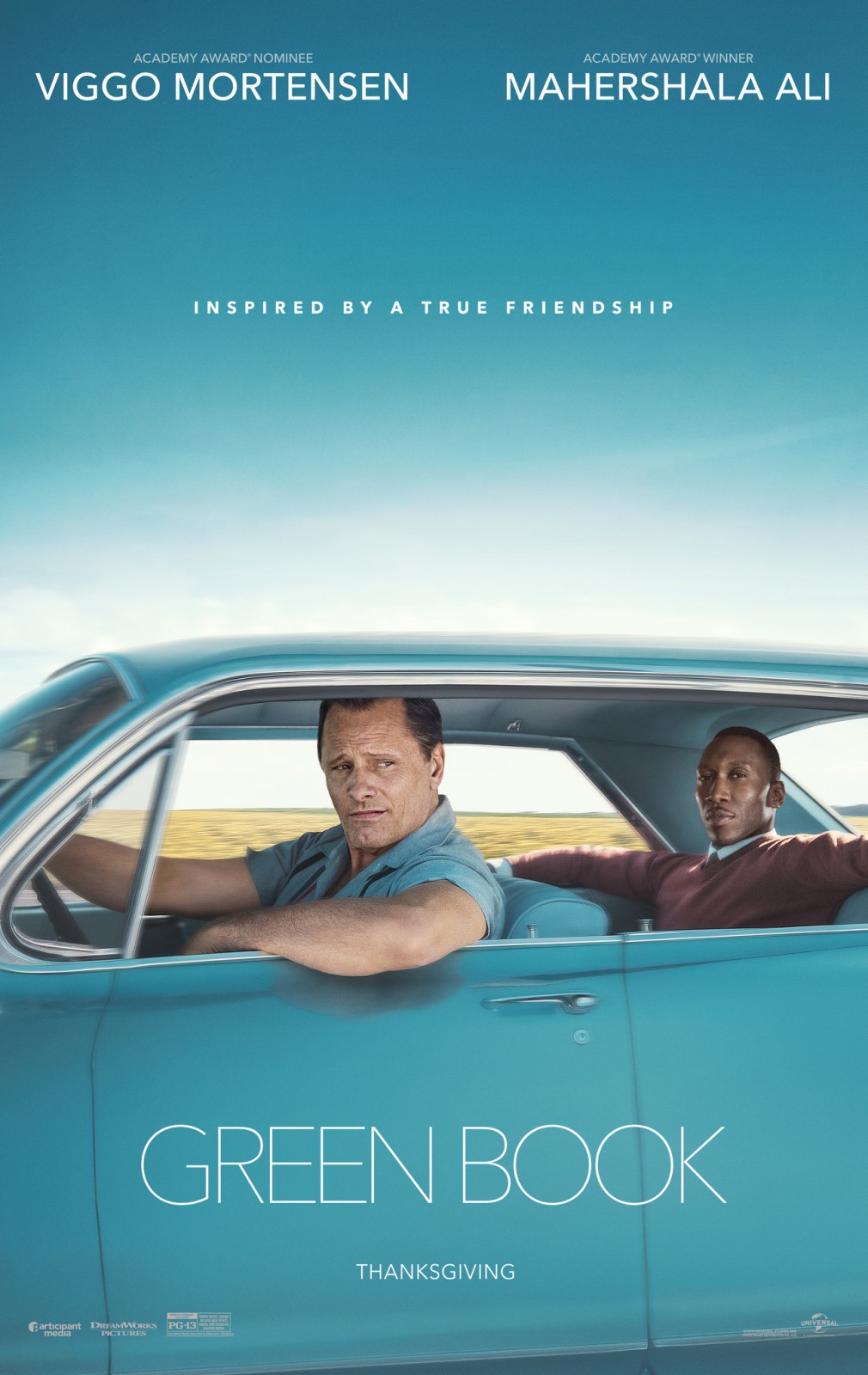 #3. Green Book – Dr. Donald Shirley (Mahershala Ali), an accomplished concert pianist, hires Italian-American bouncer Tony “Lip” (Viggo Mortensen) to drive him during his 1962 tour of the South as protection against the racism that he, as an African American, is certain to encounter. Despite their differences, Dr. Shirley and Tony discover that they enjoy spending time together and have much to learn from each other.
Nominated for 5 awards: Best Picture, Best Lead Actor (Viggo Mortensen), Best Supporting Actor (Mahershala Ali), Best Film Editing, and Best Orginal Screenplay.
The whole idea of the real-life book Green Book is a tragic and disgusting necessity of our American history. For more than 30 years, The Negro Motorist Green Book guided black travelers through segregated America. In an era when many hotels and restaurants refused to serve or shelter African Americans (particularly, but not entirely, in the South), the Green Book was designed (as the book itself said) to give “the Negro traveler information that will keep him from running into difficulties, embarrassments and to make his trip more enjoyable.” And so when it comes a time in 1962 for an accomplished Black piano player to go on a concert tour down South, he needs a little more muscle. Enter: Tony “Lip” Vallelonga – a simple New Yorker in need of some cash who will do what it takes to provide for his family, even drive a Black man on his 8-week tour. With the Green Book in hand and Tony “Lip” behind the wheel what could go wrong? Southern hospitality!
This is a perfect pairing when it comes to acting – Viggo (best known for The Lord of the Rings franchise) alongside recent Oscar’s winner Mahershala (2016’s Moonlight) – a star-studded power duo for the big screen. When I saw the trailer debut back in the summer, I had extremely high hopes for Green Book (maybe even a little too high) but nonetheless, I expected greatness in story and character and overall they both deliver.
With these two actors portraying real-life people it can be hard to live up to the expectations of who they are playing in real life. No wonder Tony’s son, Nick Vallelonga, came onboard as the producer and writer. In an interview he did, Nick says this about his father’s relationship with Dr. Shirley: “My father was a street guy, and a product of his environment, of the times. On this trip, he is thrown into this car with this guy. There were a lot of differences. . . . They were teaching each other things. It changed the way my father raised us as kids.”
Now a lot has been made in recent weeks ever since the film’s nomination about the validity of the screenplay and its main tandem. Many critics have come out after the fact saying that this film is “tone-deaf” and portrays the friendship of Tony and Dr. Shirley as a “White-savior complex”. Monique Judge from the Afrocentric progressive online magazine “The Root” says that “this film spoon-feeds racism to White people”. It is also a bit disturbing that the Shirley family has shared that they were not contacted until after the film was made, leading many to wonder if Dr. Shirley is based in fact or based on Tony’s Son, Nick’s, the viewpoint of his father’s friend. Not to mention Director Peter Farrelly’s past accusations resurfacing as well. All of this to say – who would’ve thought that there would be controversy surrounding such a controversial topic as race relationships? (Notice the irony?)
As I watched Green Book this could have easily been yet another generic Civil Rights film, but it was much more than that. Marhershala Ali carries this film with dignity and class as he gracefully steps into the role of Dr. Shirley – who he himself had done research on even before accepting the role. He is easily a shoo-in for Best Supporting Actor, even though he’s better described as the “co-lead” for this film (but hey – if Viola Davis can do it in 2017 with Fences so can Ali). This film goes above and beyond previous iterations of race relationships like Driving Miss Daisy or the angry Malcolm X or even the preachy often called “heavy-handed” Best Picture winner from 2005, Crash. Green Book lands firmly as a staunch reminder of a tragic history here in America.
Unlike many of the film’s competitors, this flick has that “Oscar’s moment” – that one scene that stands the test of time and serves as a 60-second synopsis of the entirety of the story. If you’ve seen Green Book you hopefully remember the scene where Dr. Shirley exits the vehicle on a rainy day and argues with Tony about identity – what makes up a person, and in particular, a person who doesn’t feel that they feel welcomed and belong. A powerful scene to accompany a wonderful film.
Writer Nick Vallelonga said this about his feelings on the film as a whole: “I always wanted an ‘It’s A Wonderful Life’ type feeling when you walked out of it. These days you need it. There’s enough hard-edged, mean spirited things going on in this world. If you can come out of that movie feeling good, I think we have accomplished something.” Couldn’t have said it any better.
Overall Grade: B+
Projected Wins: Best Supporting Actor (Mahershala Ali – even though he’s really the co-lead for this film)
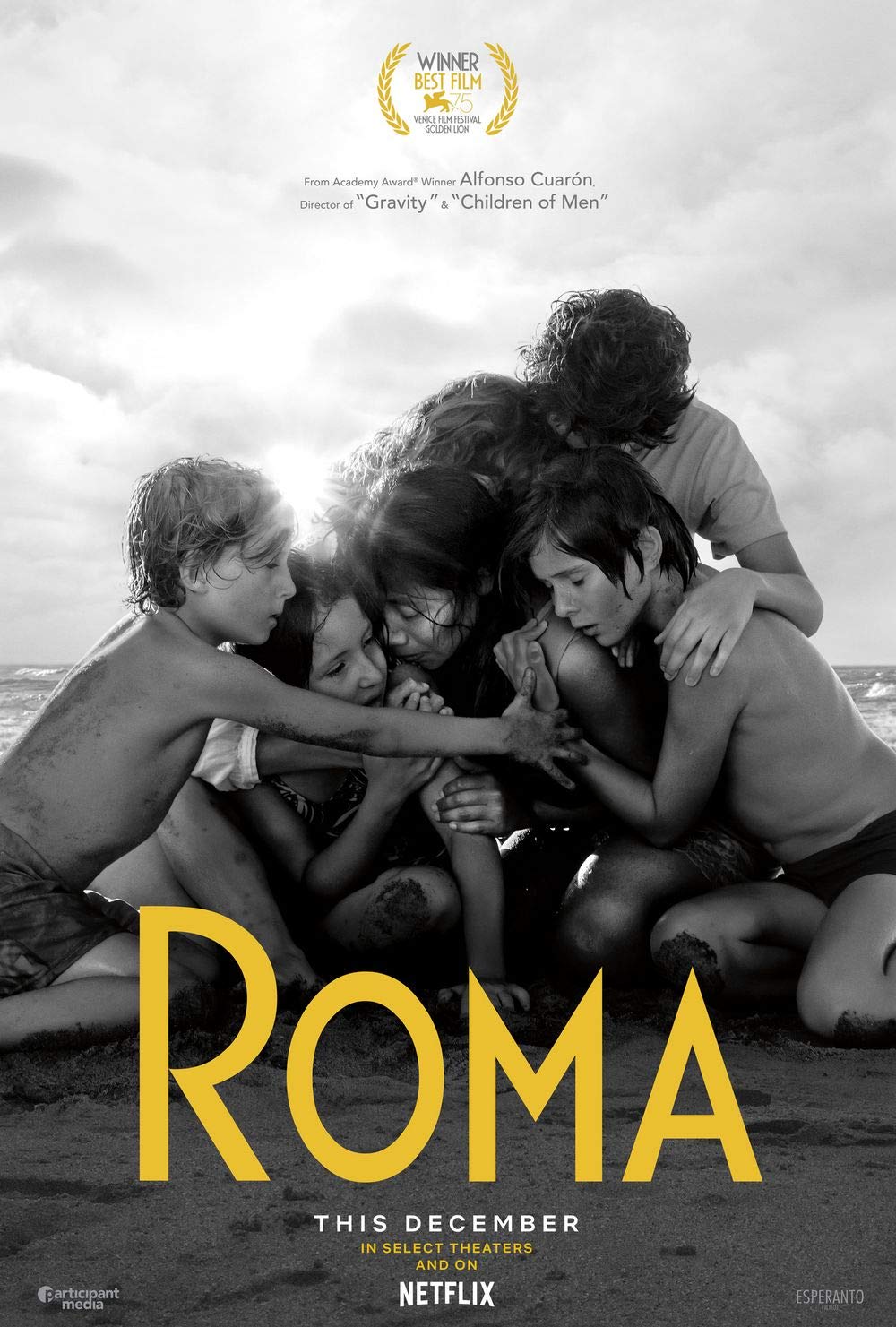 #2. Roma – In Mexico City in the early 1970s, Cleo (Yalitza Aparicio) is a maid in the household of a middle-class doctor. She takes on increasing responsibility of caring for the family’s four children during a time of personal and political upheaval.
A film in total black and white as well as in Spanish is also tied for the most Oscar nominations with 10 awards: Best Picture, Best Lead Actress (Yalitza Aparicio), Best Supporting Actress (Marina de Tavira), Best Cinematography, Best Director (Alfonso Cuarón), Best Foreign Language Film, Best Production Design, Best Sound Mixing, Best Sound Editing, and Best Original Screenplay.
Most likely you didn’t see this one – I may not have until it was nominated.
Most people probably haven’t given it any thought even though it’s available on Netflix right now.
It didn’t come out on the big screen as a summer blockbuster.
It doesn’t have the lead actor/actress that you recognize from your favorite film.
It’s in black and white format, lost in an arthouse form meant for Indies and pre-1960’s films.
The film is completely in Spanish adding an extra layer to the unwatchability factor for many American movie-goers.
The director does it all – from behind the camera to production and beyond – you name it Cuarón does it.
And to top it all off – there’s no soundtrack – not one piece of accompaniment added that is typically in today’s film library.
The result though is a very human story of family, love, grief, and guilt, with a light criticism of social classism.
Alfonso Cuarón made a name for himself a few years ago with the Oscar hit and big winner at the 2014 ceremony with Gravity, taking home prize after prize for visuals and direction. And if you’ve seen Gravity it is remembered for its awesome and wild spectacle of space and heartfelt character moments. Here in Roma, Cuarón strips away all of those extra unnecessary distractions to focus on his main character – Cleo.
The most incredible feat in this film is the work he does with Oscar-nominated actress Yalitza Aparicio who had never acted before this movie (that’s right – one acting gig and she’s already a star). His ability to guide Aparicio and other inexperienced screen actors through long takes (meaning he doesn’t cut away as he pans the camera slowly and methodically around the room), tackling complex emotions on cue is truly remarkable and inspiring for young filmmakers of today.
Cuarón has talked about how Roma is a deeply personal work, recreating memories of his own childhood. It especially was meant to be a love letter of sorts to Libo Rodríguez, the nanny who helped raise him. And in this retelling of his childhood memories, we see the world unseeing and forgetting what doesn’t hold value for them, but change is on its way. And once that changes comes (personally or nationally), nothing will look the same as it did before.
Roma is the definition of a “slow-burn” film – taking it’s time to tell the story in long, drawn out, sometimes idle conversations of little meaning that show day-to-day life. That can be a detraction for viewers who are used to the quick, frenetic blockbusters of today. And the fact that it’s on Netflix (that same place you watched Tyding Up with Marie Kondo – admit it! My wife and I did too) it gives you the power of control. When you are bored with what you are watching you can flip away to anything else your heart/mind desires – no harm, no foul because it’s your viewing experience that matters. Roma is overlooked and unappreciated for the time in which we live in. This film will ask you to leave behind showy explosions, splashy CGI, or lush period-piece costumes and step into the shoes of someone who feels overlooked and undervalued. Can you sense what the Mexican-born director Alfonso Cuarón is trying to say? Think!
Before you login to your Netflix account and gather the family, there is great caution to be taken here. There’s an overly gratuitous male-nudity scene that is blatantly and frustratingly unnecessary. I would firmly argue that it serves the story no purpose other than the fact that the director wants to be hypersexual in his storytelling and it detracts from the relationship he’s attempting to construct in Cleo’s life. Aside from that one moment, in the background of this film are real historical events of violence that Cleo is forced into. For example, while shopping for a [SPOILER], the events the Corpus Christi Massacre (which took the lives of about 120 people in Mexico City on June 10, 1971), are recreated in horrific and perilous detail. So although Netflix doesn’t distribute its films with MPAA ratings – this would certainly qualify as an R-rated film warranting a heavy caution to all viewers.
Even so, Roma remains a deeply affecting work – stunning in its use of light and shadow, resonant in its unassuming storytelling. And it also gives us a glimpse of something truly sublime: the glorious nobility of service. Jesus tells us that we should serve others, so we know it’s good advice. But most of us – especially those of us who live in the United States, where strength and vanity often hold a certain pride of place – secretly find the concept of servitude rather demeaning and weak. We strive for our promotions, grasp for bigger paychecks. We yearn to lead. We long to be recognized. We want to be important. We see Cleo – really see her – and glimpse someone who is worthy of respect, then admiration, and then perhaps even envy. In her modesty, her quiet dignity, her humility, and her ever-present grace, we behold in her a…blessing. A hint of the Beatitudes, where the mournful are comforted, where the meek inherit the earth.
Roma, like Cleo, might seem meek at first, by our oversize cinematic standards. But it packs a wallop in innumerable ways.
Overall Grade: A-
Projected Wins: Best Picture, Best Director, Best Cinematography, Best Foreign Language Film, Best Production Design, and Best Original Screenplay
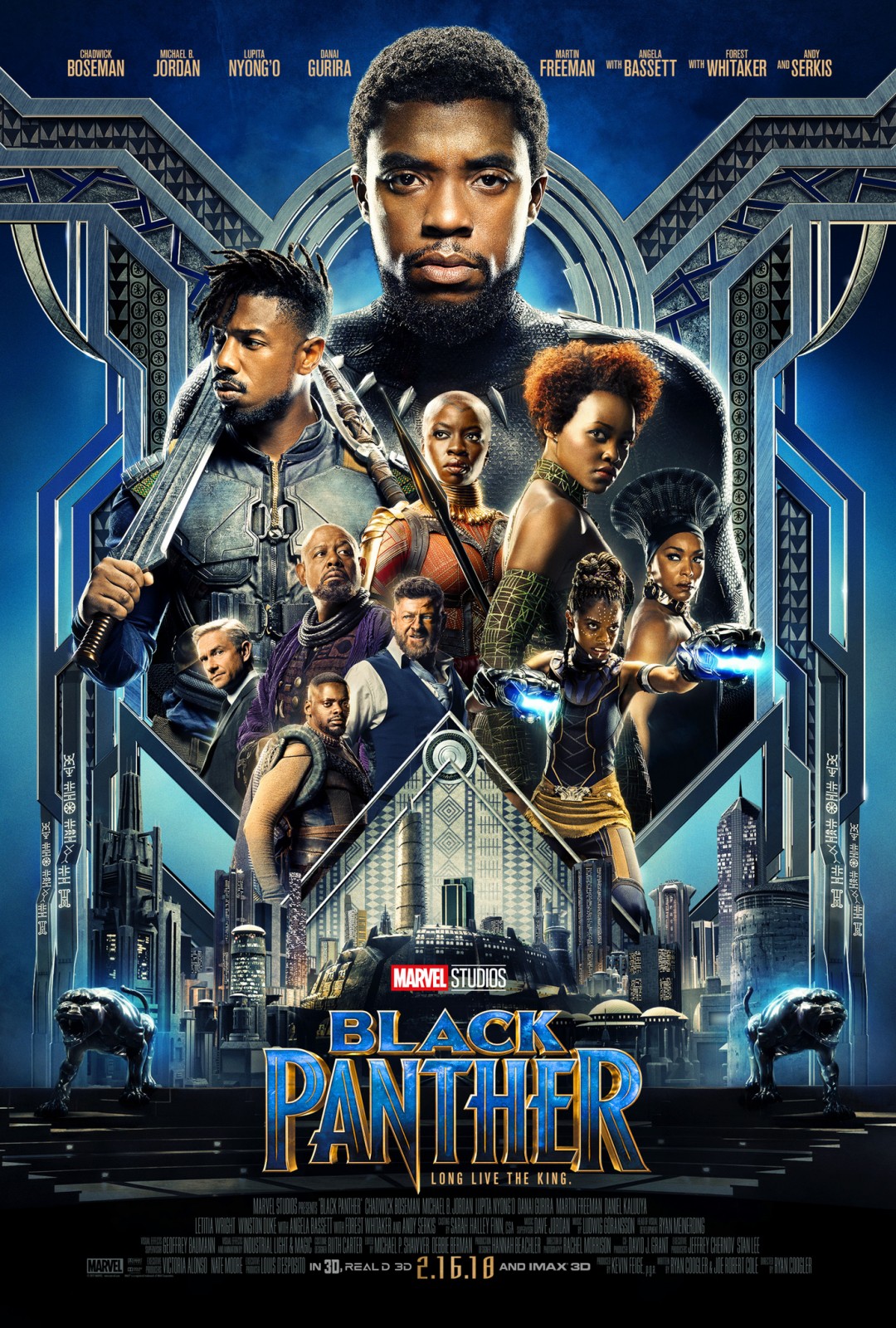 #1. Black Panther – After the death of his father, Prince T’Challa (Chadwick Boseman) returns to his African homeland of Wakanda, which has hidden its wealth and advanced technology for generations. T’Challa assumes his father’s throne and must also accept his mantle as the superhero Black Panther to protect Wakanda from numerous enemies intent on pillaging its resources.
Nominated for 7 awards: Best Picture, Best Costume Design, Best Original Song, Best Original Score, Best Production Design, Best Sound Mixing, and Best Sound Editing.
Welcome to Wakanda! (“Wakanda Forever!”) – a nation that is hidden from the rest of the world in secret as it struggles alongside the rest of the country in poverty. Well, that’s what they want you to think. Hidden under a secret invisible cloak is a secret nation containing the most advanced society on the planet. Its capital city makes Abu Dhabi look a little dull, Tokyo look a little old-fashioned, and the Big Apple looks like it’s a little past its sell-by date. The secret of Wakanda has kept them safe for generations and now with the rise of a new king following the death of his father in Captian America: Civil War, T’Challa looks to be the leader his father. Until it is unveiled that he is not the only one eyeing the throne. Killmonger is coming and is ready to warmonger and profiter Wakanda’s resources to establish a new world order, with him on top of course. But the throne is more than just about Wakanda – it’s about the rightful mantle of the Black Panther.
One of the biggest blockbusters the film industry has ever seen hit this past February as Marvel’s first African American lead superhero stormed into theaters and racked up the 5th largest opening of all-time topping the worldwide box office for $1.3 Billion. From a marketing and statistical perspective, it landed it at #9 all-time in the world box office rankings and 3rd overall here in the States behind only Avatar and Star Wars: The Force Awakens – talk about an elite company! So why did it make so much money? People will say “It’s a Marvel film” and there’s some truth to that. Superheroes are all the rage today ever since Iron Man‘s release back in 2008 that began this paladin trend. But in reality, it is much more than just simple facts and numbers from the box office that determined its success.
In all the films that came before in the Marvel Cinematic Universe (MCU), this one was different – an African American lead with a predominantly African American cast set in the backdrop of Africa. People, for the first time, saw a superhero that looked like them, talked like them, and was as exciting as advertised in his previous appearance. Oscar-winner Octavia Spencer, who’s not even in the movie, thought the movie was important enough to rent out an entire movie theater and fill it with “an underserved community … to ensure that all our brown children can see themselves as a superhero.” Black Panther, in its own superhero-y way, deals with bigger cultural touchstones, most notably racial upheaval. Overall, it is an exciting and ultimately redemptive story, with tremendous special effects and fabulous production designs – even the costume design is getting Oscar cred this year which goes to show just how many talented people worked on this hit.
Let’s start with the good (I mean bad) – the villain Marvel finally gets right! After bad and forgettable villains (Maleketh, Killian, Daren Cross, even a whole planet named Ego – yikes) the villain rises up to match the intensity and intrigue of the hero. In doing so the antagonist is actually speaking hard truths giving him even more credibility and character. For many, he topped their list of favorite villains in the MCU (that is until Thanos came along and snapped his gauntlet wearing fingers). Killmonger (Michael B Jordan) is the guy who has seen Africa exploited, misused, and ignored. He knows the injustices that the continent’s inhabitants have had to endure for so many centuries, and he’s angry about it. And when you look at history, it’s not hard to find reasons for that anger. Killmonger, in all of his villainy, speaks some truth – which is what makes a good villain.
Pair that alongside the hero, T’Challa (Chadwick Boseman) and you have a battle of identity and rulership. T’Challa is thrust into a position that he does not fully feel he is ready for. And so he chooses to follow in his ancestor’s footsteps hoping to maintain peace and security for as long as possible. All the while in the back of his mind knowing that the secret of Wakanda is getting out and their mysterious nation won’t be able to hide in the shadows for much longer. The themes of family, redemption, and identity resonate throughout the entirety of the film making it a strong case for this year’s Oscar film with the best message.
But it’s not a perfect film (hard to say that any are) but there’s a reason why it is #1 on my list while not receiving the top possible grade. While some of the film’s spiritual nature deal in Christian ideas and values, there is a whole lot of other mythos that is embedded in the fabric of this narrative. In the film, we see T’Challa on a spiritual quest talking with his ancestors upon his coronation as the new king. But these aren’t just memories, flashbacks, or spiritual journies – this is family pagan worship. The gods of the ancestors play a pivotal role in T’Challa’s understanding of who he is and what kind of king he will be and throughout the film, and his rival antagonist pushes back against that core spiritual belief. Without giving major plot details away, this friction may, in fact, be good for the new king as he sets out on a journey of his own, learning hard truths, and fighting for what he knows to be right against his ancestor’s judgment. But in the end that spirituality of paganism doesn’t escape it from criticism. Plus the final battle is a CGI mess that falls into stereotypical superhero tropes we’ve seen before that doesn’t feel like the fitting production quality as the rest of the flick.
That being said, there are so many wonderfully good Christian themes and messages scattered throughout Black Panther that catapulted it to this top spot on my list. The film speaks against revenge and supports repentance and reconciliation. It also contains some allegorical Christian references to death, baptism, and resurrection. When T’Challa faces his dearly departed father, he’s told flat out, “You are a good man with a good heart. And it is hard for a good man to be king.” But T’Challa’s determined to try to be both, whatever the cost and that message has wonderful avenues for conversations about the Christian faith and life.
Black Panther has a good heart, and it gives us a real hero – strong and honorable and, when possible, even filled with grace.
Overall Grade: A
Projected Wins: None (sadly)
What do you think of the Best Picture nominees? To be honest, I was a bit disappointed this year. Check out how it compares to previous years:
2016 – 1 C 3 B’s 3 A’s 2 A+’s
2017 – 1 D 3 C’s 3 B’s 2 A+’s
2018 – 1 F 3 C’s 2 B’s 2 A’s
*No A+ ratings this year and the first ever F (OUCH!)
What else did you love from this past year? I want to hear your Honorable Mentions!
Where did you see the Gospel in these Best Picture nominees and how can we as the church come Monday after the awards night use conversations about these films to bring people closer to faith?

Leave a Reply