
 Sometimes you don’t get to see everything when it first comes out…and that’s the case here with these two movies. They came out in March and April of this past year, but I never found enough free time to make my way to the theaters. And so as the summer blockbusters fade away, these movies from the springtime are now hitting the shelves for home release or rent. However, I get the feeling that I am not alone.
The Case for Christ – is based on the true story of award-winning investigative journalist Lee Strobel – an avowed atheist – who applies his well-honed journalistic and legal skills to disprove the newfound Christian faith of his wife – with unexpected, life-altering results. The book (by the same name) since its release all the way back in 1998 has sold over 10 million copies and was the catalyst to many other “The Case for…” books by Strobel. It is simply as the poster reads, “One man’s journey to solve the biggest mystery of all time.”
The Shack – After the abduction and presumed death of Mackenzie (Mack) Phillips’ youngest daughter, Mack receives a suspicious letter and determines it is from God, asking him to return to the Shack where her murder trail went cold. After much contemplation, Mack leaves his home and family to go to the Shack for the first time since his daughter’s abduction which starts him on an eye-opening experience that will change his life forever. William P. Young authored the book in 2007 for which this movie’s screenplay is about. His book was a #1 New York Times bestseller capping the 20 million copy mark this past year and has since its release has caused discussions and heated debates from readers of faith and beyond.
Both of these films managed to stay in theaters for roughly 3 months though each never seemed to draw in the crowds as they had hoped. The Shack made a little over $57 million in total, which is modestly well considering it came out in a stacked month with juggernauts such as Logan, Beauty and Beast, and Boss Baby. The Case for Christ only managed $14.6 million in its wide release a month later (BoxOfficeMojo). These two films are not the only Christian movies to hit the big screen lately. In the past few years, Christian movies such as God’s Not Dead (1 & 2), Son of God, Risen, Do You Believe?, and Heaven is for Real have all made their push to the bigger markets, but few ever stand up to the competition of other mainstream movies.
Perhaps it’s because these sorts of films are having to work harder than say a comic-book or star-studded Hollywood movie. Add to that the fact that the “Christian” movie stereotype is often not well received by the mainstream public due to past movies that have flopped or shown poor Christian theology/beliefs (Facing the Giants, Exodus: Gods and Kings, Noah, Left Behind). You put all that together and you might expect The Shack and The Case for Christ to be a miss, when in fact these movies BOTH have plenty of positive elements and thoughtful illustrations of the Gospel.
***There are NO SPOILERS! This, along with any other “The Gospel According To…” reviews are spoiler-free to help you both understand the movie as well as illuminate the Gospel’s presence throughout the film. So feel free to read without the worry of having the movie ruined for you.
Remember too, these are my own feelings about this movie so feel free to disagree, comment, and share your own thoughts!
 The Case for Christ:
#1 – In a movie that focuses on the journey of one man’s tireless investigation of disproving Jesus, that lead actor has to carry the weight of this role – and Mike Vogal does just that. He is able to convey his anxiousness and the interest of this newfound faith his wife has latched onto while at the same time remaining complex and mysterious. There is more to Strobel’s life than just this mystery of Jesus. He’s a writer for a the Chicago Tribune, an investigator who works with police, new father, husband, and friend all wrapped together with a deep backstory. As the movie progresses, Strobel’s character development gets richer which in turn helps shape the overall person we as the audience see on screen. There were times I was watching and would say, “Oh, now I get why he acts that way…It’s because of _______.” Movies should take our characters on a journey that by the end show the progress they’ve been on. Sure, Vogal isn’t an “A list” movie star, but his portrayal is captivating as we identify ourselves in his life-changing story.
#2 – As I said in the opening, many Christian movies can have that glossy feel of tackiness or the production just looks poorly done, but here in this film that is not the case. The Case for Christ, which was produced by PureFlix, looks like a movie that is the real deal. I remember when this film was being advertised, trailers and TV spots likened this film to be a mystery with a purpose that really boosts the watchability and marketability – even if it is a “Christian” movie. When you’ve got actors like Vogal, Faye Dunaway, and Robert Forster attached to this project, it certainly helps bolter that larger audience due to name recognition. And what I appreciated most in viewing this film is that there isn’t that cheesy Christian movie feeling. By the end, not everything works out perfectly; which is comforting since that’s the world we live in. What probably helps The Case for Christ‘s cause is the fact that this is based off of the true story of Strobel’s life. It’s something small that some people may not even notice at first glance, but overall the level of production in a picture can make a huge difference.
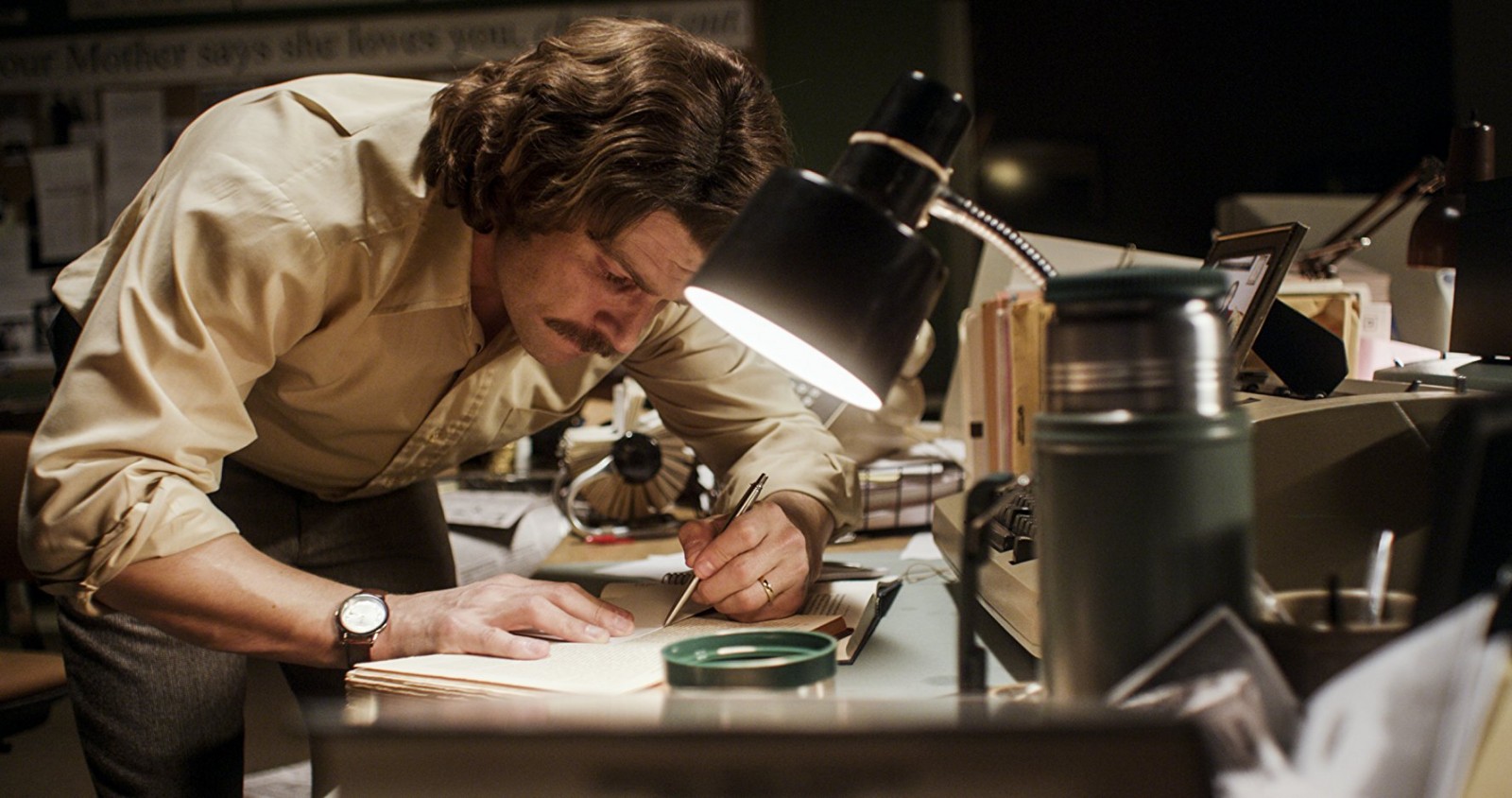 #3 – There comes a point in this movie where Strobel has to make that final decision and what leads up to that makes Act 3 breathtaking. Though later on I will nitpick about some parts of this film in my ‘dislike’ section, the last 30 minutes of this movie are why people should watch this. Without spoiling anything, there is an event that takes place that rocks Strobel’s life causing him to wrestle not only with that event, but also how his investigation of Christianity plays a part. The director does a fantastic job of bringing together all of the details from through the movie, tying them together, presenting them in a convincing manner, and then strengthening the climax to a highly dramatic and satisfying finale.
#4 – When I am working in my office, I tend to have music on. The problem is, and maybe this applies to you as well, I cannot type or read with music playing that has lyrics. Just an aside: I remember one time I received back a paper I submitted for college with comments from the professor along with a circled a phrase that was completely out of place. It dawned on me that at that moment I was listening to a song and I had accidentally written the lyrics in my assignment! And so as a soundtrack junkie (since that’s all I can listen to so that I don’t make more errors) I love listening to a film’s score that I just watched. Though the music for this particular film isn’t all that great, there is one song that immediately jumped out to me because it sounds exactly like the main theme from A Beautiful Mind. So if you hear it – enjoy!
The Shack:
#1 – Like The Case for Christ, this film rests on the shoulders of the main character and his portrayal by Sam Worthington – and once again, he shines. Now Worthington is a more well known actor playing in key leading action film roles (Avatar, Terminator: Salvation, & Clash/Wrath of the Titans), but here he gives a powerful emotional performance. If you know the premise of story, you know that Mack has been through something that no parent should ever have to go through. The opening 20 minutes are gut-wrenching and painful all while knowing deep down where this leads. Even when Mack gets to the Shack, there’s still deeper emotional levels that Worthington explores through his interactions with persons of God (more on that in a moment) about what happened with his daughter that explore more of Mack’s backstory. You really do feel for Mack. You feel for his family who has been through one of the worst pains imaginable. In the end, you buy into Mack as a convincingly broken and hurt father in need of emotional and spiritual mending.
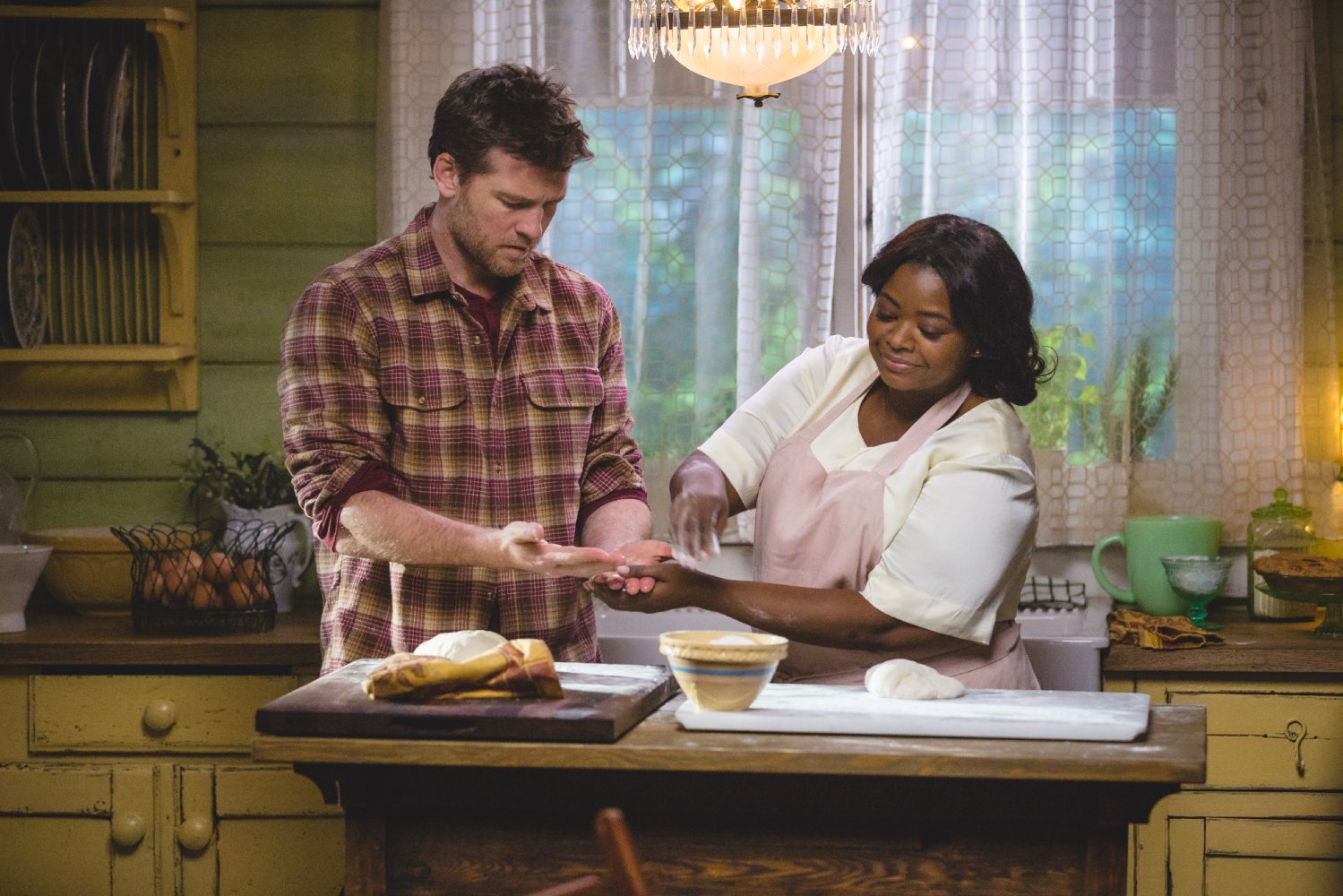 #2 – Pictured in the photo to the left is the main character Mack played by Worthington and Papa played by Oscar winning actress Octavia Spencer (The Help, Hidden Figures). Yes you read that right. Papa is the nickname that Mack’s wife, Nan, gives to God when she talks about Him to her kids. At the onset of the movie, Mack just goes along with Nan’s teachings to her kids and lives out a luke-warm faith vicariously through her passionate relationship with God. As Westerners, in movies and even in our stained glass windowed churches, we typically picture God as an old white guy with a beard (Papa says comically in the movie, “I think you call that guy Santa”). But what this movie does so brilliantly is it forces us to rethink our mental view and concept of God, notably the Trinity.
Now I could go off on a theological argument about whether or not the way that William P. Young illustrates the Trinity in his book or as the screenwriter for this film has a proper understanding of God, but you’ve probably seen and heard enough about that through other bloggers and theologians. If you want some resources, check at the bottom for some links to other reviews or simply Google your way to I’m sure more than a few articles on the subject. Basically, what it comes down to is: does it work? On the surface – yes, (loosely) – but that’s not why it’s in my ‘likes’.
In the same way that a musical like Hamilton can cast African Americans to play white American historical figures like Washington, Adams, Jefferson, and Madison, so too our minds should be able to accept the changes in the character’s appearance so long as they hold true. And for the most part, here they do. These visual changes help us to see a more diverse God through the imagery presented. Is it always right? No and I’ll touch on that later. But you can’t claim that God/Trinity is diverse and not expect our visuals, whether movies or even our picture bibles, to express that imaginatively.
#3 – Throughout a majority of the film, Mack spends ampule amounts of time with God – specifically with the 3 persons of God (Papa, Jesus, and Sarayu/Holy Spirit). Each character of God, thought different from each other, also is God. Though that may sound a bit messy and problematic there is one very redeeming quality that I found to be extremely likable and that is Mack’s relationship with Jesus. The two of them have the most intimate of conversations about life and healing. At one point, Mack even says that he feels closest with Jesus compared against the other two. Jesus’ response, “Well of course, you know I am man right?” That companion relationship feels real and authentic every time they are together on screen. So a big shout out goes to Avraham Aviv Alush, the actor portraying Jesus, who in my opinion had the second most difficult role in this film outside of Mack and if you look at Aviv Alush’s filmography this is his biggest role to date. Job well done and hope to see him again in more roles.
 The Case for Christ:
#1 – My biggest disappointment with The Case for Christ is that the movie never lands tonally from beginning to end creating a bit of clutter. What I mean by tonal issues is that this movie doesn’t know itself as well as it should. As the movie goes along, it tries to be something that it’s not while never really succeeding on any of them. The trouble is: what kind of movie is it? Is this movie a mystery and investigative piece or is it a family drama? Is it a crime thriller or is a comic coming-of-age story? What happens is that Strobel’s story gets lost a bit in the chaos of the films identity crisis.
There are major tonal switches that hinder the progress the movie is trying to make. If more time was taken to look at the film narratively or if better placement of some scenes would’ve happened then that would have served the overall storyline better resulting in better tone. To give you an example, one of these cringe-worthy moments was when Strobel is investigating the death of a cop while doing a story for the newspaper. In the next immediate scene which was preceded by a moment of grief the soundtrack roars and jovial upbeats jump out as Strobel is in his car driving home after work. Those kinds of clashes are sprinkled all throughout the movie – that is till the 3rd Act in which I believe the director really does nail down the essence of this film’s story. Tone is a big deal, and The Case for Christ sometimes ignores itself.
#2 – The other disappointment I found with this film is the lack of support from the secondary characters. Sure, you hear names like Faye Dunaway and Robert Forster but they are limited on screen far too much. Strobel’s wife, played by Erika Christensen, is not all that strong leaving this film totally in the hands of Vogal (who as I said earlier in my ‘likes’ really does shine). What this movie really needed was a stronger supporting cast to rally around Strobel in his everyday life as well as in his investigation of Christianity. It’s what keeps this movie from reach that next level and probably kept a number of people from seeing this film when it was in theaters.
The Shack:
#1 – Though I side-stepped from the theological debate earlier about the illustration The Shack uses for the Trinity, there are some issues that I must talk about with what Young is saying through his theology. The biggest concern that I have is that Young makes key mistakes causing his argument to be muddled. To clarify, in the Godhead there is a Trinity, of one substance and power that are coeternal. They are: the Father, the Son, and the Holy Spirit. They are one God while at the same time three separate persons of that same God. Young tries to show this early on during Mack’s time at the Shack in a scene entitled “Together”. Click below to watch the scene in full:
In this scene Young attempts to show the unity of Papa, Jesus, and Sarayu – that they are one and the same by sharing things like the scars on Jesus’ hands from his death on the cross. Here’s the critical mistake: why would Papa have scars on her wrists? Forgive me for putting it so directly, but God the Father was not crucified on a cross, he did not give up his life and die as a ransom for our sins, nor did he rise again from the dead. Those things all happened in the life of Jesus Christ, not God the Father. Only Jesus would have those scars as only he experienced those events. It’s not semantics – it’s proper theology. It’d by like saying that Jesus lives in my heart. Yes we tell our kids that, but literally speaking, no Jesus Christ does not live in our hearts as believers – that’s the Holy Spirit who is everywhere present with mankind to convict of sin, work newness of life in them that believe, and lead them into all truth. The Holy Spirit did not die on the cross and should not have the same scars either. Sure they were all present for Creation and they are each eternally present, but to say that each of them died on the cross or that each of them lives in our hearts – that’s where it falls off the rails. It’s a confusion of the nature of the Trinity that leaves a whole lots of question marks rather than affirmations.
The film complicates it further when at one point Mack meets an individual who calls herself Wisdom, who is not God and yet for some reason Jesus cannot be in the room as her, but is still some sort of judge even allowing Mack to visibly see heaven. I understand the need for an outside person being as how for most of this film it is just the 4 main characters at the Shack, but this scene needed to have Octavia Spencer as Papa rather than an extra that overcomplicates the storyline. Wisdom is not a separate attribute of God; it is showing discernment and making good judgements by seeing life’s situations from God’s point of view (1 Kings 3:9). It’s these mistakes, along with an already brewing firestorm of Christians who take issue with Young’s concept of God, that add to the errors and backlash against this film. The Shack attempts to do a lot of explaining the complex natures of a topics like the Trinity and Heaven while not succeeding on either.
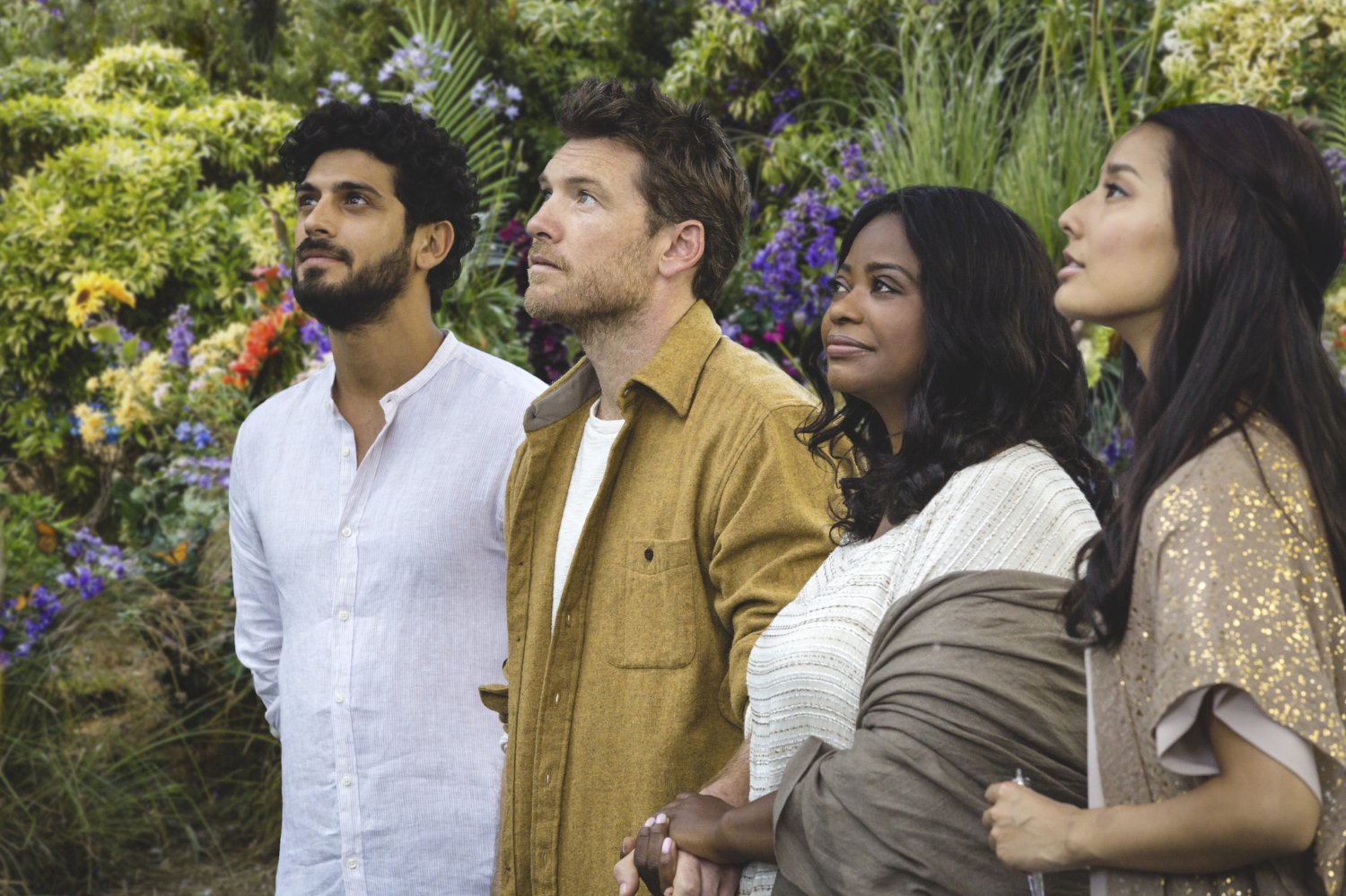 #2 – When we talk about God, many times in church we are referring to God the Father or Jesus Christ. The Holy Spirit is often left out of our prayers, worship, and conscious mind. So while I very much appreciated the significance of a symbolism that focuses on all three parts of the Trinity, the Holy Spirit, or as she is called in the movie – Sarayu, and the direction of her character leaves me with questions. My issue simply is the way the film presents her. The actress who plays Sarayu, Sumire Matsubara, has had a few roles (though none in mainstream media) is also a singer and fashion model. The film seemed to focus more on her physical beauty than her characterization of the Holy Spirit. For example, every time that Mack looks at Sarayu, she has an odd glow around her and Mack seems to blush as though there was some physical or romantic attraction as he stumbles to hold meaningful conversations with her. That bothered me a bit and was a uncomfortable to watch.
#3 – As I said in the introduction, this movie did modestly well at the box office bringing in almost three times as much The Case for Christ, but one very noticeable fault, even from my home viewing experience, there are some bad CGI moments. A lot of the opening is grounded in non-CGI sets, but as Mack reaches the Shack and spends a great deal of time with Papa, Jesus, and Sarayu, there are some moments I winced due to the poor visual effects. Some parts are great, like when Mack and Jesus do a “certain thing” (don’t want to spoil that scene), but later on there is a nighttime location with all of the main characters that had all sorts of cheapness undoing the moment the film was going for.
#4 – Finally, without giving too much away, the ending of this film was a bit predictable and began to fall into that conventional Christian movie ending. I’m not saying that it was Facing the Giants bad (which if you haven’t seen that – good!), but as the movie drew to a close too many things fell too perfectly in place. I do get why the filmmakers want to end on a happier note when most of the film revolves around a very deep and traumatic hardship, but for me it fell a bit “too” into place for my liking.
 Both of these films center around the Gospel – there’s no denying that. One is the biographical record of a man’s journey to self-discovery in who Jesus was and his own submission to that faith. While the other is a fictional story (a parable you could say) of a brokenhearted father in search of answers and healing after unspeakable tragedy. Both discover the character of who God is, the revelation of his death and resurrection, and the proven realization for needed change in their lives. So what should these movies teach us and where is the Gospel?
In The Case for Christ, the Gospel is shared for the investigator in all of us. At one point or another along life’s journey we have to wrestle with our faith; no matter what we each believe it must be rooted in something. And, we each must take ownership of that which we believe. The overarching question is: have we taken the time to believe it to be true? Over the course of this film, Lee Strobel, former legal editor for the Chicago Tribune, cross-examines a number of experts and specialists in the areas of old manuscripts, textual criticism, and biblical studies. Strobel challenges each of them with questions that you and I most likely have like:
– “How reliable is the New Testament?”
– “Does evidence for Jesus exist outside the Bible?”
– “Is there any reason to believe the resurrection was an actual event?”
 It’s a riveting quest for the truth about history’s most compelling figure! So that when all is said and all is done, just as Strobel wrestled, what will your verdict be in the case for Christ – you must make a choice!
As for The Shack, Christians wrestle again and again about the merits of Young’s argument both in his book as well as this movie. But what if we’re asking the wrong questions? Is this movie exploring and explaining the nature and doctrine of the Trinity? No. Young in his own words says that the purpose of his book, and ultimately the film, is “to wrestle with the timeless question: ‘Where is God in the world so filled with unspeakable pain?'” The movie is a parable for where tragedy confronts eternity and is forced to grapple with the complexities of life.
For some outside perspective, here is what my friend Tony Blair, president of Evangelical Seminary, had to say about the Shack after he viewed it back in March: “What would happen if we could see God bearing our pain with us? What would change within us if we could truly believe we are that deeply loved? What would change in our relationships if we could let go of our anger and guilt, and choose instead to forgive and be forgiven? What could be healed through our tears if we would let them flow for the brokenness of this world?
This is not a movie about doctrine; it is a movie about gut-wrenching pain and unfathomable evil. And love. And love. And God.
I am especially fond of this movie.”
The Case for Christ wants you to investigate – to know what you believe. It’s a message for the seeker.
The Shack wants you to wrestle with God – to meet him face to face when life feels shattered. It’s a message for the broken.
Overall Grades
The Case for Christ: B+
The Shack: B –
For more reviews of The Case for Christ:
– Christianity Today – Review
– Patheos Review
For more reviews of The Shack:
– Humor to illustrate the complexity of the Trinity: Bad Analogies – St. Patrick [VIDEO]
– Chip and Joanna Gaines from HGTV’s Fixer Upper Review [VIDEO]
– More to The Shack Than Shaky Theology – Crosswalk
What are your thoughts about The Case for Christ? How much research have you done about your own faith beliefs?
What are your thoughts about The Shack? Have you read the book or talked with others about it? I’d love to hear your thoughts on what you believe The Shack to be about.
What have you recently seen where you saw the Gospel?
Feel free to share your thoughts as well as other likes/dislikes/Gospel moments you saw in the film.
Don’t forget to stay in touch here on our website as well as at our church! Feel free to comment AND SHARE on what you agree with, what challenges you here, or push back a little on what I’ve said. Don’t want to miss out on new posts? Be sure to check back for more Monthly Snapshots (always on the 1st of the month), “The Gospel According to…” reviews, and lots of other great things here on our church blog!
Leave a Reply